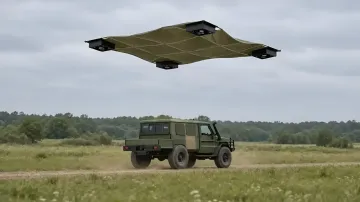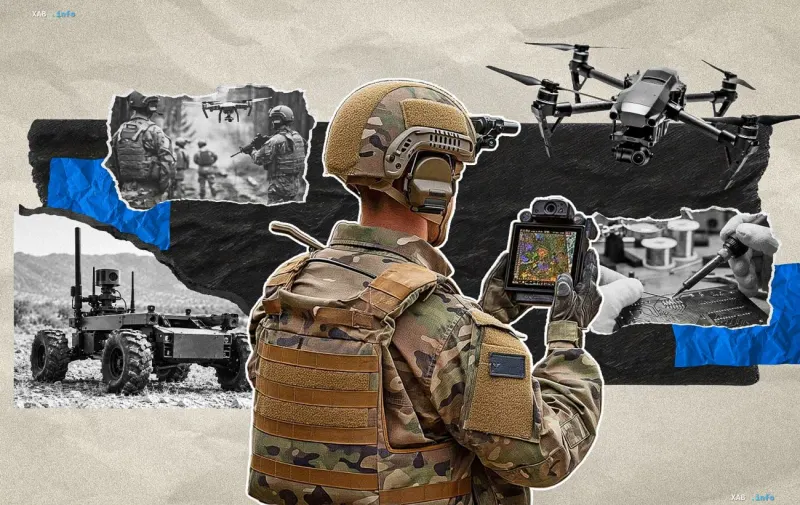
The Ukrainian miltech sector has traveled a rapid path over the past few years from volunteer workshops and initial experiments to large-scale serial production of drones, electronic warfare systems, and complex technological solutions. Companies that emerged in response to urgent frontline needs are now scaling up production, developing proprietary technologies, and entering international markets. A prominent representative of this industry is PG Robotics, which demonstrates impressive drone manufacturing rates and deploys advanced solutions for the Ukraine Defense Forces as of 2026.
Company Origins and Product Line Development
PG Robotics began operations in 2022 immediately after the full-scale invasion started, receiving official registration in 2023. The team was formed at the intersection of aviation, engineering, practical UAV operation experience, technological entrepreneurship, and operator training. According to visionary and co-owner Vladyslav Plaksin, the team progressed from executing targeted tasks to the serial production of full-fledged unmanned systems. Today, the company specializes in UAVs for reconnaissance, fire support, and special missions.
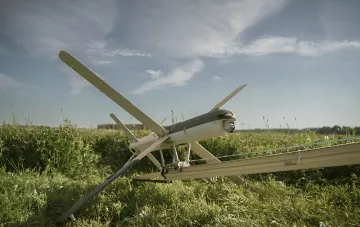
The company's flagship products include the Lucky Strike drone family (Series 1 and 2), specifically the codified serial Lucky Strike-1.5 and Lucky Strike-2.1 systems designed for daytime tactical reconnaissance, observation, and fire adjustment. Additionally, the company produces kamikaze drones such as Lucky Shot, an attack UAV featuring machine-vision auto-targeting capable of carrying a 1.5 kg payload over distances up to 15 km. Released in August 2026, the Lucky Strike-1.5 modification features an increased payload capacity of up to 3 kg, more powerful engines, and an updated power system while maintaining full compatibility with first-generation ground stations.
Technological Innovation and Consistent Quality Control
Developers place special emphasis on autonomy and electronic warfare resistance. Specifically, the Lucky Strike-2.1 system integrates the Salamandra optical navigation module based on the Raspberry Pi Compute Module 5. This technological solution allows the drone to orient itself via camera video feed, hold its position, and autonomously return to the launch point in conditions with complete GPS denial. Before delivery to frontline units, every manufactured device undergoes real flight testing and rigorous trials at a specialized testing ground.
Company management identifies maintaining identical quality across thousands of products as the primary challenge in mass serial manufacturing. To achieve this, the production process utilizes strict component standardization, multi-level quality control, localization, and prompt modernization directly on the assembly line. As of 2026, total drone production has exceeded 100,000 units, with monthly manufacturing capacity reaching 10,000 complexes. Furthermore, the company's training center has prepared over 7,000 qualified operators.
Platform Versatility and International Prospects
PG Robotics development platforms are actively adapted for various combat and logistical missions. They are utilized for remote mining via 6-mine drum drop systems or 9-mine cassette modules, small aero-logistics tasks including the delivery of ammunition and medical supplies, signal relaying, evacuation and search for other drones, and weapon module integration. The company fulfills government contracts, direct military unit orders, and volunteer foundation requests, maintaining a unified ecosystem to save unit resources.
To expand its global market presence, PG Robotics participates in European defense forums and investment platforms, exploring joint ventures and manufacturing facilities abroad. As Vladyslav Plaksin notes, the company's core asset is its strong team of engineers, programmers, and designers, while the future of the Ukrainian defense industry relies on growing system autonomy and establishing a world-class engineering school.
Significance of Ukrainian Miltech for Industry Future
The rapid growth of Ukrainian defense enterprises establishes a new paradigm for military technological support, where innovation speed and manufacturing flexibility play crucial roles. The successful scaling experience of companies like PG Robotics proves the domestic engineering potential's capability not only to meet critical frontline needs for thousands of equipment units but also to set trends in the global unmanned systems industry. Further integration of Ukrainian developments into international technological supply chains creates prospects for long-term strengthening of the country's position as a global leader in military technology.