The onset of the winter period once again highlights the issue of supplying Ukrainian servicemen with functional protective gear. The Ministry of Defense of Ukraine has published a clarification detailing what to do if winter boots begin to let in water, a jacket or trousers become unusable ahead of schedule, or footwear and clothing are received with manufacturing defects. The clarification is based on Ministry of Defense Order No. 232 of April 29, 2016, which remains a valid regulatory act governing the issuance, use, and repair of clothing property. According to RBK-Ukraine, the document is addressed to both servicemen within combat units and personnel in rear and training units.
Defect upon receipt: report immediately
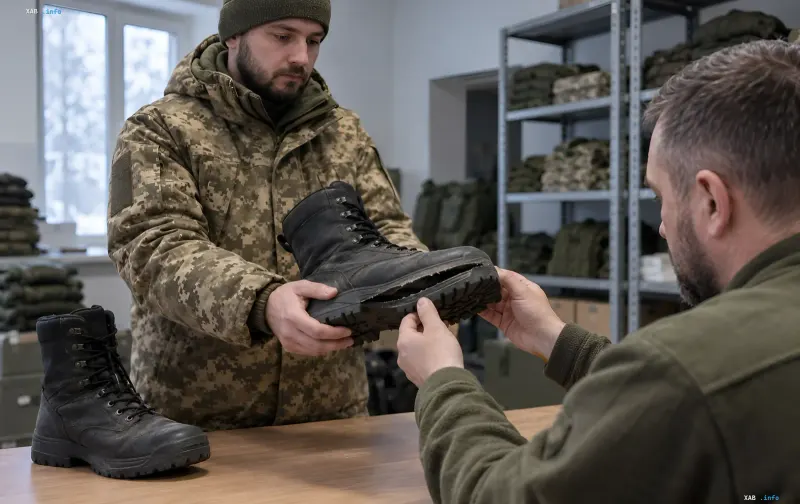
The first rule emphasized by the Ministry of Defense concerns the moment of issuing clothing property. According to Order No. 232, equipment is issued strictly in accordance with the specific serviceman's sizing data. If the size does not fit or a manufacturing defect is already noticeable on the item — such as a peeling sole, a split seam, or broken hardware — the clothing warehouse worker must be notified immediately. Replacement in such cases is carried out before use begins, i.e., on the very day of issuance. A serviceman is not obligated to "break in" uncomfortable or defective footwear in field conditions: the legal basis for replacement exists from the moment the discrepancy is discovered.
Damage during use: procedure of actions
If the defect arises after the item has already been put into service, the algorithm changes. The serviceman should report the problem to their immediate commander and contact the clothing service of their military unit. The key requirement is that the damaged item must be preserved in the exact condition in which it was found. It is forbidden to throw it away, disassemble it, cut off the markings, or perform complex repairs independently, as it is the preservation of the item that allows the cause of the defect to be determined. Not every damage indicates poor-quality manufacturing: the cause may be natural wear, mechanical impact, improper care, or non-compliance of the item with technical requirements. The final conclusion regarding the nature of the defect is made by responsible officials after inspection.
Report for combat units: what to write
For servicemen who are part of military groups engaged in combat operations, Order No. 232 provides a simplified and more expeditious procedure. The report must state the name of the item, the date of its receipt (if known), describe in detail the nature of the defect, the moment and circumstances of its occurrence, and explain why the item can no longer be used safely. In a separate line, the serviceman asks to inspect the item and resolve the issue of repair or replacement. The Ministry of Defense clarification gives a specific example of the wording: "I ask to inspect the issued high winter combat boots due to the peeling of the sole and loss of moisture protection. Based on the results of the inspection, I ask to resolve the issue of repairing or replacing the footwear." It is permissible to attach photographs of the damage to the report, but they do not replace an in-person inspection of the item by a commission.
Repair, wear, and service life
Order No. 232 distinguishes three levels of clothing property repair: current, medium, and major. Minor damage to uniforms may be fixed by the serviceman independently. Current footwear repairs are performed by non-staff shoemakers of units or by the servicemen themselves. Medium repairs are carried out in clothing repair workshops of military units or logistical support units. If repairs cannot restore the protective properties of the item, the clothing service organizes an inspection and draws up the necessary documents; if necessary, a commission is appointed, formed by the commander of the military unit. It is important that all acts and accounting documents are processed by the military unit itself, not by the serviceman.
For most elements of the Category 5 winter kit, a two-year service life is established: these are winter boots, jackets, trousers, insulation suits, and cold-weather underwear. Winter gloves last for one year. However, the Ministry of Defense emphasizes that the expiration of the service life is not the only basis for replacement. In military units that are part of combat groups, service lives are not set at all — equipment is used until complete wear, and when destroyed or unfit, the property is replaced with new one. If an item is destroyed or damaged while performing official or public duties, Order No. 232 also provides for the issuance of a new set. In rear and training units, the next scheduled issuance takes place after the expiration of the established period, but if an item becomes unusable earlier, its condition and the circumstances of damage are assessed separately.
Quality control and work with the supplier
If the peeling of the sole, the parting of a seam, or the breakage of hardware occurred without obvious mechanical impact, this may indicate a manufacturing defect. The final conclusion, however, is made only after inspection. Quality control of clothing property compliance with technical requirements is regulated by a separate Ministry of Defense Order No. 375. Interaction with the supplier and processing quality claims is the prerogative of authorized bodies and the military unit itself; a serviceman does not need to contact the manufacturer independently. Winter uniforms and boots, which belong to personal-use property, are issued to mobilized and contract servicemen into ownership, which additionally emphasizes the importance of timely processing of defects through official channels.