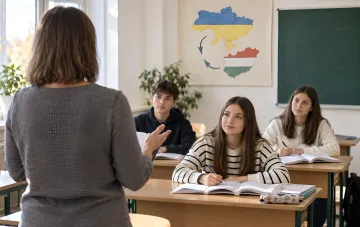
The Ministry of Education and Science of Ukraine has published the results of a large-scale survey of school libraries, showing that literature in the languages of indigenous peoples or national minorities is available in over 700 educational institutions across various regions of the country. This was reported by RBC-Ukraine, citing a publication by the MES press service. The study, conducted between September 11 and October 9, 2026, covered more than 10,000 state- and municipal-owned educational institutions and became one of the most comprehensive cross-sections of school library collections in the country.
Scale of the Study and Response Rate
The purpose of the survey was to ascertain the current state of school libraries, with a specific focus on the linguistic composition of library collections and the availability of literature in the languages of Ukraine's indigenous peoples and national minorities. According to the ministry, information on the linguistic distribution of literature was provided by over 92% of the surveyed institutions, which, in the view of the MES, ensures high representativeness of the data obtained and provides a true picture rather than a selective sample.
Literature in Indigenous Languages
The presence of literature in the languages of Ukraine's indigenous peoples was reported by 189 schools. The ministry noted that in institutions where such literature is present, its average share in the total library collection is 4.7%. The survey also helped identify leading regions by the number of institutions with corresponding literature and by the volume of the largest collections in terms of the number of copies, although the specific list of regions was not disclosed in the open press materials.
Collections in National Minority Languages
Literature in the languages of national minorities residing in Ukraine is much more widely represented: 677 schools reported having it. In total, these collections account for 921,246 copies, and the average share of such literature in the total library collection of institutions holding it is 13.4%. As in the previous category, the same regions that hold indigenous language collections also possess the largest book holdings in national minority languages.
Category Intersection and Reasons for Differences
As part of the survey, 128 schools reported having literature in both categories simultaneously, which accounts for about 1.8% of the institutions that provided information on the linguistic composition of their collections. Based on the data obtained, the MES concluded that collections of literature in indigenous and national minority languages differ significantly. The ministry attributes this difference partly to the larger number of ethnic communities belonging to national minorities, and consequently a broader linguistic diversity of relevant publications. The availability of such literature, according to the MES, may also be influenced by cultural ties maintained by national minority representatives with other countries.
What's Next: Updating and Modernizing Collections
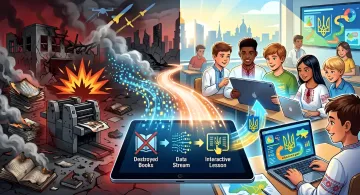
The ministry emphasizes that the survey results will help not only assess the representation of literature in indigenous and minority languages across school libraries in different regions, but also systematically update the collections. At the same time, to determine real needs, the MES notes it is important to consider not only the number of copies, but also the relevance of publications, their suitability for the age and interests of children, and the linguistic needs of students in specific communities. Thus, the study lays the groundwork for targeted work with library collections at a time when some Ukrainian libraries and publishing capacities continue to suffer from enemy attacks.