Ukrainian tourism in recent years has been changing not only under the pressure of war, but also under the influence of how destinations themselves present the country to the world. One marker of such recognition has become the international Best Tourism Villages project, implemented by UN Tourism — a specialized UN body in the field of tourism. Its idea goes beyond simply picking "beautiful places to vacation": the list features rural communities that demonstrate how tourism can support the local economy, preserve traditions, cultural heritage, and the natural environment. The initiative launched in 2021, and in its first years it gathered hundreds of applications from around the world.
How Ukrainian Villages Made It Into the UN Network
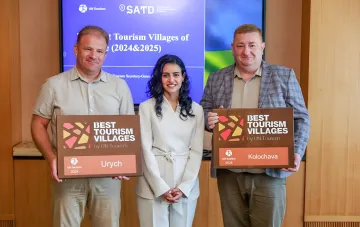
For Ukraine, this story began in 2024, when two settlements entered the international Best Tourism Villages network for the first time — Vorokhta in Ivano-Frankivsk Oblast and Urych in Lviv Oblast. Their applications were selected from among more than 260 participants from over 60 countries. The following year, 2025, the Ukrainian list was joined by two more Zakarpattia villages — Kolochava and Synievirska Polyana. By the end of 2024–2025, Ukraine already had four representatives in this international tourism network, and each occupies its own niche: Vorokhta — for those seeking activity and resort infrastructure, Urych — for fans of history and unusual landmarks, Kolochava — for immersing in Carpathian culture, and Synievirska Polyana — for nature and mountain trails.
Visit by the Head of UN Tourism: the First in a Decade
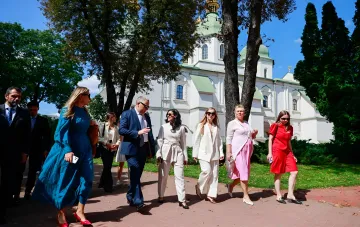
Ukrainian villages with international status were back in the news in August 2026, when Sheikha Nasser Al-Nuways, Secretary-General of UN Tourism, visited Ukraine on a one-day official visit. This was the first visit by the organization's head during the full-scale war and the first arrival of the UN Tourism Secretary-General in Ukraine in ten years. During the visit, representatives of the organization, the State Tourism Development Agency, and Ukrainian communities discussed not only the future of the industry but also the results already achieved — including a separate mention of the four villages that received international tourism recognition.
Four Characters: From a Ski Resort to a Medieval Fortress
The main feature of Ukraine's "quartet" is how unlike they are to one another. Vorokhta is most often associated with skiing, but its tourism history is far older than modern lifts and cottages: the destination took shape as early as the beginning of the 20th century, when the railway arrived, bringing with it hotels and sanatoriums. Urych is known for its medieval fortress on the rocks, Kolochava has effectively built its tourism image around its museum heritage, and Synievirska Polyana has become a kind of gateway to one of the most famous natural sites of the Ukrainian Carpathians. What they share is different: a tourist comes not simply to "look at the scenery" but to gain a specific experience — natural, historical, ethnographic, or sporting.
The Practical Meaning of the Status for Communities
It would be wrong to talk about this status only as a pretty award: for communities it has quite practical significance. In the Best Tourism Villages concept, tourism is seen as a tool for developing rural areas — an opportunity to attract partners, create jobs, support local businesses, develop infrastructure, and at the same time not lose one's own identity. That is why the program's criteria cover more than just attractions: cultural and natural resources, the state of infrastructure, social and economic components, community involvement, and how effectively tourism actually works for the development of the territory all matter.
A New Wave: Five Applications for 2026
Ukrainian communities are already using the experience of previous years' winners for upcoming competitions. In 2026, Ukraine submitted five more applications to Best Tourism Villages: Opishnya in Poltava Oblast, Vyghida and Kryvorivnia in Ivano-Frankivsk Oblast, and Medzhybizh and Chynadiiv (Kytayhorod) in Khmelnytskyi Oblast. The selection results are expected at the end of the year. Thus, the four current winners are no longer isolated stories but part of a broader process in which Ukrainian communities are gradually learning to work with international tourism standards.