European Commission spokesperson Lammert clarified during a briefing that the EU Council's decision to extend the temporary protection regime for those forced to leave Ukraine contains no distinction based on gender. According to him, the provision is formulated in terms of 'military service' or 'army service' and therefore applies equally to men and women. 'It is about military service or service in the army, so there is no difference between men and women,' emphasized the EC representative, as reported by RBC-Ukraine.
Gender neutrality of the EU Council decision
The key takeaway from the briefing is that the formal structure of the pan-European decision is not tied to the applicant's gender. This means that women who are subject to military service in Ukraine will have to confirm, when applying for temporary protection in EU countries, that they are not evading their military obligation. Previously, public discourse focused primarily on men, but Brussels' position expands the scope of the rule to all those liable for military service, including women.
What exactly those liable for military service must confirm
The requirements concern the fulfillment of military obligations in two aspects: current military service or service in the past. In practice, this means the need to provide documents confirming status, registration, legal grounds for leaving Ukraine, or the absence of signs of evasion. For men aged 23 to 60, such confirmations have already become a mandatory element of the procedure, and now, according to the EC's clarification, the logic extends to women liable for military service as well.
Practice in Spain and the Czech Republic
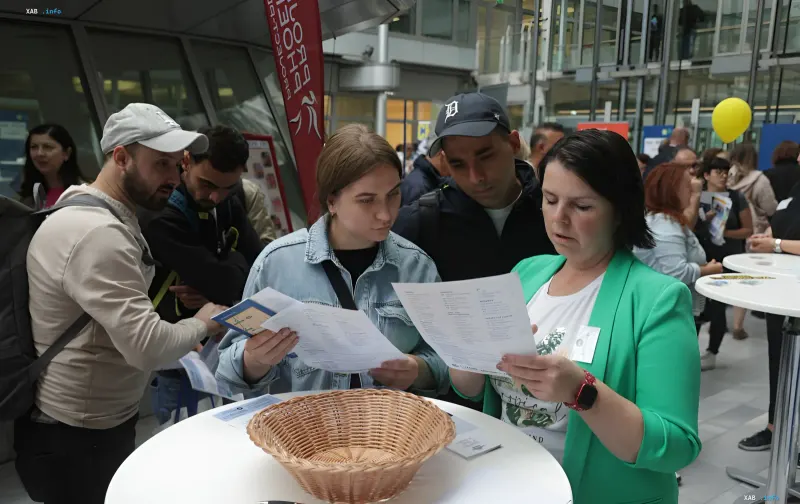
New requirements are already being reflected in the work of national authorities. In Spain, Ukrainian women applying for temporary protection report that they are being asked for data from the 'Reserve+' app and a stamp indicating crossing the Ukrainian border. The Embassy of Ukraine in Spain explained that the changes are linked to the EU Council's decision, which extends the validity of temporary protection for Ukrainians forced to leave the country until March 4, 2028. In the Czech Republic, according to available data, since August 5, dozens of Ukrainians have been unable to obtain protection due to the lack of documents confirming the fulfillment of military duty.
Contradictory data
Here it is important to honestly note the difference in emphasis. On the one hand, the official position of the EC, voiced by Lammert, emphasizes the full gender neutrality of the rule: there is no difference between men and women in the text of the decision. On the other hand, in public messages and in the practice of member states, the formulation still dominates where document requirements are described through the prism of men aged 23–60, while cases of checking women (e.g., requests for 'Reserve+' in Spain) are presented as separate, 'new' episodes. Thus, the formal rule and its actual perception on the ground currently diverge: Brussels speaks of a single rule for all those liable for military service, while national authorities and the media often describe the women's case as an exception. This is not a contradiction in figures or dates, but a significant discrepancy in interpretation that should be taken into account when assessing real risks for female applicants.
Statistics and future prospects
Despite the tightening of documentary requirements, according to Eurostat data, the total number of Ukrainian citizens under temporary protection in EU countries continues to grow. This indicates that the new rules have not yet led to systematic refusals, but they create additional administrative burdens and the risk of delays at the border and in reception centers. In the coming months, the key factor will be how national authorities uniformly apply the EC's gender-neutral formulation and exactly which documents they will consider sufficient confirmation for women liable for military service.