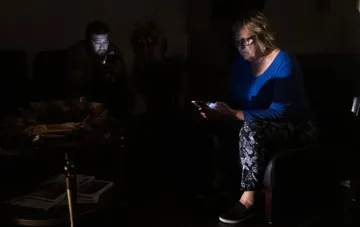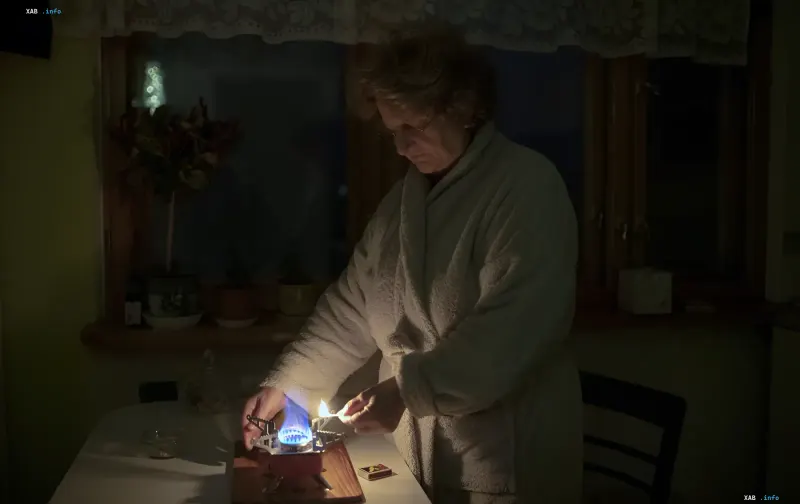
On November 2, 2026, hourly electricity outage schedules continue to apply in Ukraine, and the national energy company Ukrenergo has warned in advance that forced consumption restrictions will remain in place for the following day, November 3. The energy holding company attributes this to the consequences of massive Russian strikes on energy infrastructure facilities, which have reduced the system's generation and transmission capacities. According to operators, the restriction regime may change throughout the day depending on the actual state of the grid, so exact outage times for specific addresses should be checked on the official pages of regional distribution system operators (oblenergos).
Reason for Restrictions: Consequences of Attacks on Energy Facilities
Ukrenergo's statement explicitly indicates that the introduced restrictions are caused by the aftermath of massive Russian attacks on energy infrastructure. The company emphasizes that 'as a result of Russian shelling, the situation in the power system may change' and urges consumers to monitor up-to-date outage schedules on the official resources of their regional oblenergo. The operator's formulations indicate that the restrictions are forced and dynamic in nature: they are adjusted as information arrives regarding the condition of damaged lines and substations.
What Exactly Energy Providers Are Introducing
According to data previously cited by Ukrenergo in similar warnings, hourly outages ranging from 0.5 to 1.5 queues are applied to all categories of consumers, while round-the-clock capacity restriction schedules remain in effect for industry and business. Energy workers separately urge citizens to consume electricity sparingly during the hours when power is restored according to the schedule, in order to reduce the load on the overloaded grid. The exact schedule for each address is typically published by the local distribution system operator, as the order of queues varies depending on the region and consumer type.
The Situation in Kyiv: Voltage Fluctuations and the Metro
On November 2 in Kyiv, amid significant voltage fluctuations in the grid, the underground metro system partially stopped operating, which became another consequence of the unstable state of the power system following damage to energy facilities. Emergency power outages had previously been introduced in the capital due to damage to energy infrastructure, confirming a steady pattern: local accidents and voltage drops affect not only household consumers but also critical urban infrastructure, including transport. For passengers, this means potential reductions in train frequency and temporary delays during peak hours.
Expert Context: Temporary Measure During Repairs
Energy experts, commenting on such regimes, link the restrictions to damage sustained from shelling and characterize them as a temporary measure while repair work is underway. According to them, outage schedules are introduced to balance the load in parts of the grid where capacity has been lost due to damage and to bring the system to a stable state. This means that upon the successful completion of repairs and the restoration of generation, the restriction regime may be mitigated or canceled, but until that moment Ukrenergo recommends maintaining a regime of conservation.
Recommendations for Consumers
The operator's main practical advice boils down to two points: monitor official announcements from your regional oblenergo and use electricity sparingly during the hours it is supplied according to the schedule. Under conditions where outages can last whole days and change throughout the day, pre-planned consumption — turning off unused appliances, shifting energy-intensive tasks to guaranteed power hours — helps reduce grid load and lowers the likelihood of additional emergency blackouts.