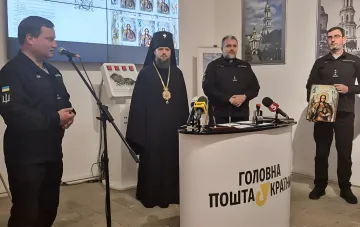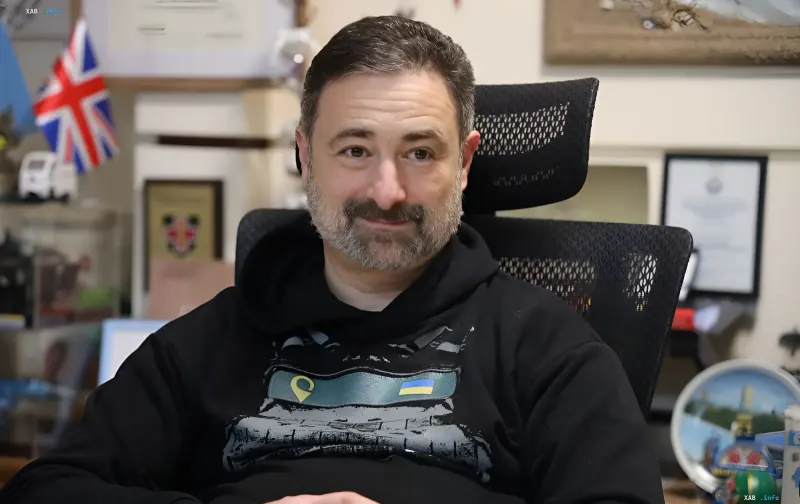
Ukraine's state postal service, Ukrposhta, has begun examining the circumstances surrounding the sending of a procedural document — the formal suspicion addressed to the head of the National Anti-Corruption Bureau (NABU), Semen Kryvonos — which was previously publicly announced by the suspended Prosecutor General Ruslan Kravchenko. This was stated on 15 September 2026 by Ukrposhta's CEO Ihor Smylianskyi in a public address, as reported by RBC-Ukraine. The company emphasized that any further actions will be carried out strictly in accordance with the current legislation and the enterprise's internal procedures.
Breach of payment procedure: cash instead of non-cash settlement
The key aspect of the investigation, which drew attention at Ukrposhta, was the form of payment for the postal services. According to the company, the copies of the receipts published by Kravchenko show that the services were paid for in cash directly at a postal branch. This method of settlement, Ukrposhta claims, does not comply with the terms of the contract concluded with the Office of the Prosecutor General, nor with the requirements of Ukraine's budgetary legislation, which provide for non-cash payment by state bodies. It was precisely this discrepancy that became the basis for initiating an internal review of the processing of the disputed shipments.
Position of the Office of the Prosecutor General: the suspicion was not served
Separately, Ukrposhta referred to the official statement of the Prosecutor General's Office, which noted that within the relevant criminal proceedings, no one — including the head of the anti-corruption body — was served with the suspicion in the manner prescribed by law. The authority also pointed out the absence of legal grounds for adopting such a procedural decision. Thus, the position of the Office of the Prosecutor General directly contradicts Kravchenko's claim about the allegedly sent document.
Contradictory data
The situation reveals a significant discrepancy between the versions. On the one hand, the suspended Prosecutor General Ruslan Kravchenko publicly stated on 13 September 2026 that the suspicion to Kryvonos had been sent via Ukrposhta and published copies of receipts which, according to him, confirm the fact of sending. On the other hand, Ukrposhta points out that the method of payment (cash at the branch) does not meet the contractual and budgetary requirements, while the Office of the Prosecutor General categorically denies the very fact of serving or sending the suspicion in the established manner. Moreover, the information entered into the Unified Register of Pretrial Investigations (ERDR) about the corresponding procedural decision has already been cancelled. As of the publication of this article, Semen Kryvonos has not officially confirmed receiving any suspicion.
Privacy of correspondence and legal restrictions
In his statement, Ihor Smylianskyi also emphasized that Ukrposhta, as a postal operator, is obliged to respect the privacy of correspondence guaranteed by Article 31 of the Constitution of Ukraine and protected by Article 163 of the Criminal Code. The company stated that when providing information and comments on this situation, it would take into account these constitutional and criminal-law requirements. This means that the details of the investigation, concerning the content and recipients of the shipments, may be restricted from public access.
Context: Kryvonos's status and the cancellation of ERDR records
A reminder of the current status of events is of fundamental importance: as of 15 September 2026, NABU Director Semen Kryvonos had not received a suspicion in the manner established by law. The information about the procedural decision, which had previously been entered into the ERDR, has been cancelled. Thus, Kravchenko's public statements about the "sending of the suspicion" have found no confirmation either in the position of the Office of the Prosecutor General or in the actions of Kryvonos himself, while Ukrposhta has taken on the role of an independent investigating body that must establish exactly how and on what legal basis the disputed shipments were processed. The company intends to inform the public of the results of the internal review within the limits provided for by legislation.