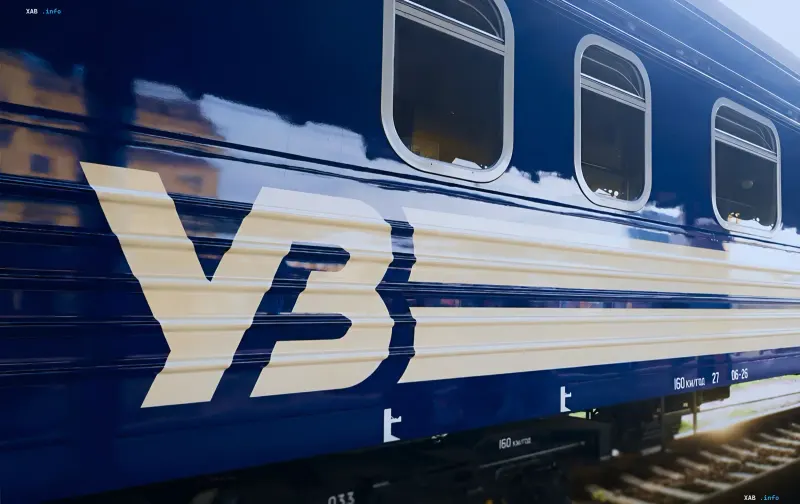
On the occasion of Railway Worker's Day, Ukrzaliznytsia, together with the Ministry of Communities and Territories Development of Ukraine, published a summary of the railway industry's losses since the start of the full-scale invasion. According to official data, 1220 company employees have died during this time, and Russian strikes have damaged or destroyed 616 locomotives and 268 passenger carriages. The message was timed to coincide with the professional holiday and became one of the most large-scale public assessments of the war's impact on the country's railway infrastructure.
1220 lives: the price of war for railway workers
Ukrzaliznytsia emphasized that behind the figure of 1220 are specific people — those who met passengers at stations, drove trains, repaired tracks, and restored railway communication after Russian attacks. The company noted that behind this figure are "relatives who will no longer wait for them at home, colleagues who will no longer work side-by-side with them, and thousands of memories that will remain with us forever." Thus, the agency for the first time in such concentration provided a cumulative assessment of human losses in the industry for the entire period of the conflict.
616 locomotives and 268 carriages: the scale of destruction
According to the Ministry of Communities and Territories Development, Russian strikes damaged or destroyed 616 locomotives and 268 passenger carriages. These are hundreds of pieces of equipment put out of action as a result of systematic attacks on railway infrastructure. The ministry thanked industry workers for their work in wartime conditions and stressed that railway communication continues to function and develop despite regular strikes.
"Train of Iron Memory"
The memory of fallen railway workers was honored on their professional holiday by launching the "Train of Iron Memory" to the sound of a locomotive horn. This symbolic event became the central element of the official ceremony dedicated to Railway Worker's Day and is designed to preserve the memory of fallen industry workers in the public consciousness.
Work in wartime conditions
Despite the attacks, railway workers continue to transport passengers and humanitarian cargo, carry out evacuations, and restore damaged stations and tracks. Some industry workers are currently defending the country in the ranks of the Armed Forces of Ukraine. Last winter, railway workers, in addition to their main work, helped restore energy facilities after Russian attacks, which testifies to the multi-profile burden carried by the industry in wartime.
Strike on Dnipro: a reminder of the price
One of the latest demonstrations of the railway infrastructure's vulnerability was the attack on October 29, when Russian troops hit the railway station in Dnipro with a jet drone. Passenger train No. 866 on the Dnipro — Zaporizhzhia route was on the platform at that moment. According to available data, at least 14 people were killed as a result of the strike, and another 14 were injured, including children. Before the attack, railway workers announced the evacuation of passengers, but some people remained near the train. This episode once again confirmed that railway infrastructure remains a systematic target for strikes.