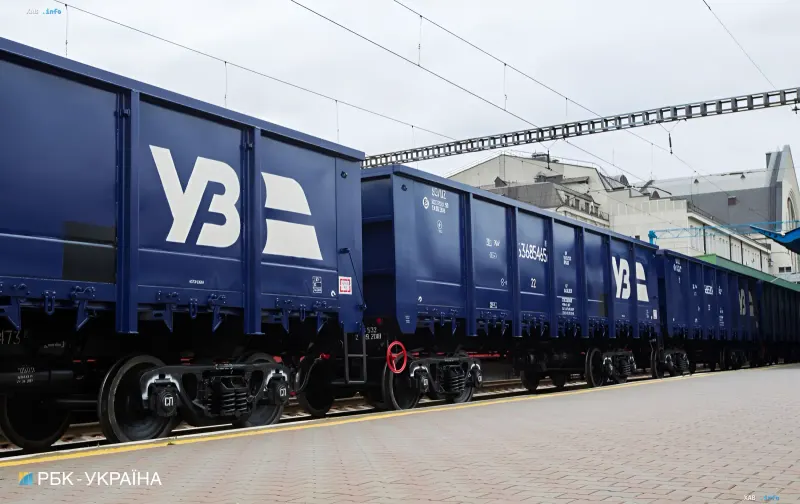
The logistics factor has become one of the key drivers of price growth on Ukraine's primary housing market. The combination of two factors — a 30% increase in Ukrainian Railways (Ukrzaliznytsia) freight tariffs and the threat of strikes on warehouse facilities — is forcing developers to rethink their supply chains and abandon the practice of stockpiling materials on construction sites. According to RBK-Ukraine's assessment, it is precisely these circumstances that are putting pressure on the cost per square meter and, as a result, on the final price of apartments that buyers will pay this fall.
For the first time in four years: +30% to freight tariffs
For the first time in four years, Ukrzaliznytsia has revised its freight transport tariffs, raising their cost by 30% from August 1, 2026. This decision directly increases the cost of delivering each ton of raw materials to factories and construction sites. For the construction industry, where a significant share of materials (crushed stone, sand, cement, brick) is transported over long distances, even a slight increase in the cost per ton-kilometer adds up to a noticeable rise in the cost of completed housing.
Strikes on infrastructure and situational shortages
In addition to the tariff factor, the military situation is making things worse. As explained to RBK-Ukraine by PBG "Kovalska," frequent enemy attacks on railway infrastructure in April–June 2026 led to a slowdown in wagon movement and a situational shortage of crushed stone and cement. As a result, the company is forced to seek alternative and more expensive delivery routes, which only increases the final cost of materials. Warehouse real estate has also come under enemy fire, so developers cannot afford to risk accumulating large stocks on site.
Developers change their procurement tactics
The response to logistics risks has been a shift in procurement strategy. According to Yelena Ryzhova, Commercial Director of "Intergal-Bud," the company plans its needs for key materials in advance and purchases certain items, locking in the price, to avoid accumulating large batches in one place. This trend is also confirmed by the developer company "Creator Stroy": construction materials are purchased ahead of schedule, which allows them to partially lock in current prices and reduce the risks of sharp fluctuations in costs.
Contradictory data
Here it is important to honestly reflect the discrepancy in assessments. On the one hand, developers talk about a situational shortage of certain items (crushed stone, cement) and the forced switch to more expensive routes. On the other hand, Konstantin Saliy, President of the All-Ukrainian Union of Building Materials Manufacturers, asserts that Ukrainian enterprises meet developers' current needs 100%, and that there is no real shortage: the country has enough crushed stone, sand, concrete, aerated blocks, tiles, and brick. Moreover, according to his data, factory utilization for sales is only 42–48%, meaning there is ample production capacity. Thus, the "shortage" on the ground is more of a local and temporary effect of logistics disruptions, rather than a systemic lack of raw materials, and manufacturers are, on the contrary, interested in growing domestic demand.
What this means for prices in the fall
The cumulative effect — more expensive transport, costlier alternative routes, and early fixed-price purchases — is being built by developers into the price per square meter. As long as factories can cover the restrained demand, there is no acute shortage, but, as Saliy notes, it may occur at the start of recovery, when a large number of consumers enter the market all at once. It is precisely in this scenario that the logistics markups already built in are most likely to be reflected in the final apartment prices this fall.