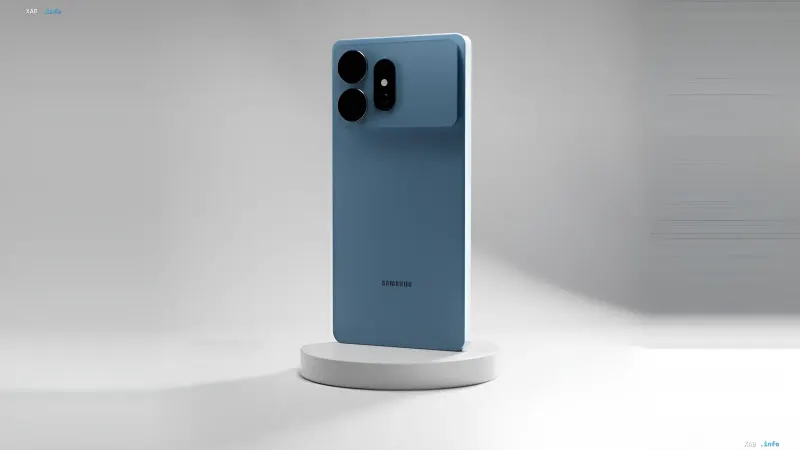
The upcoming Samsung Galaxy S27 Ultra flagship, known by model number SM-S958, has been certified by the Danish division of UL Solutions — Demko. A new CB certificate (document DK-188396-UL), issued on November 17, 2026, confirmed the device's nominal input at 20.0V at 3.0A, which results in a peak wired charging power of exactly 60W. In the document, the device is described concisely as a “Samsung Electronics mobile phone,” with no mention of a power adapter or wireless charging capabilities. The list of models includes regional variants: SM-S958B/DS and SM-S958B for the international market, SM-S958N for South Korea, SM-S9580 for China, SM-S958W for Canada, SM-S958U and SM-S958U1 for the US, as well as SM-S958D, SM-S958Q, SM-S958Z, and SC-54H for Japan (the latter likely being an NTT Docomo model code).
60W with no leap: Samsung does not accelerate the flagship
The key takeaway from the certificate is that Samsung does not intend to increase the charging speed of its upcoming flagship. 60W is exactly the peak figure that the company introduced in the Galaxy S26 Ultra when it recently switched from 45W to 60W. In other words, judging by the document, there should be no expectation of another power leap: the new-generation flagship charges at the same speed as the previous one. Notably, this is not the first signal regarding the 60W rating: as early as September, the Chinese 3C certification indicated the same power ceiling for the S27 Ultra and S27 Pro, and the Demko certificate merely confirmed these data on an international level.
Larger battery — and slower charging
However, the same charging power does not mean the same charging time. The 60W Galaxy S26 Ultra reaches about 75% in 30 minutes, with a full charge taking approximately 52 minutes. The Galaxy S27 Ultra, according to available data, will take longer to charge for a simple reason: it is credited with a larger capacity battery. According to TUV certification and battery-related documents, the cell EB-BS958DBY has a nominal capacity of 5534 mAh and a typical capacity of around 5700 mAh. This is a noticeable step up compared to the Galaxy S26 Ultra, and it is precisely for this reason that, despite the same 60W power, the full charging time will likely increase.
Charging power distribution across the S27 series
Certification data allow us to paint a complete picture of the charging power across the entire Galaxy S27 series. In addition to the Ultra, the Galaxy S27 Pro will receive 60W charging, making it the second device in the series with this rating. The Galaxy S27+ will retain 45W charging, and the base Galaxy S27 will stay at 25W. Thus, Samsung is building a clear hierarchy: top models receive a maximum of 60W, the middle one 45W, and the entry-level one 25W. For the user, this means that fast charging remains a privilege of the higher-end models, and the flagship in the new generation will receive neither a speed boost nor, apparently, any new wireless charging solutions, as none were mentioned in the certificate.