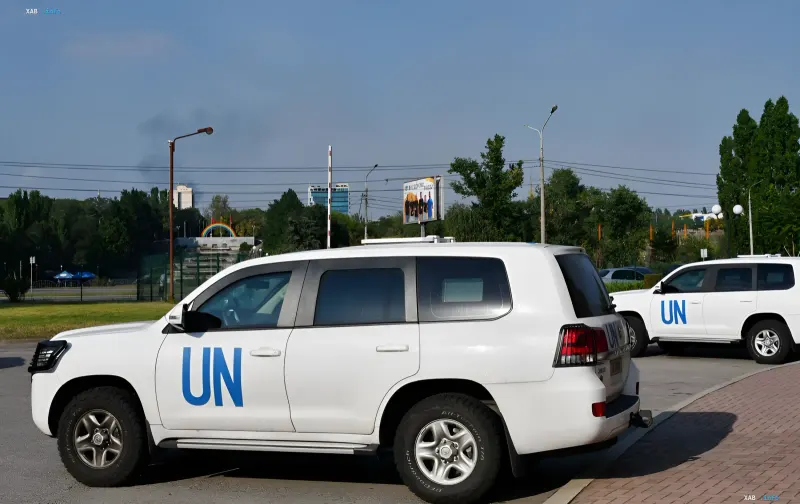
Matthias Schmale, the UN humanitarian coordinator for Ukraine, stated that the organization is actively seeking ways to reduce the risk of humanitarian aid being destroyed as a result of Russian attacks. According to him, ten UN warehouse convoys have already come under fire this year, resulting in the destruction of cargo worth millions of dollars. One of the most high-profile incidents was the strike in early September on one of the main warehouses of the World Health Organization, where medical supplies were stored. Other Russian strikes destroyed hygiene kits and school supplies intended for children.
"A new trend" and a review of logistics
Schmale openly described the attacks on warehouse facilities as "a new trend of the past few months," emphasizing that this is forcing humanitarian organizations to reconsider their approaches to storing and delivering aid. "These deliberate attacks on warehouse facilities (…) are a new trend of the past few months," the UN coordinator stated. As one of the key response options, the organization is considering moving its stockpiles into underground bunkers, which should make them less vulnerable to air and missile strikes.
"Last-minute" strategy and shorter storage times
In addition to physically protecting the warehouses, the UN is trying to change the very logic of its procurement. According to Schmale, the organization is striving not to purchase large volumes of humanitarian aid well in advance of its delivery, but to bring the moment of purchase as close as possible to the date when the cargo will be needed on the ground. This approach is intended to shorten the time goods spend in warehouses and, as a result, reduce the likelihood of them coming under fire. "There is a growing impression that the front line is moving into the air," the UN representative noted, stating that the airspace over Ukrainian territories has in effect become a combat zone.
Financial burden beyond the budget
Schmale added that the situation creates an additional financial burden that goes beyond the direct cost of the destroyed cargo. This also includes significant expenses on protecting personnel and the humanitarian infrastructure itself. According to him, these additional costs are not provided for in the UN budget for humanitarian assistance to Ukraine, which stands at $2.3 billion for 2026. As a result, the organization is forced to seek additional sources of funding to ensure the safety of its operations in conditions where warehouse logistics has become a high-risk zone.
Context: "the hardest winter" and the threat to food security
Earlier, the UN warned of "the hardest winter" for Ukraine since the start of the full-scale war. Due to ongoing Russian strikes on energy infrastructure, millions of people could be left without electricity, heating, or water, which, combined with low temperatures, threatens a humanitarian catastrophe. In addition, the UN acknowledged that Russia's attacks on ports and vessels pose a direct threat to global food security, extending far beyond the Ukrainian context. The combination of these factors makes the protection of humanitarian warehouses and supply chains one of the priorities for international organizations in 2026.