Modern Ukrainian coffee shops are increasingly going beyond the usual format of catering establishments, transforming into full-fledged cultural spaces. Today, the design of a coffee shop is not just an aesthetic choice, but a way to tell a story, create a unique atmosphere, or immerse the visitor in a different reality. WAVE publication presented a review of establishments where the interior harmoniously combines art, history, and author's concepts, making the process of consuming coffee part of a deeper experience.
Natural Aesthetics and Industrial Minimalism
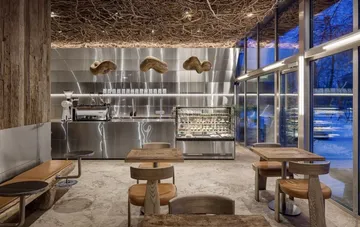
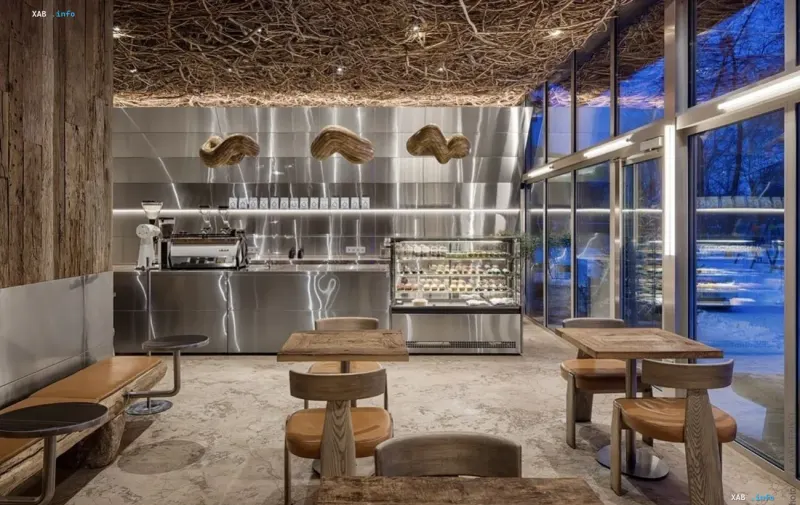
One of the striking examples of the synthesis of nature and modern architectural forms is the DROP coffee shop. Oleksandr Makhno, the author of the interior, focused on using natural materials — textured oak with natural cracks, concrete, and metal. The visual center of the space is a unique ceiling decorated with real tree roots, which, combined with signature coffee-drop-shaped lamps, creates an almost sculptural composition that highlights the connection between modern urbanism and the organic natural environment.
Atmosphere of History and the Film Industry
Many coffee shops strive to use design as a tool for immersion into a certain era or artistic world. Thus, establishments with vintage aesthetics often exhibit old photo equipment and household items, turning the coffee shop into a kind of museum space. At the same time, conceptual spaces find inspiration in pop culture: for example, a themed coffee shop whose design resembles a chemical laboratory refers visitors to the aesthetics of the series "Breaking Bad", where functional equipment and a bean roasting area become the main style-forming elements.
Coffee Legend as a Design Basis
Projects where the interior is a direct reflection of the brand's mythology deserve special attention. "Lviv Coffee Mining Manufacture" stands as a standard for this approach, playing on the popular urban legend about "mining" coffee deep underground. Visitors descend into halls stylized as mines, where the entourage, lighting, and serving of drinks create a sense of belonging to a theatrical performance. Here, the design is completely subordinated to the idea, turning an ordinary trip for coffee into a thematic exploration.
The Future of Gastronomic Spaces
The trend towards more complex interiors and the creation of thematic spaces indicates a shift in consumer behavior. Today, a guest expects not only a quality product but also a "third place" between home and work, where they can get emotional relief. In the near future, we can expect the emergence of even more niche concepts, where visuals will integrate with new ways of serving the product, turning every visit to a coffee shop into an individual visual and gastronomic experience.