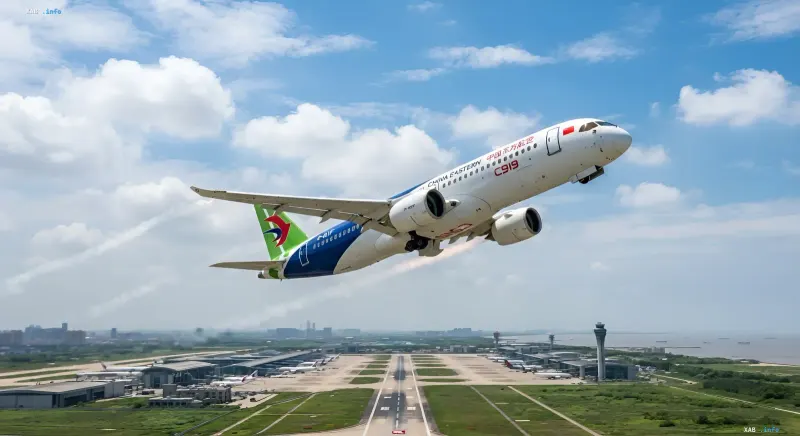
The US House Select Committee on the Chinese Communist Party has prepared a report featuring a package of recommendations aimed at tightening restrictions on China's aviation industry. The central proposal of the document is to prohibit the US Federal Aviation Administration (FAA) from certifying Chinese-manufactured aircraft. The authors of the report justify the initiative with two key arguments: the massive state support received by China's aviation industry, primarily the COMAC concern, and the lack of a final report from Beijing regarding the causes of the 2022 China Eastern Boeing 737 crash. The initiative comes at a time when the Chinese narrow-body C919 airliner is actively ramping up commercial flights and aiming for international markets.
Full Package of Restrictions: From Investment to Government Contracts
In addition to the certification ban, lawmakers propose restricting Western corporate investment in China's aerospace sector and tightening export controls. A separate measure envisions stripping US government contracts from companies that invest in China's aviation industry. According to the report's authors, such measures could also affect the acquisition of American enterprises by foreign companies, including French ones. Airbus receives special scrutiny, operating two A320 assembly lines in Tianjin, while wings for these aircraft are manufactured by China's Xi’an Aircraft Industry Group. The report claims that such cooperation facilitates the transfer of technology and production expertise to the Chinese side, including its military industry.
C919’s Dependence on Western Engines
The restrictions may also affect American suppliers. The Chinese C919 narrow-body aircraft is powered by LEAP-1C engines produced by the GE Aerospace and Safran joint venture. This very dependence makes the C919 vulnerable to US export controls. In 2025, Washington already suspended export licenses for engine and equipment supplies to COMAC. At the same time, in early November 2026, GE Aerospace signed contracts with Chinese airlines to supply LEAP-1 engines worth a total of $12.9 billion, demonstrating the American manufacturer's ongoing commercial attachment to the Chinese market.
Certification Status: COMAC Has Yet to Declare Intentions in the US
It is important to note that COMAC has not yet declared a desire to certify passenger airliners in the United States — the Chinese concern currently interacts only with the European regulator. This means that the proposed FAA certification ban does not block the specific certification procedure in the short term, but it creates a long-term barrier to the potential entry of Chinese aircraft into the US market. Combined with investment and export control restrictions, the committee's initiative forms a multi-layered system of pressure on China's aviation industry, affecting both European partners and American engine suppliers.