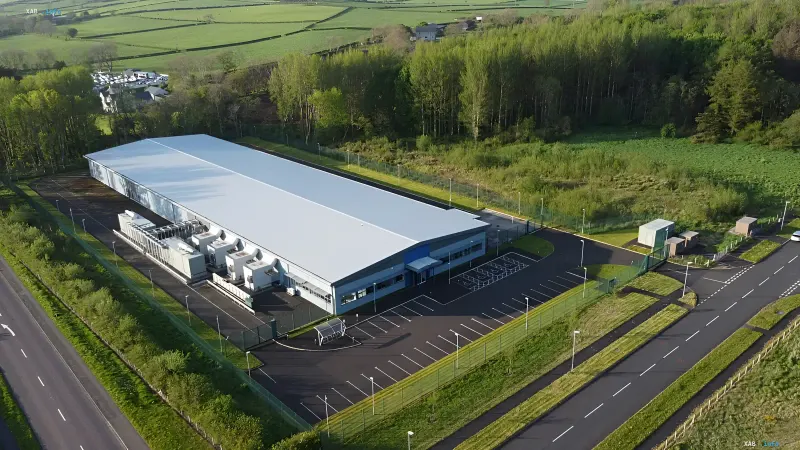
Harvard University has presented one of the first systematic studies assessing the electricity consumption and carbon footprint of hyperscale data centers following the rapid development of artificial intelligence. According to the researchers, the electricity consumed by the 403 largest data centers in the US over a year led to emissions roughly equivalent to the CO2 produced by Denmark, a country with a population of about six million. Between May 2024 and April 2025, the researchers estimate that these facilities resulted in the emission of 25.7 million tons of CO2.
Two to Three Times Higher Than Previous Estimates
The resulting figure, the study authors note, is about two to three times higher than previous estimates based on 2018 data. More than half of the electricity consumed was generated from fossil fuels, primarily natural gas and coal, which further exacerbates planetary warming. "We are moving backward from our goal to control CO2 emissions," said Harvard biostatistics professor Francesca Dominici to the AP agency. The study was published as negotiators at COP31 are launching a voluntary initiative calling on data center operators to transition to cleaner energy sources and disclose data on their environmental impact.
Europe Prepares for Its Own Boom
Against the backdrop of American data, Europe is preparing for its own construction boom. Over the next seven years, the EU intends to triple its data center capacity as it seeks to compete in the global AI race. The consulting firm CBRE expects that in 2026 alone, European capacity will grow by 20 percent. London, Frankfurt, and Paris have already become major hubs, yet power shortages have forced Amsterdam and Dublin to pause some new projects, causing investors to seek opportunities in other regions. In Finland, 145 data center projects have been announced across the country in recent years, 60 of them this year alone. In Spain, more than 50 facilities are planned, and 17 are already under construction. In Italy, in Puglia, local authorities have received 29 applications for grid connections for potential data centers, and according to CBRE, Milan is expected to overtake Dublin by 2028 to become the fifth-largest data center market in Europe. The IEA estimates that by 2030, data centers will account for 10 percent of additional electricity demand in the EU, placing stress on aging electrical grids.
Protests Against Construction
Residents and environmental organizations are expressing concerns about water consumption, noise pollution, and land use for data centers. In July, the UK government overruled a local council and approved a 585-million-euro plan to transform the former Truman Brewery in East London into a mixed-use complex with shops, offices, housing, and a data center. Activists took to the streets, claiming that a single data center could consume as much electricity as 15,000 homes, even though the project includes building only 44 new apartments, only six of which are designated as social housing. In October, more than 1,000 people representing about 40 local committees gathered in Milan to protest the expansion of the data center network in Italy and demand a halt to new projects. Less than a month later, activists infiltrated a Microsoft construction site in Amsterdam, climbed a crane, lit flares, and clashed with police. Then, in November, the Stop Dirty Data Centres coalition, which brings together over 100 environmental, human rights, and community organizations, held actions in 15 countries demanding a freeze on new data center construction until governments address their impact on utility bills, housing, and resources.
Geography Matters
Harvard researchers also found that the scale of a data center's impact depends largely on where it is built. The same amount of electricity leads to more than double the carbon emissions in Wyoming, where most energy is produced from coal, compared to Oregon, where renewable generation accounts for a significant share of the energy mix. Thus, the choice of location is becoming as important a factor in the carbon footprint as the total amount of power consumed.