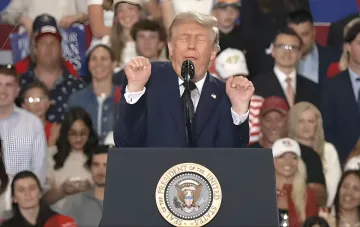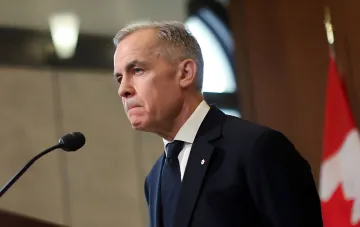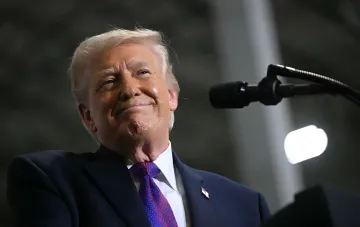
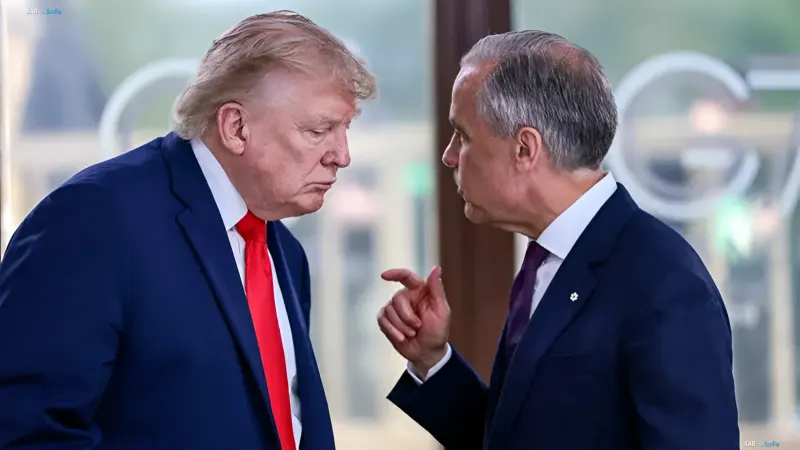
Washington at the last minute pulled back a new round of trade escalation with Ottawa. According to UANA's correspondent in Washington, US President Donald Trump stated on social media that the United States had decided to temporarily delay the introduction of a 50% tariff on a range of Canadian goods following negotiations, citing the fact that both countries had reached a fundamental agreement and were now only awaiting the completion of the relevant procedures and documentation. According to the agency, the decision was made less than two hours before the new tariffs were due to take effect, allowing a new flare-up in relations between the two long-standing neighbors and allies to be avoided.
Scope and legal basis of the tariff
The potential 50% tariff would have covered Canadian goods worth approximately $20 billion, or about 5% of Canada's total exports to the US. The list included, in particular, hockey equipment and certain categories of consumer goods. Previously, the Trump administration had planned to impose these tariffs, citing Section 338 of the Tariff Act of 1930 and claiming that Canada applies discriminatory practices against American goods and businesses. According to available information, this was the first time Washington had invoked this provision, which allows the president to impose tariffs of up to 50% on goods from countries considered to treat trade with the US unfairly.
Background of trade tensions and the fate of USMCA
The negotiations took place against the backdrop of already strained trade relations between the two countries due to tariffs previously imposed by Washington. Ottawa is seeking a reduction or cancellation of US tariffs on steel, aluminum, and lumber, while Washington is demanding further concessions from Canada in the areas of trade, defense, and access to key mineral resources. The temporary suspension of the tariffs gives the parties additional time to work on revising the trade agreement between the US, Mexico, and Canada (USMCA). The total volume of trade in goods and services between the two countries in 2025 is estimated to reach approximately $880 billion, making any escalation critical for both economies.
Colombian track: pause after the earthquake
In parallel, in Colombia, President Abelardo De La Espriella announced on August 18 that the United States was ready to temporarily suspend the tariffs applied to Colombian goods. According to the president, after a phone call with US Secretary of State Marco Rubio, Washington agreed to meet Bogotá's request, and both sides are taking the necessary steps; De La Espriella instructed Trade Minister Mauricio Gomez to travel to Washington to facilitate reaching an agreement. It is worth recalling that on June 24 the US imposed an additional 12.5% tariff on most goods from Colombia as part of a policy based on Section 301 of the US Trade Act and linked to an investigation into countries' practices regarding the prevention of goods produced using forced labor. Colombia sought a temporary suspension, including in connection with recovery from the magnitude 7.4 earthquake that occurred on August 10, and also introduced a bill banning the import of goods produced wholly or partly using forced labor.
Contradictory data
The available wording from the parties and agencies contains discrepancies regarding the legal status of what was achieved. On the one hand, Trump speaks of a "fundamental agreement" that only needs to be formalized in documents, implying proximity to a full deal. On the other hand, the discussion concerns a temporary delay/suspension of the tariff's introduction, not its cancellation, meaning the basic decision on the 50% tariff formally remains in place and could be activated later. In addition, the legal basis cited for the tariff is Section 338 of the Tariff Act of 1930 — a formulation that is atypical for US public tariff practices and requires further verification; in the Colombian track, by contrast, the more familiar Section 301 is used. These inconsistencies in terminology and legal basis should be taken into account when assessing the outcomes of the negotiations.