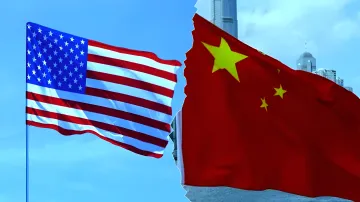
In August 2026, the geopolitical struggle for technological supremacy reached a critical juncture. The US State Department prepared a draft letter addressed to 35 partner countries containing an ultimatum: choose a side in the global artificial intelligence race. Washington warns that attempts to maintain neutrality and cooperate simultaneously with America and China could lead to exclusion from key US-led coalitions.
The Pax Silica Initiative and the Ultimatum to Allies
The central element of this pressure is the Pax Silica initiative, designed to protect global supply chains critical for AI development. This involves control over semiconductors, rare earth elements, energy consumption, and the algorithms themselves. According to the text of the document submitted to Reuters, the US views participation in this initiative not as a formality, but as a strict obligation. The letter contains a direct threat: "To be part of everything is to be part of nothing." Washington insists that the requirements of Pax Silica and competing Chinese structures are incompatible.
Beijing's Countermove and the Split in the Global Community
The US actions are a direct response to steps taken by Beijing in July 2026. Under the leadership of Xi Jinping, the "World Artificial Intelligence Cooperation Organization" (WAICO) was established to promote Chinese standards and technologies. This organization is positioned as an alternative to Western influence. As a result, the world has been divided into two camps: countries supporting Pax Silica (Japan, Australia, South Korea) and those leaning towards Shanghai Cooperation Organization initiatives and Chinese projects.
Contradictory Data
The situation is complicated by the fact that Kazakhstan is currently the only known country to have officially joined both initiatives — both Pax Silica and Chinese structures. This has caused serious concern in Washington, which sees this as a violation of exclusivity principles. However, according to Reuters data, the exact date of sending the ultimatum letters and their final wording have not yet been established. Experts note that the US may adjust the tone of the letter before publication to avoid a complete rupture of relations with ambivalent partners.
Technological Sovereignty and Cyber Threats
Alongside diplomatic pressure, the US is strengthening legislative control. Politico reports on a pending bill that would give authorities the right to forcibly disconnect dangerous AI models. This step is intended to prevent the use of technologies against national interests. At the same time, in July 2026, Taiwan recorded a series of large-scale cyberattacks on government institutions using AI. Although the source of the attack has not been officially named, experts link it to Chinese actions, confirming the need for a strict demarcation of technological spheres.