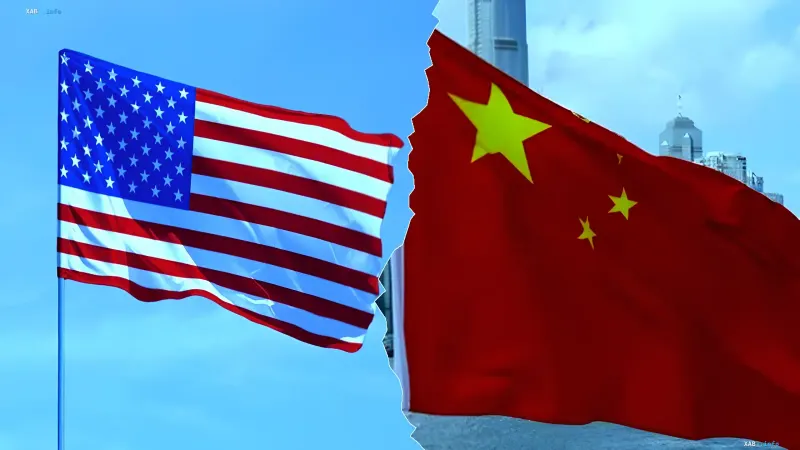
August 15, 2026. The US Department of State has launched an unprecedented diplomatic campaign by issuing an ultimatum to 35 countries worldwide. The document, which became public thanks to an investigation by Bloomberg, demands that states attempting to balance between East and West make a final choice. Washington is putting the question bluntly: either full accession to the technological coalition Pax Silica ("Silicon Peace"), or exclusion from Western supply chains if cooperation with the Chinese "Digital Silk Road" initiative continues.
Architecture of the "Silicon Peace" and Resource Control Strategy
The Pax Silica coalition, finalized by the Donald Trump administration by mid-2026, represents a functional analogue of NATO in the high-tech sector. The alliance already includes 22 states, including Japan, South Korea, the Netherlands, Taiwan, and Australia. The coalition's charter stipulates strict obligations: a complete ban on selling lithography equipment to China, an embargo on exporting AI chips, and, critically, the centralization of supplies of critical minerals (lithium, cobalt, nickel, and rare earth elements) exclusively within the alliance.
A new directive from the State Department, signed by Secretary of State Marco Rubio, aims to eliminate the "gray zone" in global trade. The letters to partners contain a direct threat: "To be part of everything is to be part of nothing." The US intends to exclude from the coalition any countries that maintain formal or factual ties with Beijing in the fields of AI and resource extraction. For countries that do not choose a side by the end of autumn 2026, a scenario of secondary sanctions and blocking access to advanced AI platforms is envisaged.
Kazakhstan: Geopolitical Victim or Strategic Hub?
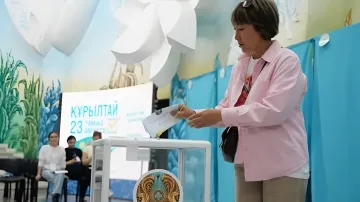
Kazakhstan has found itself at the epicenter of the diplomatic storm. Astana is the only state currently participating in the working groups of both opposing coalitions. This position makes Kazakhstan a key target of pressure from Washington. The strategic value of the republic for the US is determined by control over 40% of the global uranium market, as well as colossal reserves of titanium, magnesium, rhenium, and rare earth metals necessary for the production of defense electronics and next-generation chips.
Washington is sending Astana an unambiguous signal: an attempt to maintain a technological partnership with Beijing within the framework of the "Digital Silk Road" will be regarded as a threat to US national security. As a countermeasure, the possibility of blocking the export of Kazakh oil through the Caspian Sea and introducing strict restrictions on cross-border transactions is being considered. President Tokayev has effectively been given an ultimatum — sever agreements with China on AI or risk economic isolation from the West.
Military Context: The AI Arms Race
The urgency of American actions is dictated by Pentagon intelligence data. According to classified reports, by the summer of 2026, China was on the verge of a breakthrough in creating military AI models capable of managing swarms of autonomous drones and modeling nuclear scenarios. A critical factor for Beijing remains the shortage of raw materials for semiconductors.
The US strategy involves creating an artificial "resource hunger" for the PRC. By cutting off access to mineral resources from 35 countries on the list (including Brazil, Saudi Arabia, UAE, South Africa, and Indonesia), Washington aims to slow down the development of China's military AI potential for decades. This is not just an economic blockade, but an attempt to cement Western technological dominance in the age of artificial intelligence.
Contradictory Data
During fact-checking, discrepancies were identified in the assessments of the consequences for Kazakhstan. On the one hand, sources in the US State Department insist that "dual membership" in technological alliances makes Kazakhstan vulnerable to espionage and technology leaks, requiring an immediate choice of side. On the other hand, economic analysts from Astana and Beijing point out that severing ties with China will cause irreparable damage to the Kazakh economy, as the PRC remains the main partner in the fields of infrastructure and energy. Furthermore, official representatives of the Kazakh Ministry of Foreign Affairs have not yet commented on receiving the ultimatum, creating an information vacuum and uncertainty regarding Astana's next steps.