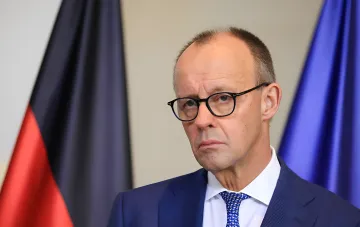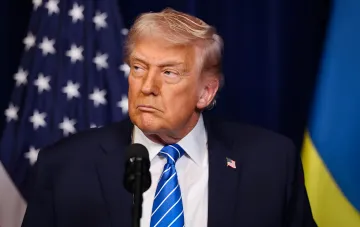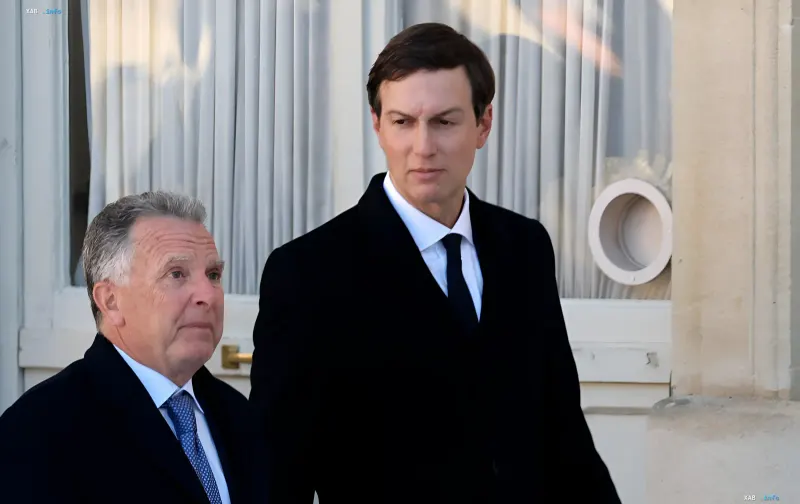
Washington, according to the Financial Times, has identified three European capitals — Berlin, Paris, and London — as the most likely participants in the negotiations to end Russia's war against Ukraine. The so-called E3 format, uniting Germany, France, and the United Kingdom, is viewed by the American side as the optimal mechanism for representing European interests at the settlement table. At the same time, the final decision on the participation of European states in the talks, diplomatic sources emphasize, has not yet been made and remains the subject of further consultations.
Alignment with Kyiv: Visit by Witkoff and Kushner
According to a European diplomat familiar with the discussions, US Presidential Special Envoys Steve Witkoff and Jared Kushner have already agreed on the E3 format with the Ukrainian authorities during their visit to Kyiv in September 2026. This means that Kyiv, according to available data, does not object to having the three largest European economies act as its partners on the negotiating track. Nevertheless, the mere fact of agreeing on the format is not equivalent to approving specific individuals who will represent each country — an issue that, in the assessment of diplomatic circles, remains open.
Alarm in 'Small Europe': Risk of Marginalization
The prospect that the interests of the entire continent will be expressed by only three states has caused noticeable concern in other European capitals. As FT interlocutors note, Germany, France, and the UK are certainly among Europe's most influential countries, but their representation on behalf of the entire continent risks alienating smaller states that fear being left out of key decisions. Arguments are being voiced in Brussels and other capitals that the E3 format could be perceived as a "big club" that fails to take into account the positions of Eastern and Central European countries, for whom the war poses a direct security threat.
Precondition: Europe's Seat at the Table
One of the diplomats cited by the publication emphasized a fundamental aspect: before discussing who exactly will represent Europe, it is first necessary to ensure the continent's participation in the negotiations itself. According to him, the question of whether Europe will have a secured seat at the negotiating table logically precedes the question of specific representatives. This means that the E3 format cannot be implemented until a consensus is reached between Washington, Moscow, and European capitals on the very composition of the settlement participants.
Moscow's Position and the European Condition
Russia, as previously reported, has expressed no desire to see the European Union among the participants in the negotiations on the Ukrainian settlement. Moscow consistently emphasizes that negotiations must be conducted directly between the US, Russia, and Ukraine. The European side, conversely, insists that any talks on ending the war are impossible without the participation of Ukraine and Europe, since the continent's security is an integral part of any sustainable settlement. Thus, the question of the format and composition of the negotiation process remains one of the key political knots, without resolving which the transition to substantive discussions on the conditions for halting hostilities is difficult.
Context: From Five Candidates to Three Countries
Previously, according to European sources, EU leaders considered five politicians who could potentially represent Europe in negotiations with Vladimir Putin regarding the war in Ukraine. The transition from discussing specific individuals to defining participating countries in the E3 format indicates that the process of building a European negotiating position is at the institutionalization stage: first, the representation structure is determined, and then the individuals who embody it. The E3 format, therefore, could become a working framework for European participation, although its final approval and staffing with specific names lie ahead.