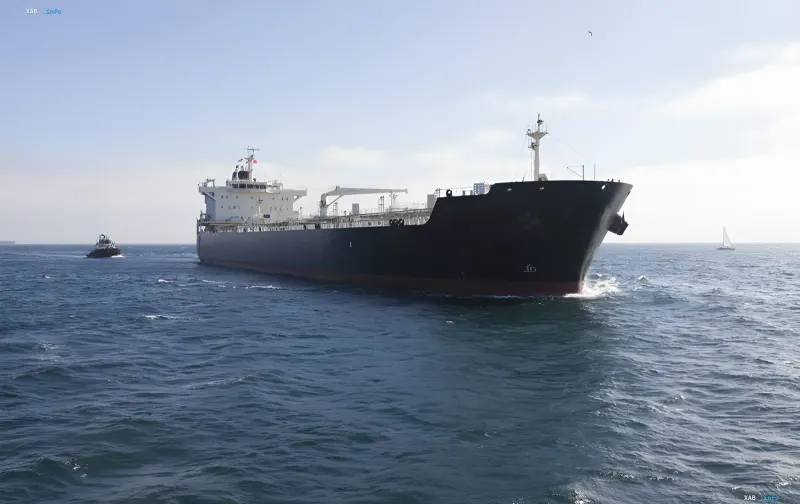
Six months after the start of the armed conflict between the United States and Iran, Tehran has found itself under unprecedented economic pressure from Washington. According to Iranian and regional sources cited by Reuters, a country that had survived for years under a sanctions regime is now facing one of the most severe periods of external pressure in the entire history of the Islamic Republic. The naval blockade imposed by the US Navy, combined with the successive tightening of sanctions packages, has significantly restricted Iranian oil exports, complicated access to foreign currency, and exposed the growing strain within the domestic economy. Against this backdrop, Washington and several regional capitals are betting that it is precisely economic, rather than military, pressure that can force Tehran to agree to the resumption of free navigation through the Strait of Hormuz — the artery through which roughly a fifth of the world's oil flow passes.
Washington's Bet: Iran Is Suffering More Than It Inflicts
The logic of the American strategy, according to regional sources, comes down to a simple arithmetic calculation: Iran's economic losses from the blockade and sanctions are growing faster than the costs Tehran can impose on Washington and its allies. It is still unclear whether this pressure will lead to concrete concessions on the Iranian side, but the fact remains — Iran has failed to create for the United States the level of costs that Tehran had hoped for in order to undermine the resolve of the American leadership to continue the operation. At the same time, Tehran has not yet shown any signs of abandoning its key demands: easing of the sanctions regime, access to frozen overseas assets, and official recognition of its role in ensuring the security of shipping in the Strait of Hormuz.
A New Formula and the Fear of an Internal Explosion
According to sources, a new formula for resolving the standoff is currently being discussed among the mediators in the negotiations, although its parameters are not disclosed. Internally, the Iranian leadership, according to officials, is concerned that the worsening economic situation — characterized by a sharp rise in consumer prices, a weakening of trade flows, and direct pressure on household incomes — could once again ignite nationwide unrest, which in recent years has repeatedly challenged the stability of the Islamic Republic. Particular concern is caused by the shortage of basic imported goods, including fuel and wheat, without which the country's economy cannot function in normal mode.
Contradictory Data
It is appropriate here to note a discrepancy in assessments that can be traced in the available sources. On the one hand, Reuters and a number of regional analysts state that the US economic pressure tactic is working: Iran's influence in the Strait of Hormuz is weakening, and its ability to pressure the global oil market through the threat of a blockade is narrowing. On the other hand, the Iranian side continues to publicly threaten to declare a so-called "no-fly zone" (restricted zone) in the strait's waters, and in recent weeks mutual military strikes have been recorded, indicating that the blockade is "leaking" and that the conflict does not reduce to the economic track alone. Thus, economic pressure has not canceled the military confrontation but has merely added an additional vector of impact to it, and the final balance of power between Tehran and Washington remains uncertain.
What Comes Next: Scenarios for Autumn 2026
At present, experts identify two main scenarios. The first assumes that the accumulated economic pressure, combined with internal social tension, will force Tehran to sit at the negotiating table on terms acceptable to Washington, including a de facto capitulation on the issue of control over the Strait of Hormuz. The second scenario — the Iranian leadership, relying on pro-Iranian groups in the region and the threat of escalation, will choose a "endure and wait" line, counting on the fatigue of the American coalition and a change in the domestic political climate in the US. In both cases, the key indicator will be whether Tehran can maintain internal social stability amid the ongoing shortage of basic goods and rising prices over the next two to three months.