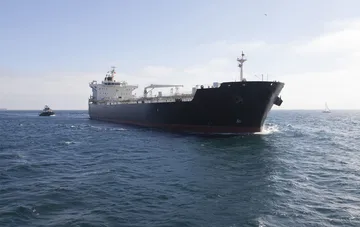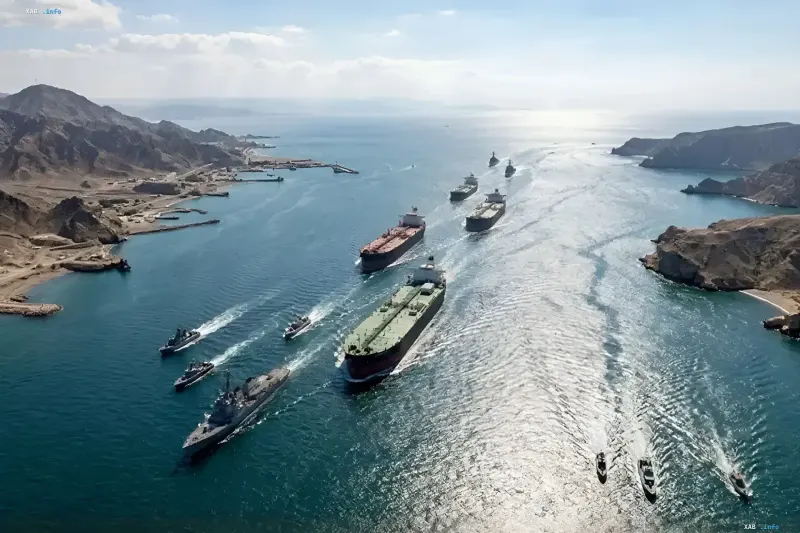
The situation around the Strait of Hormuz — the main artery of global oil trade — has reached, according to observers, a critical point. According to the Iranian news agency Tasnim, cited by a number of outlets, official Tehran has conveyed to the US administration, through intermediaries, an ultimatum consisting of seven stringent conditions, the fulfillment of which, as stated by the Iranian side, is a prerequisite for opening the strait. It is emphasized that until these requirements, reportedly approved by the highest authorities of the Islamic Republic of Iran, are unconditionally met, the Strait of Hormuz will remain fully closed to shipping. Against this backdrop, the Islamic Revolutionary Guard Corps (IRGC) has announced harsh punitive measures against any tankers or merchant vessels that attempt to violate the established restrictions.
Seven-Condition Ultimatum: What Tehran Is Demanding
According to information published citing a source at the Tasnim agency, Tehran's position is uncompromising. The ultimatum was conveyed to Washington through intermediaries and includes seven special conditions; the Iranian side states that they have been approved at the highest level of the country's leadership. Fundamentally important, according to the source, is the fact that any diplomatic agreement between Iran and Oman does not mean the automatic opening of the strait. Moreover, even in the event of a future opening of the Strait of Hormuz, this will be done, as Tehran phrases it, exclusively as a measure to strengthen Iran's sovereignty over the waterway, and the decision entirely depends on the actions of the White House. At the same time, the exact text of the seven points is not detailed in the sources available at the time of publication — only their number is known, and that they were conveyed through intermediaries.
Military Control and No-Go Zone: The IRGC's Position
The situation east of the Strait of Hormuz, according to a statement by the official IRGC spokesperson Hussein Mohibi, has been placed under military control. Iran has declared the areas east of the strait a no-go zone for shipping. Any merchant or cargo vessel that attempts to pass through this area, ignoring the ban, will, according to the spokesperson, be subjected to "severe punishment." In addition to direct measures, violating vessels are promised a complete cessation of maritime, insurance, and logistical support services, which, according to experts, could paralyze a significant portion of international maritime transport.
Blow to Global Energy: What Is at Stake
The strategic significance of the Strait of Hormuz is hard to overstate: through this narrow waterway from the Persian Gulf, about 20 percent of all crude oil transported by sea on the planet is shipped. A complete and prolonged closure of the strait threatens a sharp spike in oil and gas prices, a wave of inflation, and a serious energy crisis in the industries of Europe and Asia. An additional risk is the likelihood of the use of force by the US and its allies to ensure freedom of navigation, which could become a trigger for a major military conflict in the Persian Gulf region.
Contradictory Data
There are notable inconsistencies in the statements of the parties and in the chronology of events, which are important to take into account. First, in mid-August 2026, according to reports by a number of outlets, Donald Trump stated his intention to declare the Strait of Hormuz US territory, to which Iran responded by emphasizing that the strait "will remain Iranian." Thus, the parties directly contradict each other on the question of jurisdiction over the waters. Second, the seven-condition ultimatum itself was conveyed through intermediaries and relies on statements by the Iranian state agency Tasnim; independent confirmation of the specific content of each of the seven points in open sources is absent at the time of publication. Third, the Iranian side states that the agreement with Oman does not open the strait, whereas diplomatic signals between Tehran and Muscat may be interpreted by markets as a sign of possible de-escalation. These discrepancies in versions make the picture ambiguous.
Probable Scenarios and Washington's Response
The Middle East crisis has put the White House before a difficult choice: either the path of negotiations and compromises, or the risk of dragging the region into a new large-scale conflict. Diplomatic responses in the coming days, according to analysts, will determine whether the first scenario will be chosen. For the global economy, the key question remains the duration of a possible blockade: even the threat of closing the strait is capable of sustaining elevated volatility in oil markets and raising insurance rates on the tanker fleet. The outcome of the confrontation largely depends on whether Washington will agree to the put-forward demands or prefer to ensure navigation by force.