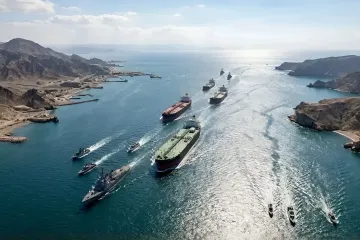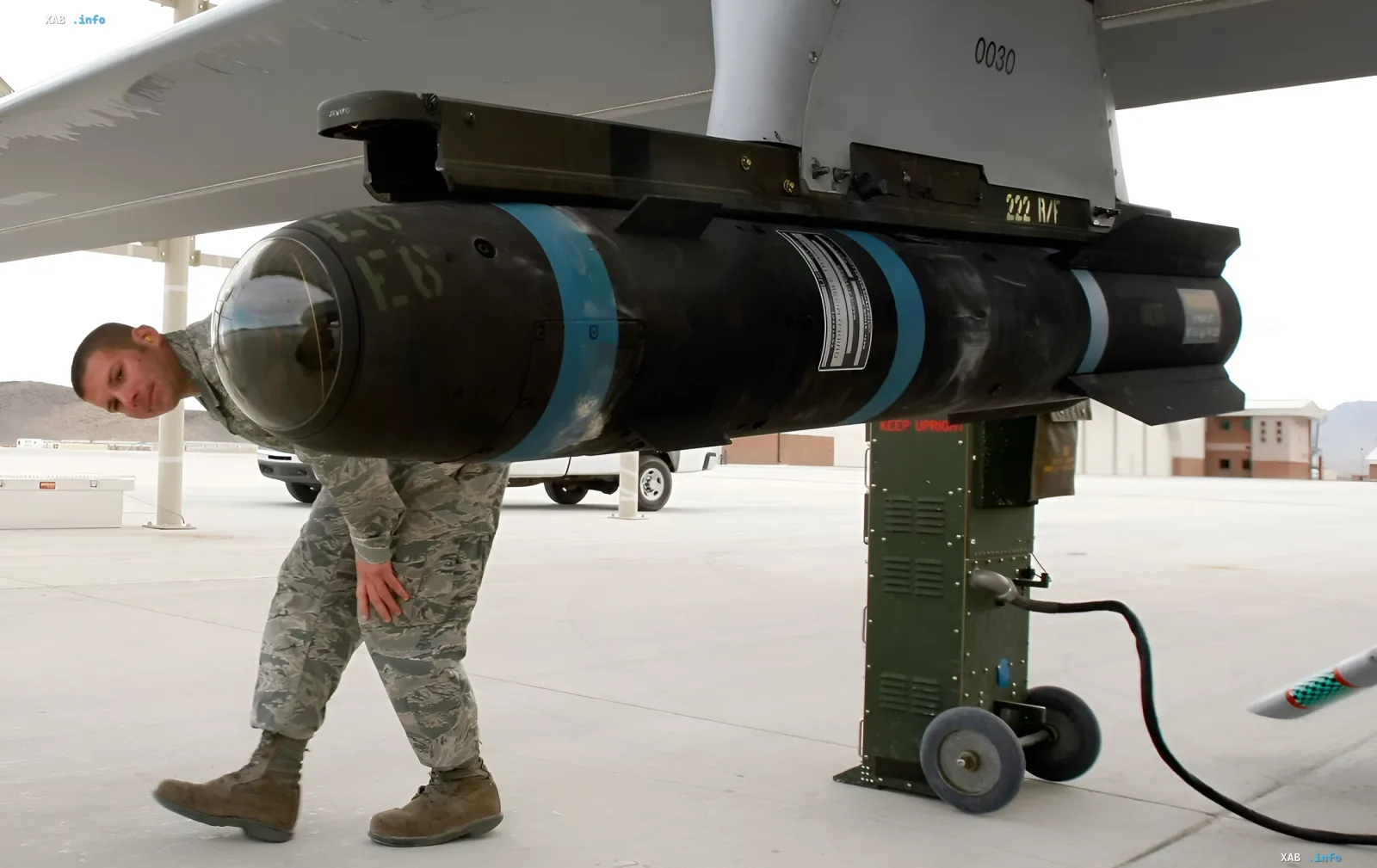
On Tuesday, September 1, the U.S. Armed Forces began striking targets belonging to the Islamic Revolutionary Guard Corps (IRGC) on Iranian territory. This was announced in an official statement by the U.S. Central Command (CENTCOM). According to the command, hostilities began at 12:00 Eastern Time (19:00 Kyiv time). The strikes, as emphasized by the Pentagon, were a response to recent attempts by the Iranian IRGC to attack commercial shipping in the Strait of Hormuz, as well as threats against U.S. military personnel stationed in the region.
Trump's Statement: 'Large-Scale and Powerful' Strikes
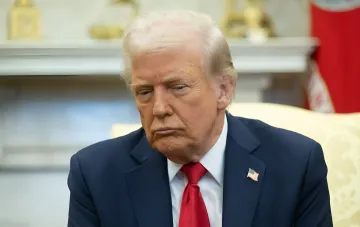
U.S. President Donald Trump personally commented on the operation in a public address. In his words, the strikes on Iranian targets near the Strait of Hormuz are 'large-scale and powerful.' Trump pointed to two direct causes of the escalation: what he assessed as a failed attempt by Tehran to lay naval mines in the strait, and the launch of eight missiles at a U.S. military base in Jordan. The president stated that all eight missiles were successfully intercepted, and that the strait, according to him, 'is currently free of mines' — they, as he emphasized, were 'completely removed or destroyed.'
Threat of a 'Far More Severe' Response
At the end of his statement, Trump addressed a direct warning to Tehran: if the 'failed state of Iran' retaliates against the current attack, it will be struck 'at a far more severe and higher level.' Earlier, as reported by Russian media, the head of the White House had allowed for a scenario of the 'complete destruction' of Iran in the event of continued retaliatory strikes by the IRGC. Against the backdrop of these threats, the Iranian side, according to several publications, has already begun launching retaliatory strikes, indicating a further escalation of the conflict.
Context: Mine Threat and Qatari Negotiations
The escalation is taking place against the backdrop of a multi-day crisis around the Strait of Hormuz — a key artery of global oil trade. The day before, CENTCOM reported that U.S. military forces had 'taken limited and precise measures' against IRGC units that, according to intelligence, were laying naval mines and posing a threat to shipping. In parallel, Qatar is conducting mediating negotiations with Iran on the issue of unblocking the strait. Tehran, according to available information, has agreed to prepare a list of conditions for restoring normal navigation, although specific timelines and the terms of the agreement have not yet been disclosed.
Contradictory Data
There is a significant discrepancy between statements by the U.S. side and assessments by independent sources. Donald Trump claims that the Strait of Hormuz has been fully demined and that there are 'no mines' in the waters. However, according to Bloomberg, the strait is likely still mined, despite the White House's public statements. Thus, the question of the actual state of the waters remains open: one side declares the threat fully eliminated, while the other records its persistence. This discrepancy is critical for assessing risks to international shipping and for understanding the real reasons behind the ongoing strikes.
Market Reaction: Oil Above $90
The new flare-up between the U.S. and Iran was immediately reflected in global energy markets. Immediately after reports of the strikes, Brent crude prices jumped by more than 2%, surpassing the $90-per-barrel mark. Analysts link the rise to the risk of the Strait of Hormuz being blocked or its throughput capacity being restricted, with about one-fifth of the world's oil passing through it. The further price trend will depend on whether diplomatic channels, including through Qatari mediation, can de-escalate the situation or whether the conflict will enter a phase of protracted confrontation.