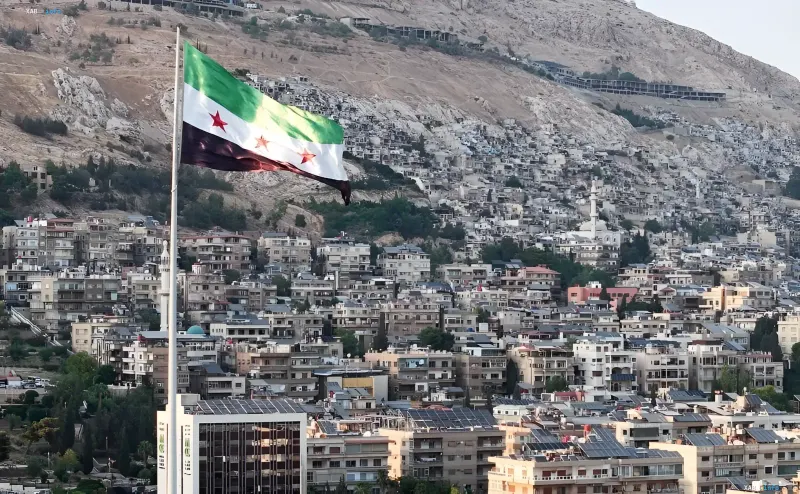
On August 24, 2026, the U.S. Department of the Treasury announced two key steps toward unblocking relations with Damascus: the State Department removed Syria from the list of state sponsors of terrorism, and the Office of Foreign Assets Control (OFAC) removed the Hayat Tahrir al-Sham (HTS) group from the Specially Designated Nationals (SDN) list. According to the department, these measures fulfill President Donald Trump's promise to ease sanctions pressure on Syria. Formally, HTS has been removed from the SDN — the list of individuals, companies, and organizations whose assets are frozen and with which the U.S. government prohibits transactions — as a global terrorist organization.
What changes in the sanctions mechanism
Removing the state sponsor of terrorism designation has direct legal consequences: previously, the Treasury Department could take action against organizations, individuals, and countries that engaged in commercial transactions with states included on that list. Following Syria's removal from the list, this instrument no longer applies to Damascus. The list of state sponsors of terrorism currently includes three countries: Iran, North Korea, and Cuba. Thus, Syria is leaving the closed club of the most tightly isolated regimes, paving the way for the normalization of financial and trade contacts with American counterparts.
Dual logic: delisting HTS and new sanctions
Paradoxically, at the same time as liberalizing its stance toward Damascus, Washington intensified targeted pressure: the United States imposed sanctions on two former HTS members who, according to U.S. authorities, continued to support the terrorist group Al-Qaeda. This step underscores that the demilitarization of the organization as a whole does not mean the automatic rehabilitation of all its former personnel: those responsible for ties with Al-Qaeda remain in the crosshairs. For Damascus, this is a signal that integration into the international system will be accompanied by demands to sever any residual links with radical structures.
The oil context of the deal
The easing of sanctions on Syria fits into a broader diplomatic trade. According to reports by Reuters and a number of Ukrainian and Russian media outlets, Damascus undertook to reduce or abandon imports of Russian oil in exchange for the lifting of U.S. sanctions. According to sources, it was precisely this oil element that became one of the conditions allowing Washington to move toward removing the state sponsor of terrorism designation. Thus, the economic restructuring of Syria's energy flows has been tied to the political-sanctions track of relations with the United States.
Contradictory data
There is inconsistency in the wording regarding the parties' oil commitment. The Ukrainian outlet ukranews.com, citing Reuters, reports that Syria "committed" to abandoning oil imports from Russia in exchange for the lifting of sanctions. Meanwhile, korrespondent.net uses softer wording — Syria is "ready" to abandon Russian oil — while gazeta.ru writes that Damascus is "ready to reduce" imports. In other words, some sources speak of a binding commitment, others of readiness or of a reduction rather than a full abandonment. Moreover, the primary source (giaoducthoidai.vn) records the fact of the designation's removal and HTS's delisting from the SDN, but does not disclose the details of the oil deal, so the exact scope and timeline of the oil-related obligations remain a matter of varying interpretations.
Significance for the region
Altogether, the August 24 announcement represents one of the most significant steps in the shift of U.S. policy toward Syria in recent years: the simultaneous removal of the state sponsor of terrorism designation, HTS's delisting from the SDN, and the maintenance of targeted sanctions against specific individuals form a hybrid model — "unblocking the state while controlling radical remnants." For the region, this potentially opens space for Damascus's economic reintegration, but the linkage to abandoning Russian oil makes the outcome of the deal dependent on geopolitical configurations and the parties' willingness to fulfill their commitments within the stated timeframes.