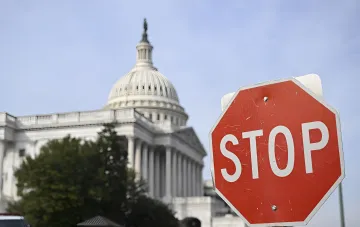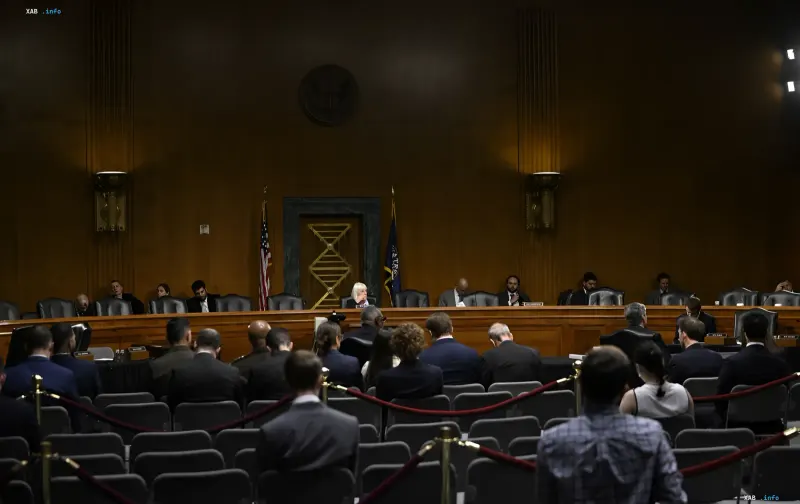
In Washington, a tense political struggle is unfolding over the adoption of a new sanctions package against Russia. A bipartisan group of US senators has issued a stern demand: Congress must vote on the bill as soon as possible, a project that the late Senator Lindsey Graham worked on for over two years. The initiative, which has become Graham's legacy, now requires immediate approval to prevent new casualties among the civilian population of Ukraine.
Coordination with the White House and Rejection of Amendments
According to information received during a press conference of the legislators, the document has already passed the stage of coordination with the White House administration and enjoys broad bipartisan support. Senators insist that the bill requires no changes. This decision is dictated by the complexity of the technical mechanisms embedded in the text of the document as a result of nearly two years of negotiations. The authors are convinced that opening the bill to new amendments could undermine its effectiveness.
The senators' position was supported by House Speaker Mike Johnson. He noted that an overwhelming majority of Republicans have long advocated for the imposition of sanctions against Russia. "The Senate and the White House have developed a formula that they believe will work, and we are happy to work on it," Johnson stated.
Response to Donald Trump's Proposals
The demand for an immediate vote is a direct response to recent statements by Donald Trump, who proposed expanding the bill to include sanctions against Iran and the Hezbollah group. Co-author of the document, Democrat Richard Blumenthal, reacted sharply to these proposals. He emphasized that the President has already approved the current version of the bill, and Congress must proceed with it.
"If the administration wants to offer separate legislative initiatives on Iran or Hezbollah, Congress can consider them separately," Blumenthal stated, insisting that mixing agendas is inadvisable. According to him, delaying the adoption of the document will mean new casualties as a result of Russian attacks.
Deadlines and Voting Mechanism
Senators hope to conduct the vote before the August recess of Congress. Republican Majority Leader John Thune is ready to put the document to a vote immediately after confirming the availability of the necessary number of votes. In the opinion of the authors, this support is already secured.
Key Changes in the New Version
The bill provides for the imposition of strict sanctions against Russia, its companies, oligarchs, and intermediaries, as well as secondary sanctions and tariffs for the largest buyers of Russian energy carriers. However, compared to the first version, the scope of the document has been significantly adjusted:
- Instead of potential tariffs for more than 60 countries, the document now focuses only on five major oil importers and five natural gas importers.
- Sanctions exemption mechanisms have become narrower and more selective.
- The powers of the US Trade Representative to determine specific tariff rates have been expanded.
Special attention in the new version is paid to combating Russia's so-called "shadow fleet" — a network of tankers used by Moscow to bypass international restrictions. According to Blumenthal, the bill for the first time contains effective tools to limit the activities of this fleet, which should significantly complicate Russia's ability to generate revenue from oil exports.