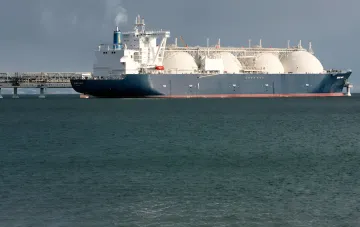
An unexpected dispute has erupted in Brussels, temporarily halting the European Union's sanctions machinery. Ambassadors of the bloc's member states failed to agree on the 21st package of restrictions against Russia. The main stumbling block in this process was the position of Greece, whose economic interests were threatened by the proposed measures regarding liquefied natural gas (LNG).
Economic Calculation vs. Political Will
The key point of contention was the clause prohibiting the transshipment of Russian LNG to third countries. Athens took a firm stance: such measures would strike not only the Russian economy but also European companies that dominate this niche.
Greece is one of the leaders in the European market for LNG maritime transport, competing on a global level with giants such as Japan, China, and the US. The Greek government fears that if European tankers are forced to abandon the transshipment of Russian gas, the freed-up market share will immediately be taken by carriers from non-EU countries.
Fear of Losing Competitiveness
As sources from Reuters note, the logic of Athens is simple: sanctions must hit the target precisely—Moscow—but must not weaken their own economy. A representative of the Greek side emphasized that new restrictions must be scrutinized down to the smallest detail to avoid handing over entire sectors of economic activity to foreign players as an unforeseen side effect.
"Europe must not end up giving up market share to players outside the EU," they summarized in Athens. In their view, any new restrictions must increase pressure on Russia while maintaining the competitiveness of European business.
Meeting Outcomes and New Deadlines
On Wednesday, EU diplomats failed to reach a consensus. In addition to Greece, Austria also raised objections to certain points of the package. Earlier, Lithuanian Foreign Minister Kęstutis Budrys admitted that there is currently no unity regarding additional restrictions on Russian gas.
As a result, the discussion of the new package has been postponed to July 23. Until that date, the price cap on Russian oil will remain at the current level—$44.10 per barrel.
Context: What Has Already Been Done
Recall that on July 17, the European Union already approved a new large-scale sanctions package. At that time, restrictions were expanded for enterprises involved in the development and production of Russian military equipment. Structures linked to the production of navigation modules for Shahed drones and Iskander-M missiles were hit. However, as the situation with the 21st package shows, the unity of partner countries in matters of economic warfare with Russia is becoming increasingly fragile.