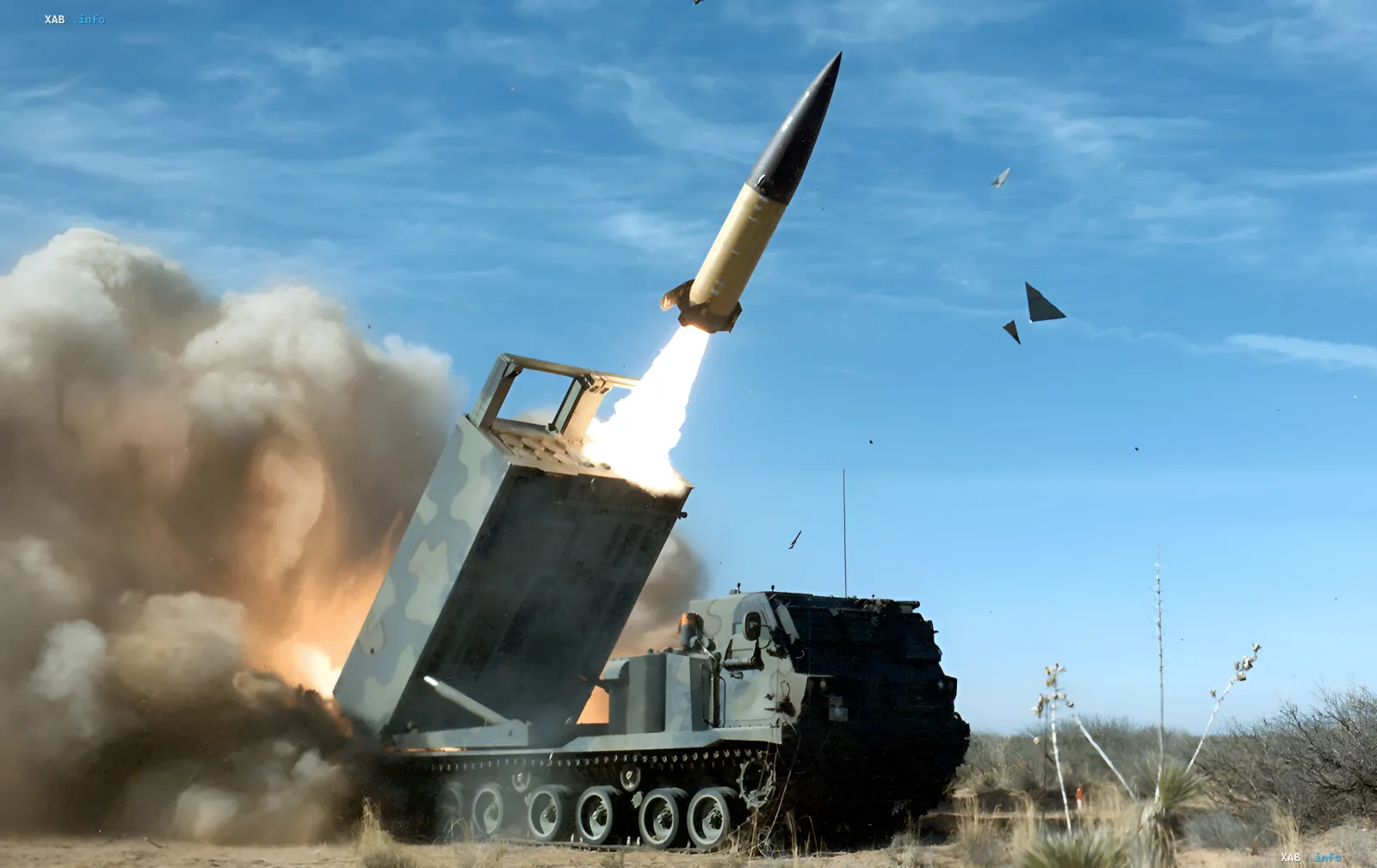
On August 8, 2026, the US State Department officially released documents confirming a large-scale military aid package for Ukraine. The transfer includes 12 Multiple Launch Rocket System (MLRS) M270 launchers and 70 ATACMS ballistic missiles. The total value of this aid package exceeds $280 million, making it one of the largest in recent months.
Supply Details: From Cluster Munitions to Ballistics
According to the published data, the main aid package includes 12 M270 launchers. These vehicles are a key element of the Ukrainian Armed Forces' artillery power, allowing them to strike enemy rear areas with high speed and fire density. Along with the launchers, a significant volume of ammunition is being transferred: 2,524 dual-purpose unguided rockets (DPICM) and 47,000 203mm M509AI DPICM howitzer shells. The cost of this part of the aid alone is estimated at $255.9 million.
Separately, the documents mention the supply of 70 M39 ATACMS missiles. This is an American surface-to-surface ballistic missile manufactured by Lockheed Martin. The M39 modification (Block I) mentioned in the documents has a range of up to 165 km and is equipped with a cluster warhead containing nearly a thousand submunitions. The cost of this batch of missiles is approximately $28 million.
Logistics via Private Contractors
Special attention in the documents is paid to the mechanism of arms transfer. Unlike direct supplies, which often pass through state channels, in this case, the transfer is planned to be carried out through a number of private companies. The list of intermediaries includes Turkish firms MKE, ASFAT, and ARCA Savunma, the Bulgarian company VTIC International, as well as American companies Pansophico and Patriot Defense Group. This approach allows Washington to accelerate the logistics process and reduce bureaucratic barriers, although it requires careful control by inspectors.
Official State Department Position and Strategic Context
Representatives of the US State Department stated that this transfer fully complies with security assistance goals. The official statement emphasizes that the US government is prepared to sanction the operation, taking into account a complex of political, military, economic, and human rights factors, as well as arms control issues. The supply of ATACMS missiles, capable of striking targets at significant distances, is viewed as a necessary step to ensure Ukraine's defensive capabilities in the context of the ongoing conflict.
Contradictory Data
While the US State Department has officially confirmed the transfer of 70 M39 ATACMS missiles, open sources, including statements by the Ministry of Foreign Affairs of Ukraine (citing Polish media), speak of the need for "regular" supplies of these missiles. This creates a certain discrepancy: the document confirms a specific one-time package, while the Ukrainian side may interpret this as the beginning of a long-term program of regular supplies. Furthermore, some analysts note that the exact number of cluster munitions (DPICM) may vary depending on the conditions of the contract with private contractors, which introduces an element of uncertainty into the total figure of 2,524 rockets.