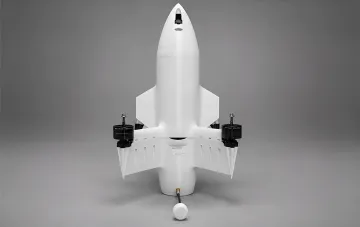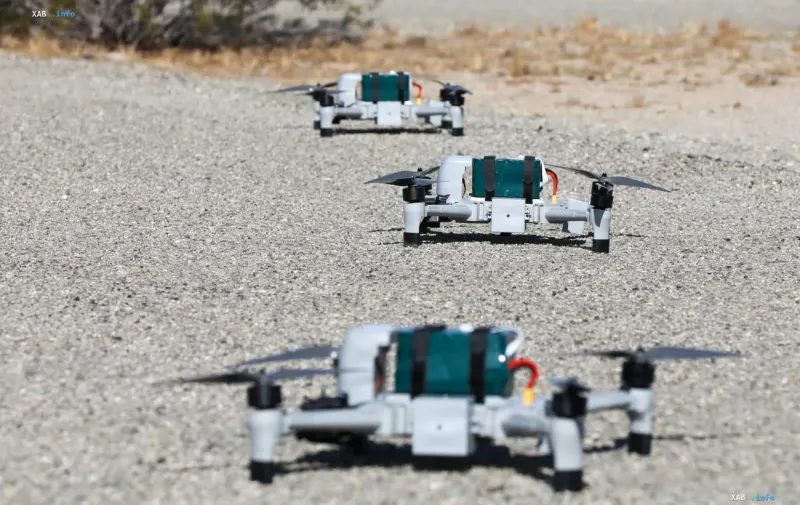
The United States Northern Command (USNORTHCOM) conducted tests of Bumblebee interceptor drones, developed by the American company Perennial Autonomy, at the Yuma training range in Arizona. The testing took place as part of the Falcon Peak 26.2 exercises, which will run until 25 September 2026. This was reported by RBC-Ukraine, citing the official USNORTHCOM Facebook page and the publication Defence Blog. Unlike previous exercise cycles, this year the main focus is on countering drones at the US southern border: teams are practising detection systems, target tracking, and methods for non-destructive drone neutralisation, used for illegal surveillance and smuggling.
From the Southern Border to the Exercises: How Experience Becomes Doctrine
According to the command, the groundwork for the Falcon Peak 26.2 exercises is drawn directly from the experience of the Joint Task Force-Southern Border. USNORTHCOM emphasises that integrating lessons learned from real operations on the border with Mexico allows teams to precisely determine which tools are needed to detect and intercept unmanned aerial vehicles. Thus, the exercises in Arizona serve not merely as a training ground, but as a mechanism for translating field-level solutions into standardised procedures for a wide range of units.
Bumblebee: A Ramming Drone with Artificial Intelligence
Bumblebee is a semi-autonomous quadcopter designed to destroy small drones by direct ramming. In addition to its interception function, the platform performs reconnaissance and target-tracking tasks. According to the New York Times, the system achieves more than 70% direct hits thanks to onboard artificial intelligence responsible for terminal guidance. A key advantage of Bumblebee is that the drone holds the target even if the operator of the enemy aircraft loses control over it. Ukrainian military forces have used various variants of Bumblebee against Russian FPV drones and reconnaissance UAVs, confirming the platform's combat effectiveness in real conditions.
Eric Schmidt and Perennial Autonomy's Contractual Expansion
Perennial Autonomy was founded by former Google CEO Eric Schmidt; the project was originally developed under the names Project White Stork and Project Eagle. In January 2026, the Joint Interagency Task Force 401 (JTF 401) signed a $5.2 million contract with Perennial Autonomy for the supply of the Bumblebee V2 system. In May of the same year, a three-year agreement with a ceiling of $500 million was signed, covering three platforms at once: Merops, Bumblebee, and Horm. Merops interceptors have already been used by units of the US Central Command (CENTCOM) against Iranian "Shaheds," and the armed naval infantry — the Second Marine Division — completed training on all three systems at a range in California in August 2026.
The Ukrainian Context: From Delta to Alexa Spatium
Earlier, RBC-Ukraine reported that former US Army Minister Dan Driscoll, together with Perennial Autonomy head Eric Schmidt, named the Ukrainian Delta system — which combines data from radars, sensors, and directly from military personnel into a coherent picture of the battlefield — one of the keys to victory over Russia. In parallel, the Ukrainian Armed Forces received their first jet-powered interceptor drone, the Alexa Spatium, designed to counter jet-powered "Shaheds." These events form a broader context: the technologies being tested at the Arizona range are part of a unified ecosystem of air-defence systems for small targets, in which Ukrainian combat experience serves as the key validation ground.
Contradictory Data
USNORTHCOM has not disclosed which specific technologies tested during Falcon Peak 26.2, including Bumblebee, will transition to operational use on the southern border, nor on what timeline. Official statements are limited to confirming the fact of testing and a general formulation about "transferring lessons" from JTF-Southern Border. Meanwhile, Defence Blog and the NYT point to specific performance metrics (more than 70% hits), which, however, have not been confirmed by an independent audit. Thus, a gap remains between the system's declared readiness for combat use and the actual decision on deployment, a gap the command has not yet commented on.