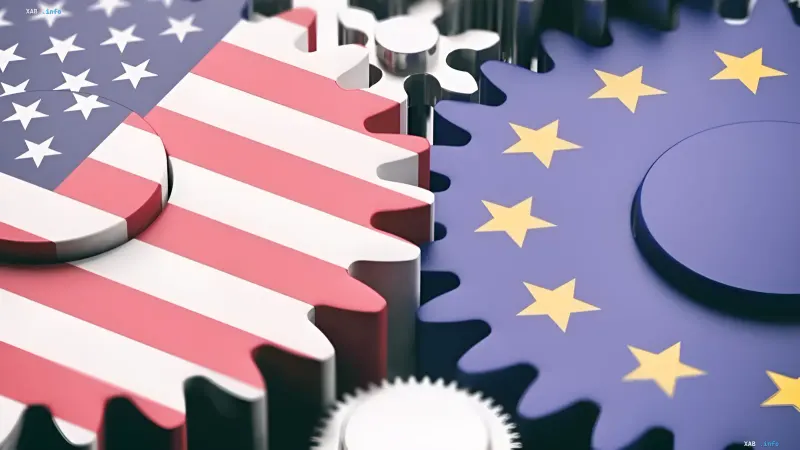
The United States seeks to expand its sphere of influence, ease international restrictions, and insists on creating alliances that yield more direct benefits. This approach could undermine the very institutions and partnerships that allow Washington to exert influence far beyond its existing economic and military might. This assessment was provided by Apostolos Tomadakis, a leading expert at the Centre for European Policy Studies (CEPS), in his analytical article published in mid-October 2026.
The New Strategic Reality and Washington's Shift
The shift in US policy should not be viewed solely as a temporary domestic political pivot or a return to traditional isolationism. Washington remains willing to deploy its massive economic, political, and military power, but is becoming increasingly selective in how and when to apply it. The US National Security Strategy consistently rejects the idea that the country must bear global responsibilities disconnected from its national interests, calling on allies to share the burden of responsibility.
Transactionalism Versus Fair Burden-Sharing
In practice, this shift is reflected in Washington's use of security commitments and tariff policies as leverage in bilateral relations. Experts emphasize the distinction between burden-sharing within alliances and outright transactionalism, where obligations are rigidly tied to immediate benefits. Viewing traditional alliances as burdensome assets carries long-term risks of strategic influence loss for the United States itself.
The European Response to Security Challenges
In response to shifting US policies, Europe is gradually taking greater responsibility for its own security, strengthening defense capabilities and creating mechanisms to control strategic dependence. Although this process is uneven, European nations are learning to stand on their own feet by diversifying partnerships and reducing vulnerabilities to Washington's foreign policy fluctuations.
Controversial Data
Discussions persist within the expert community regarding the scale and irreversibility of the current US strategic pivot. Some analysts believe the transatlantic rift is structural and long-term, while others view current developments as merely a tactical recalibration in the face of global competition with China, during which NATO will retain its fundamental importance for collective security.