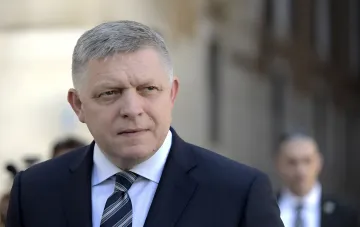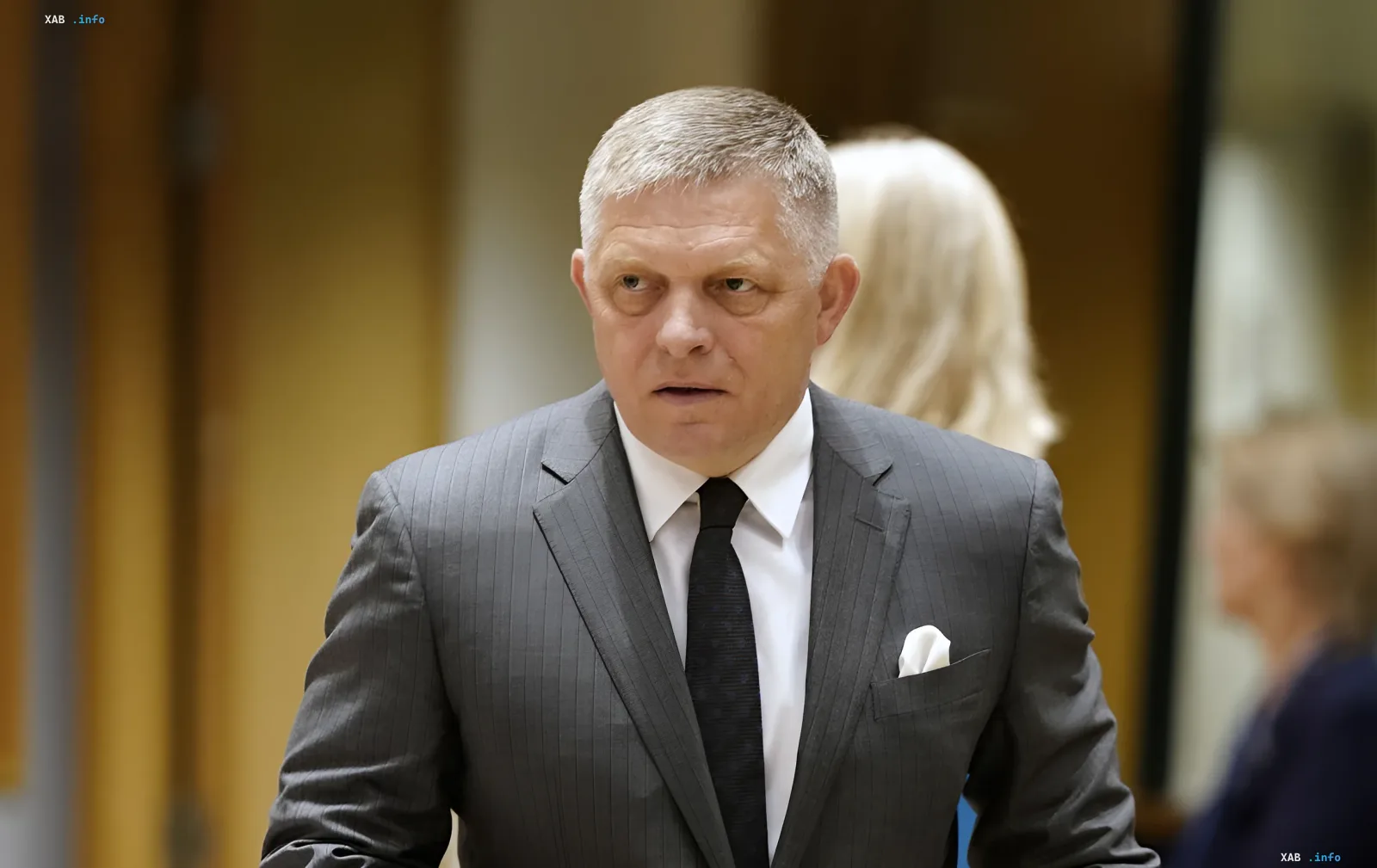
Slovakia's Prime Minister Robert Fico, in a speech published on his official Facebook account, stated that the country's NATO membership is important to him, but he categorically does not want Slovakia to be drawn into a military conflict "because of some Article 5" of the Alliance. In his own words, he "will do everything" to ensure that his country never becomes a participant in hostilities, even if that would mean formally fulfilling collective defense obligations. RBC-Ukraine reports this, citing the text of the prime minister's speech.
"Loud Belligerent Rhetoric" and the Fear of a Pan-European Conflict
Fico emphasized that he is concerned by the level of "loud belligerent rhetoric" that, in his assessment, is being heard in Europe. The prime minister stated that the situation regarding the possibility of a pan-European military conflict "has never been as serious and tense as it is now." It is precisely this backdrop, he said, that defines his position: formal respect for the alliance and its mechanisms is combined with the intention to use all available political tools to keep Slovakia out of any possible armed confrontation. "Yes, we are members of NATO, we respect that, we care about cooperation and fulfilling our obligations, but as prime minister I will do everything to ensure that Slovakia is never dragged into a military conflict," he emphasized.
Visit to Ukraine and Meeting with Zelensky and Koretsky
In the same speech, Fico reported that on September 18 he arrived in Ukraine on a visit, where he met with President Volodymyr Zelensky and the new Prime Minister Serhiy Koretsky. According to him, a number of other European prime ministers also came to Kyiv. In this context, the head of the Slovak government again referred to his "fear of war" and stated that this is precisely why he wants "to talk about it seriously." Thus, his diplomatic gesture — a personal visit amid a tense regional situation — is accompanied by a public signal of Bratislava's unwillingness to allow military escalation.
Broader Context: NATO Modernization, Drones over Europe, and Exercises in Belarus
Fico's statements came against the backdrop of several events that intensify the sense of an approaching crisis. Recently, defense officials, according to Reuters, reported that NATO needs to modernize part of its weapons and combat tactics, as they have become outdated; the experience of Ukraine is cited as an example of rapid adaptation. Lithuanian President Gitanas Nauseda, for his part, expressed the view that Russia may be deliberately launching drones over European territory to keep the continent's countries in a state of constant tension, and that Moscow is consciously allowing such incidents. Meanwhile, four-day military exercises began in Belarus near the borders with Poland and Lithuania, at several training grounds, including one not far from the Suwałki Corridor — a key logistical hub linking the Baltic states with the main territory of NATO.
Contradictory Data
Fico's public rhetoric contains a notable internal contradiction. On the one hand, he explicitly states that Slovakia "respects" its NATO membership and "cares about cooperation and fulfilling its obligations" — formulations that imply a readiness to act within the framework of Article 5 of the Alliance's Charter. On the other hand, in the same breath he promises to "do everything" so that the country is not dragged into a conflict "because of some Article 5," which in effect means an intention not to fulfill collective defense obligations in the event of their activation. Observers disagree on the interpretation: some political scientists view this as a classic tactic of "deterrence through uncertainty," in which formal membership is preserved but the actual military binding is blurred. Others point out that such statements create a risk of destabilizing trust within the Alliance and could be used by an adversary as a signal of a willingness of individual members to shirk collective defense. Added complexity comes from the fact that in other recent speeches (citing the final document of the NATO summit) Fico focused on the fact that the alliance will not oblige countries to finance Kyiv, which shifts the emphasis from the military Article 5 to the financial plane and blurs the clear boundary between his position on defense and on budgetary obligations.
What This Means for Bratislava and the Alliance
Regardless of interpretation, the prime minister's words form a new informational backdrop for Slovakia's relations with NATO and with Ukraine. The September 18 visit to Kyiv, coinciding with a public "warning" about the unwillingness to participate in a war, creates an ambivalent message: diplomatic closeness to Kyiv is maintained, but the military binding to the Alliance is called into question. In a situation where, according to defense structures, NATO's tactics and weapons require urgent modernization, while on the eastern flank exercises in Belarus are underway and UAV incidents over European skies are being recorded, such statements from Bratislava become not just a domestic political gesture, but a factor influencing the calculation of the collective defense strategy of the entire Alliance.