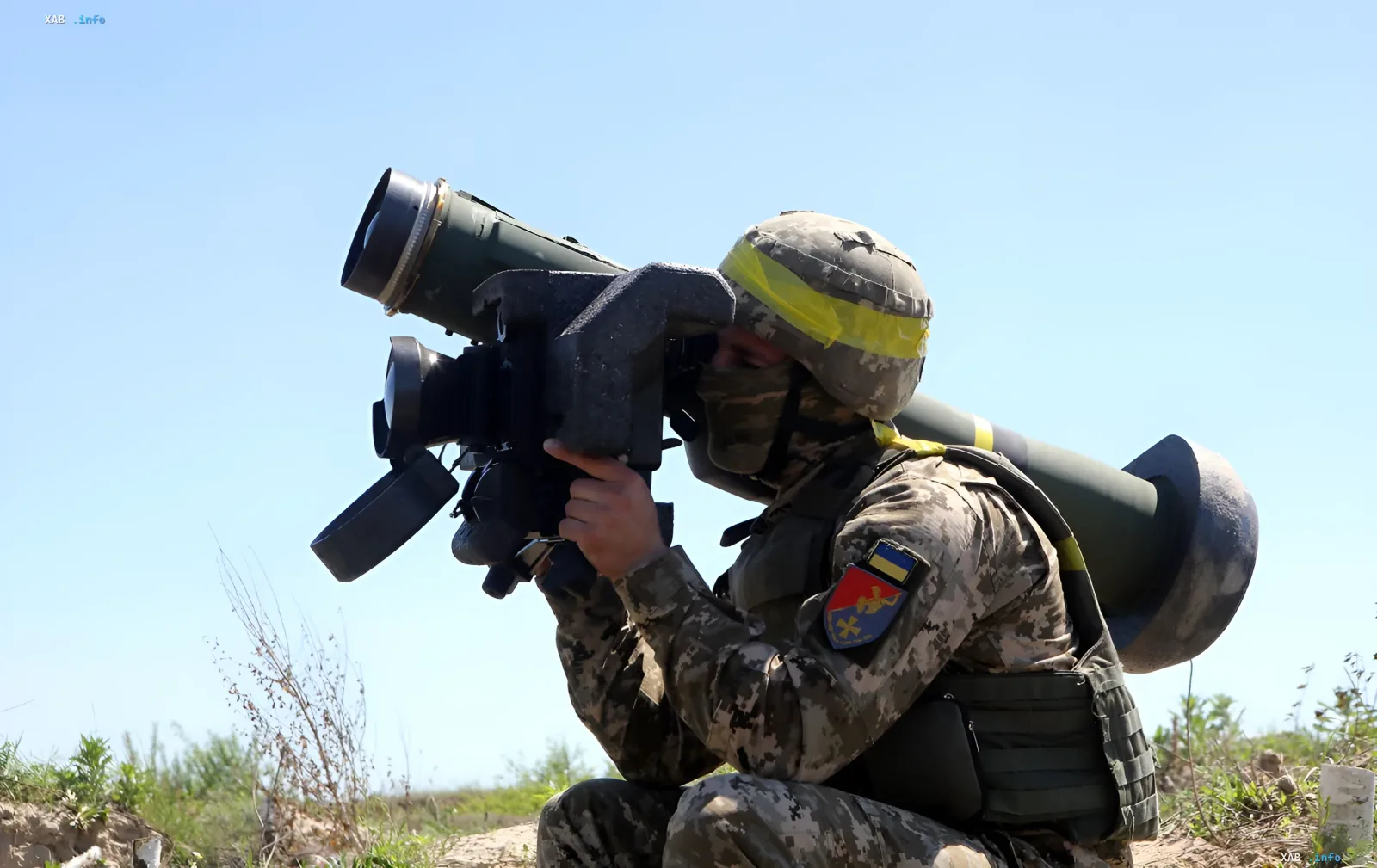
Amidst the ongoing depletion of arsenals and the need to modernize outdated weapon systems, the Pentagon has made a strategic decision to upgrade the legendary FGM-148 Javelin anti-tank guided missile (ATGM) system. The American defense company Kratos Defense & Security Solutions has received an official contract from the U.S. Army to develop a new generation infrared imaging seeker (IIR seeker). This decision aims to extend the lifecycle of the system, which has been in service since 1996, and ensure the stability of its mass production for the coming decades.
Technological modernization: replacing outdated architecture
The essence of the contract lies not in simply increasing the firing range or strengthening the warhead, but in the fundamental replacement of the microelectronic architecture used in current versions of the missiles. Existing Javelin guidance components are based on technologies that are becoming increasingly complex and expensive to manufacture due to a shortage of specific semiconductor elements. The new system being developed by Kratos is intended to replace the outdated technological base, ensuring compatibility with modern manufacturing standards.
The development and production of the new seeker will take place at Kratos' Advanced Manufacturing Technology Center in Birmingham, Alabama. After the design phase and prototype creation, the production-ready component must undergo rigorous testing by the U.S. Army. Only after successful certification will the new architecture be integrated into the mass production stream.
Production structure and the role of Lockheed Martin
It is important to note that the contract with Kratos changes the supply structure of individual components but does not transfer the full production cycle of the system to the company. Overall responsibility for the development, production, and technical support of the entire Javelin system remains with the joint venture of Lockheed Martin and RTX. Kratos acts as a specialized contractor solving a narrow but critically important task of upgrading the missile's "eyes".
The Javelin system operates on a "fire-and-forget" principle: after the operator locks onto a target using the Command Launch Unit (CLU) and launches the missile, it guides itself to the object using an infrared thermal imaging seeker. This allows the crew to immediately change position or take cover after firing, without tracking the missile's flight. Upgrading this seeker directly affects the system's effectiveness in the conditions of modern electronic warfare.
Restocking amid supplies to Ukraine
The modernization of Javelin is taking place against the backdrop of a significant reduction in U.S. stockpiles caused by large-scale weapon supplies to Ukraine. According to data current as of early 2026, by January Ukraine had received more than 10,000 Javelin missiles. At the same time, pre-war U.S. stockpiles were estimated at approximately 20,000 to 25,000 units, which indicated critical depletion of arsenals.
In response, the U.S. Army launched a program to restore stockpiles and expand production capacity. Lockheed Martin plans to increase annual missile production from approximately 2,100 to 3,960 units by the end of 2026 — a growth of nearly 89%. The component modernization being carried out by Kratos is a necessary condition for maintaining such high production rates in the long term.
Contradictory data
There is a discrepancy in estimates regarding the timing and scale of the implementation of new technologies. On the one hand, official statements from the Pentagon and Kratos emphasize that the new seeker is intended to ensure production stability for many years to come, implying a smooth transition. On the other hand, defense market analysts note that current supply rates to Ukraine and other theaters of war may require a more aggressive implementation of new components, creating risks of delays in certification. Furthermore, some sources indicate that alongside the Javelin modernization, the U.S. is considering alternative systems, which could affect long-term production plans for this specific complex.