Paradigm Shift: Abandoning 'Geran-3'
The Main Directorate of Intelligence of the Ministry of Defense of Ukraine (HUR MoD) has reported a significant change in the tactics of the Russian armed forces in the sphere of drone warfare. According to the agency, Russia has officially ceased mass production of the 'Geran-3' model of kamikaze jet drones. This model, which previously caused serious concern among Ukrainian specialists, turned out to be only a temporary solution. Information about the cessation of production is confirmed by intelligence data obtained in August 2026.
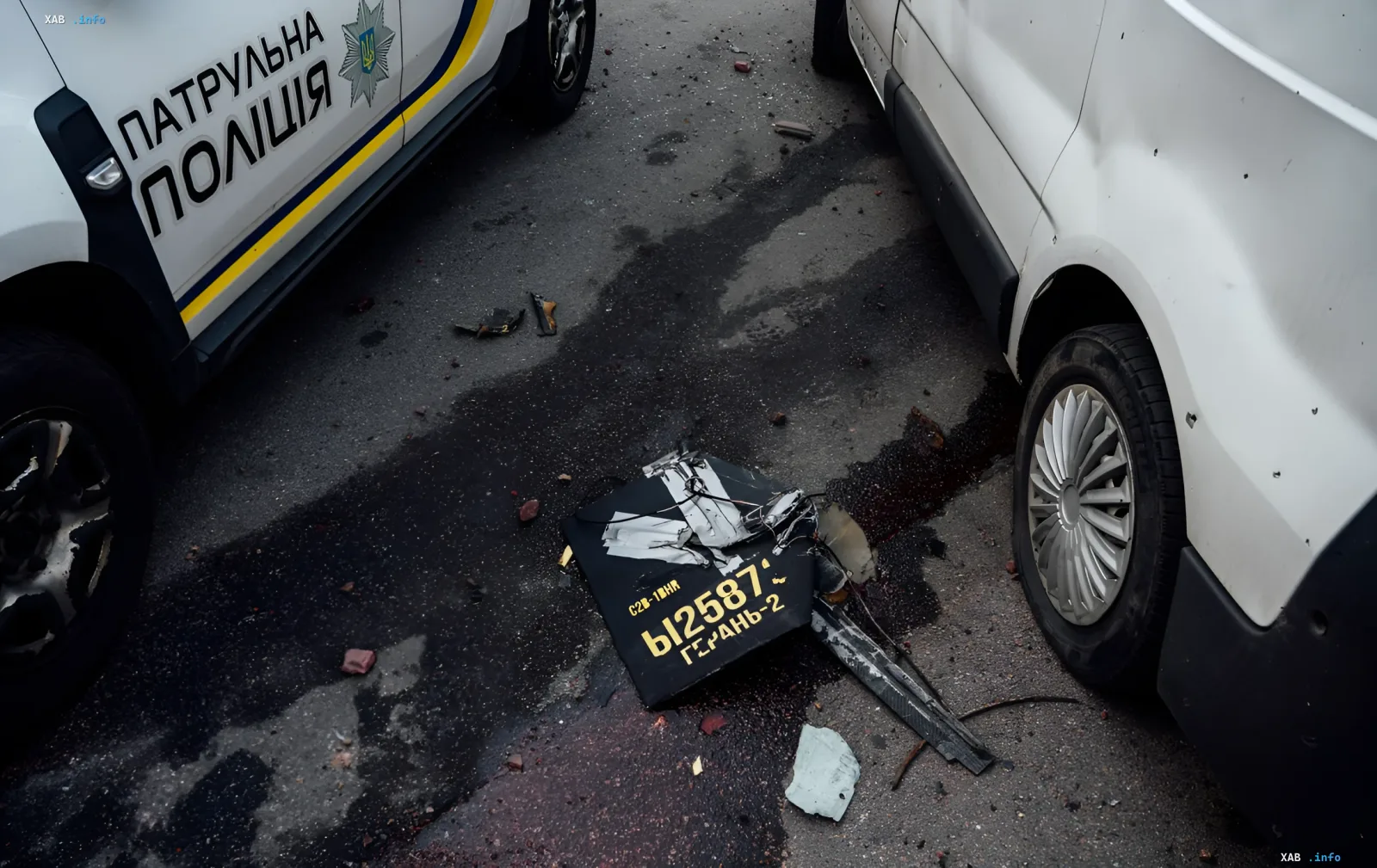
The 'Geran-3' drone represented an evolutionary step from the familiar piston-engine 'Shaheds'. A Telefly JT80 jet engine was integrated into its design, which allowed for a significant increase in flight speed — up to 370 km/h — and range, reaching 1000 km. Despite the fact that the airframe and component base remained similar to the previous 'Geran-2' version, the replacement of the power unit radically changed the characteristics of the device, making it more difficult to intercept with traditional air defense systems.
Technological Paradox: Global Dependence of the Russian Defense Industry
One of the key findings of the HUR intelligence was a detailed study of the internal 'guts' of intercepted drones. Analysis showed that the design of the Russian 'Geran-3' contains 45 foreign components. This casts doubt on the thesis of complete technological independence of the Russian defense industry. According to Ukrainian analysts, the vast majority of critical nodes — 22 components — are of American origin. The remaining parts were produced in China, Switzerland, Germany, the United Kingdom, and Japan.
Among the key systems ensuring the operation of the drone, the SADRA inertial navigation system, pressure measurement unit, and power distribution system stand out. To protect against electronic warfare and communication jamming, the 'Komet-M12' satellite system with an adaptive antenna array of 12 elements was used. The presence of such a large number of Western and Asian components in weapons used against Western countries demonstrates the complexity of modern logistics chains and the vulnerability of the Russian military industry.
Evolution of Threat: Transition to 'Geran-4'
According to HUR data, 'Geran-3' was only a transitional model designed to test the integration of jet engines into the airframe structure. Now, Russian designers have focused on the development and production of the next version — 'Geran-4'. A new airframe, specially adapted for the more powerful Telefly LX-WP-160 jet engine, has been designed for this model.
The new model demonstrates a significant increase in combat characteristics. The takeoff mass of the drone increased from 350 to 450 kg, which allowed for a more powerful warhead and improved aerodynamics. Thanks to the strengthening of the power unit, 'Geran-4' has even greater speed and range than the previous version. Experts note that this makes the new drones a serious threat to infrastructure objects located deep in the Ukrainian rear.
Kyiv's Response: ZIRKA Interception System
In response to the escalation of threats from Russian jet drones, the Armed Forces of Ukraine presented their own development — the ZIRKA automated interception system for high-speed drones. This system was created specifically to combat high-speed 'Geran'-type aircraft, which were previously difficult to shoot down due to their low radar visibility and high speed.
In early August 2026, it also became known about attempts by Russian military to equip 'Geran-4 Seeker' drones with new guidance systems and optoelectronic modules. This allows them to correct flight and hit targets even when satellite communication is lost. In addition, during shelling of the Chernihiv region, munitions with depleted uranium integrated into 'Geran-2' strike drones were found, indicating the enemy's desire to inflict maximum destructive damage.