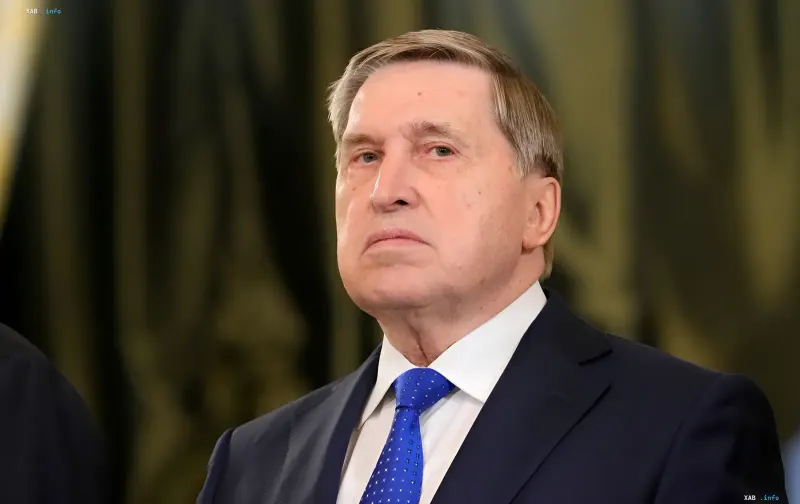
Russian President's Aide Yuri Ushakov once again outlined Moscow's position on the format of peace negotiations concerning the end of the war in Ukraine. According to him, the question of bringing representatives of the European Union into the negotiation process is not currently on the agenda. At the same time, as Ushakov emphasized, Russia maintains contacts with EU representatives, but the format of their participation in the talks has not been agreed upon and is not being discussed on a working level.
Moscow's position: Europe off the agenda
In a comment carried by TASS and cited by RBC-Ukraine, Ushakov explained that Moscow is discussing "the possible position of the Europeans, with which they would like to enter the negotiations." Thus, the Russian side notes that European partners are working out their own scenario of participation, but, according to the Kremlin's assessment, the matter has not yet reached the agreement of a specific format. Earlier, the President's aide also stated that Russia had not agreed to the participation of European representatives in the next round of peace talks on Ukraine.
Contacts exist, but the format is not agreed
Ushakov noted that Russia had not received an official refusal from the European side to travel to Moscow and that the invitation to come to the Russian capital "remains in force." According to him, various public statements are coming from EU representatives, and Moscow, as he put it, hopes to receive "one reaction or another" from the Europeans. The wording indicates that dialogue at the contact level is maintained, but, according to the Russian side's assessment, it has not yet moved to a full multilateral format with EU participation.
Invitation to Moscow and the Zelensky question
Separately, Ushakov commented on the negotiation track with Kyiv, stating that, in his words, no negotiations are being conducted with Ukrainian President Volodymyr Zelensky. This statement came against the backdrop of ongoing discussions around the architecture of the peace process and which specific parties, and in what capacity, will be represented at the negotiating table. Thus, the Russian side is drawing a distinction in its statements between two tracks — direct contact with Ukraine and the possible inclusion of European representatives.
Divergence from the Washington position
Ushakov's statements contrast with the assessments of the American mediators. Special envoys of US President Donald Trump, Steve Witkoff and Jared Kushner, after talks in Moscow, stated that Europeans would be present at the next round of negotiations. Thus, the public positions of Moscow and Washington on the question of Europe's presence at the next round diverge: the Kremlin asserts that the question is not on the agenda, while the American side reports on the planned participation of European representatives.
European track: E5 and support for Kyiv
The European Union, for its part, has declared its readiness to join multilateral negotiations on ending the war in Ukraine. One of the options discussed for holding the next meeting was European territory. According to available data, Europe intends to join the peace talks between Ukraine and Russia in the "EU plus five" (E5) and EU format, while simultaneously providing support to Kyiv and increasing pressure on Russia. The totality of these statements shows that the question of European participation remains a key point of divergence between the parties to the negotiation process.