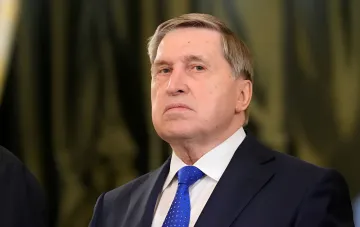
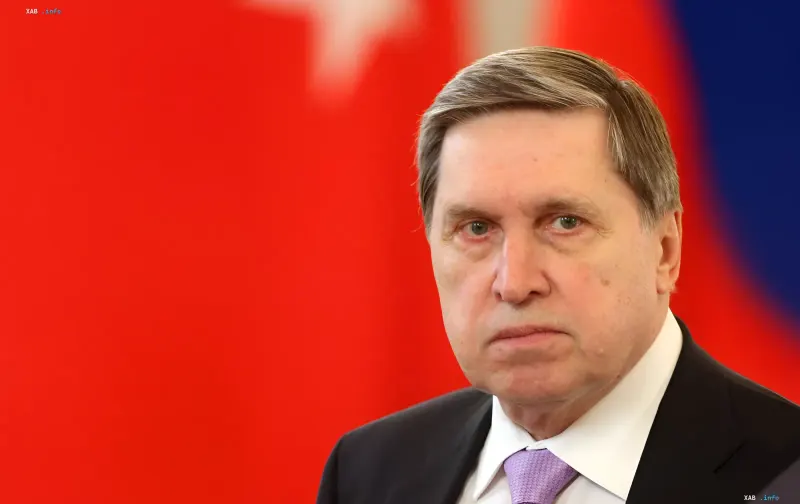
The Kremlin has acknowledged the possibility of resuming the negotiation process on settling the conflict in Ukraine in an expanded, trilateral format involving Kyiv, Moscow, and Washington. This was stated by Russian Presidential aide Yuri Ushakov, whose words are quoted by RBC-Ukraine citing the 'Vesti' TV channel. According to him, certain contacts are being maintained between the parties, and the possibility of returning to full trilateral interaction is already being discussed with American counterparts.
Trilateral format returns to the agenda
'There are some contacts, but now the talk is of resuming the negotiation process with Ukraine that existed before. And we also discussed this with our American counterparts, so perhaps this process will resume in a trilateral format,' Ushakov stated. Thus, Moscow has directly indicated that the previous bilateral or limited formats of dialogue may give way to a broader platform, where the US will act not merely as a mediator but as a full party to the interaction.
Abu Dhabi named as possible venue for meetings
In response to a question about where new rounds could be held, Ushakov referred to prior experience: 'Our representatives met, for example, in Abu Dhabi, and it is quite possible to continue meeting there as well.' This means that the neutral territory of the UAE, where contacts have already been held previously, is being considered by the Kremlin as a workable option for continuing the dialogue, which removes some of the logistical and political complexities associated with choosing a location.
The Kremlin's conditions and Washington's cautious reaction
At the same time, in response to a question about how exactly the US could help facilitate a settlement, Ushakov voiced Moscow's traditional demand: Washington should completely cease providing military support to Ukraine. Against this backdrop, US Secretary of State Marco Rubio assessed the chances of resuming negotiations cautiously — 'not optimistically, but not pessimistically either.' For his part, US special envoy Steve Witkoff, following his visits to Moscow and Kyiv, reported 'significant progress' in negotiations on ending the war and on coordinating a schedule for further meetings.
Contradictory data
The parties' statements show a divergence in assessing the pace and readiness for negotiations. On the one hand, US special envoy Steve Witkoff speaks of 'significant progress' and an already agreed schedule of meetings, which sounds like a signal of proximity to launching the process. On the other hand, Secretary of State Marco Rubio takes a restrained, 'not optimistic' position, while Ushakov uses the cautious wording 'perhaps this process will resume,' offering no guarantees. Moreover, the Kremlin's hard condition of a complete halt to US military aid to Ukraine may contradict Washington's readiness to take such a step, creating a discrepancy between the declared 'progress' and the actual conditions for starting trilateral talks.
The totality of these statements indicates that the formal launch of the trilateral track remains under discussion, and the key variables remain the choice of venue (including Abu Dhabi), the US position on military support for Kyiv, and the parties' ability to synchronize their public assessments with their actual readiness for negotiations.