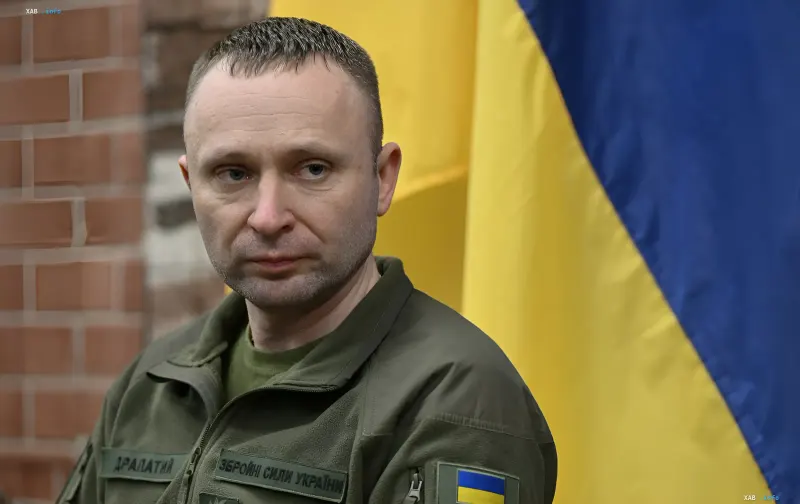
Commander-in-Chief of the Armed Forces of Ukraine Mykhailo Drapatyi has canceled more than 30 orders of the General Staff that, in the assessment of the military leadership, no longer correspond to the real conditions of conducting a full-scale war. This was reported by Vitaliy Sarantsev, head of the communications department of the 14th Army Corps, in his Facebook account, as cited by RBC-Ukraine. According to him, this is a large-scale revision of the regulatory base that, in his words, became a "truly good big autumn cleanup."
What exactly was canceled
The documents sent for "disposal" regulated the training of servicemembers and required commanders to produce a significant volume of formal reporting. According to Sarantsev, among those canceled were "long-sour instructions that had existed only on paper for years, demanding formal reports, checkmarks, and tables." In addition to the main orders, the Commander-in-Chief canceled dozens of intermediate documents containing outdated amendments and supplements to the basic regulatory acts. Thus, this is not a single correction but a systematic purge of the documentary mass accumulated over the years of the war.
Eliminating legal conflicts between ATO/JO standards and the reality of 2022–2026
Particular attention in Sarantsev's statement is given to eliminating legal conflicts between the current training standards and outdated requirements formed during the so-called ATO/JO period in 2016–2020. According to him, many of the canceled documents reflected the logic of a local conflict and did not account for the specifics of full-scale combat operations against the Russian Federation. Commanders in the field, according to the representative of the 14th Army Corps, are no longer obliged to follow standards and directives that do not correspond to conducting a modern war. This, as Sarantsev emphasizes, frees up their time for real operational work rather than filling out reporting forms.
The "autumn cleanup" as part of a broader reform
Sarantsev directly characterizes the work done as ridding the army of "outdated ballast, in order to work faster, more modernly, and without unnecessary bureaucracy." The "autumn cleanup" methodology — that is, the mass deactivation of non-actual regulatory acts in a single cycle — avoids a situation in which new orders formally coexist with canceled ones, creating legal uncertainty for subordinates. In essence, this is an administrative reset after which the AFU regulatory base is to be rebuilt from scratch, based on current combat tasks rather than on the inertia of documents five to seven years old.
Context: "Leadership Principles" and a course on the human
The revision of General Staff orders is taking place against the backdrop of a broader managerial initiative by the new Commander-in-Chief. Earlier, Mykhailo Drapatyi presented the document "Leadership Principles" — a set of eight priorities for the development of the Armed Forces of Ukraine in which people are named the main value. The cancellation of bureaucratic orders, by the logic of this document, is a practical consequence: if the priority is the commander and his subordinates at the front, then excessive reporting that carries no combat value becomes a direct enemy of effectiveness. Drapatyi's first public statement after being appointed Commander-in-Chief by President Volodymyr Zelenskyy was also devoted precisely to simplifying command and removing unnecessary administrative barriers.
What this means for combat command
The practical effect of canceling 30+ orders and dozens of intermediate documents is the reduction of the "paper trail" that a commander was required to maintain in parallel with combat tasks. In conditions where the tempo of operations at the front requires quick on-the-spot decisions, the absence of an obligation to fill out outdated reports and observe formalities not tied to real tactics directly affects the speed of decision-making. Sarantsev emphasizes that the time freed up for commanders is directed toward "real work" — that is, the direct command of units rather than administration. Thus, the carried-out "autumn cleanup" is not a formal personnel decision but a tool for increasing the operational flexibility of the army in the conditions of an ongoing conflict.