Engineering units of the Armed Forces of Ukraine have built more than 1,300 kilometers of anti-drone protection for logistics routes since the beginning of 2026. This was reported by RBC-Ukraine, citing data from the General Staff of the Ukrainian Armed Forces. As of the end of August, construction rates remain high: in just one month, engineers installed 266 kilometers of protective structures. Work on expanding the network of protected routes is ongoing against the backdrop of a persistent threat from the enemy's unmanned systems.
Scale of engineering work and construction dynamics
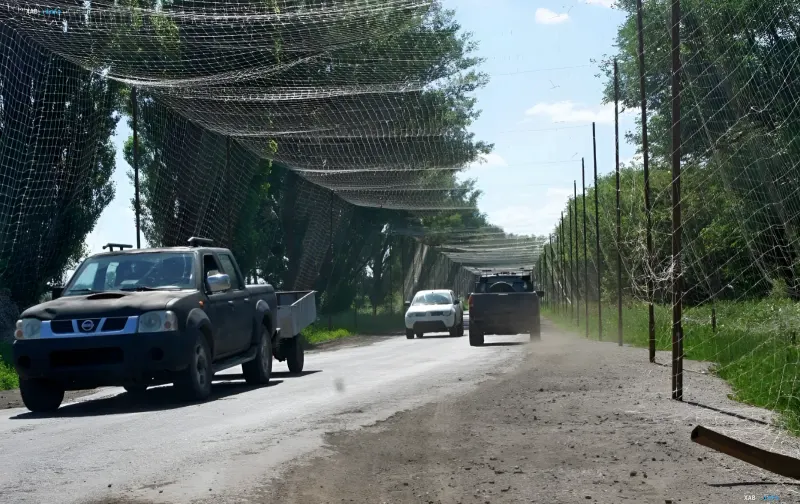
According to data provided by the General Staff, the total volume of anti-drone protection built from January to August 2026 exceeded 1,300 km. The August figure of 266 km indicates that construction rates are not slowing down and may even accelerate during certain periods. The structures consist of mesh and frame shelters stretched over roads and rural routes used to move equipment, ammunition, and personnel. Photographs published in open sources show that such "tunnels" made of metal mesh and support posts span the full width of the road, creating a physical barrier against low-flying drones.
New approaches introduced in 2025
As the General Staff clarifies, fundamentally new approaches to protecting logistics routes were introduced in 2025. Their goal is to increase the survivability of supply routes, reduce losses of personnel and equipment, and ensure uninterrupted delivery of resources to areas of active combat. The implementation of the updated designs not only increased the speed of erecting protective structures but also made them more resistant to repeated strikes. It is thanks to these innovations that the figure of over 1,300 km in eight months was achieved in 2026.
Contribution of the State Special Transport Service and the comprehensive nature of protection
Anti-drone protection for logistics is provided not only by the engineering units of the Ukrainian Armed Forces. According to data cited in the same report, as early as May 2026, the State Special Transport Service, on the orders of the Ministry of Defense, protected more than 1,170 km of frontline routes. At the same time, the construction rate of the State Special Transport Service more than doubled — reaching 8.5 km per day. The combined result of the two structures shows that the protection of rear communications has become a systematic effort rather than a one-off measure.
Strategic significance for frontline logistics
In conditions where the enemy's unmanned systems regularly attack convoys, warehouses, and road junctions, anti-drone mesh has become a critical element in the survival of the logistics chain. Without it, every transfer of a unit or cargo becomes a risky undertaking. Expanding the network of protected routes to more than 1,300 km means that a significant portion of the main and reserve supply routes now passes under physical cover, reducing the likelihood of equipment losses and personnel casualties. According to military leadership, further expansion of the network will allow flows to be redistributed and the load on individual nodes to be reduced, thereby increasing the overall resilience of the rear.