Chairman of the Subcommittee on Industrial Policy of the Verkhovna Rada Committee on Economic Development, Musa Magomedov, has initiated a move to reconsider the state's approach to financing Ukrzaliznytsia and Ukrenergo. According to him, these state-owned monopolies should be viewed not as ordinary commercial enterprises, but as the backbone of the country's life support system, which should receive separate state and international support. The statement was made in a comment to CTS and published by the RBC-Ukraine outlet.
The logic of protected budget items
Magomedov argues that Ukrzaliznytsia and Ukrenergo play a key role in ensuring Ukraine's resilience during the war. Russia, in his assessment, is deliberately targeting the infrastructure of these enterprises, which exponentially increases the costs of maintaining their operational capacity. "Ukrzaliznytsia and Ukrenergo are the foundation of Ukraine's life support. That is why the enemy spends billions on missiles and drones to strike these enterprises," the MP emphasized. On this basis, he proposes including the financing of these monopolies in protected items of the state budget, which would exclude the possibility of them being cut amid fiscal pressure.
International co-financing as a tool
In addition to internal budget mechanisms, Magomedov proposes attracting international partners to cover operating costs that Ukrzaliznytsia and Ukrenergo incur as a result of Russian attacks. In his phrasing, the state should "stop viewing these enterprises as commercial entities" and start building a model where part of the expenses caused by hostilities is compensated by external donors. The MP also emphasizes that Ukrzaliznytsia performs not only commercial but also significant social functions, which further justifies the need for targeted state support without shifting costs onto businesses and consumers.
Context: tariff policy and economic risks
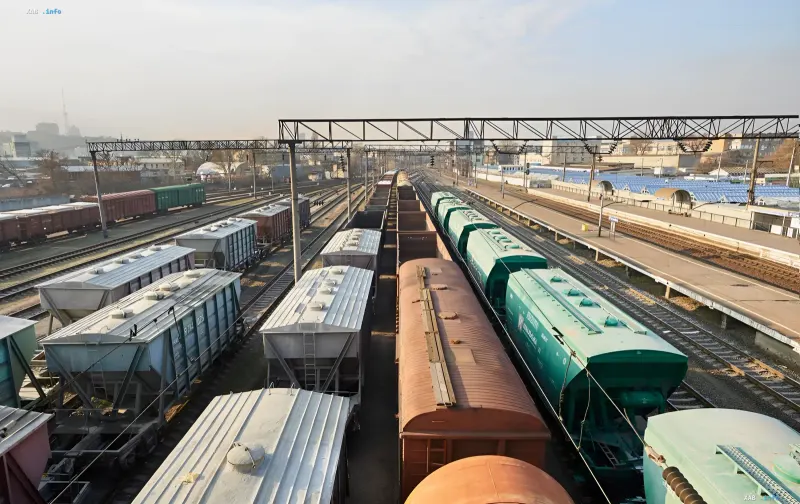
Magomedov's initiative comes against the backdrop of Ukrzaliznytsia's recent 30% increase in freight rates, with plans for further indexation of another 15%. Ukrpromecexpertiza previously warned that such a tariff increase could reduce the company's cargo base by at least 27 million tons. According to the company's estimates, the increase also threatens a loss of 96 billion hryvnias of GDP per year, a reduction in export earnings by 2.4 billion dollars, and a decrease in budget revenues by 36 billion hryvnias. The metallurgical industry, in turn, stated that the new Ukrzaliznytsia tariff increase could derail industrial recovery.
An alternative to raising tariffs
Magomedov's position effectively proposes an alternative to the model where additional costs for recovery after attacks and infrastructure maintenance are shifted onto shippers through rising tariffs. According to his logic, if Ukrzaliznytsia and Ukrenergo are financed as critical infrastructure objects — through protected budget items and international co-financing — it will allow the enterprises to continue operating during the war without systemic price hikes in logistics for business. Thus, the initiative touches on several levels at once: budget policy, foreign economic strategy, and Ukraine's industrial resilience in wartime.