
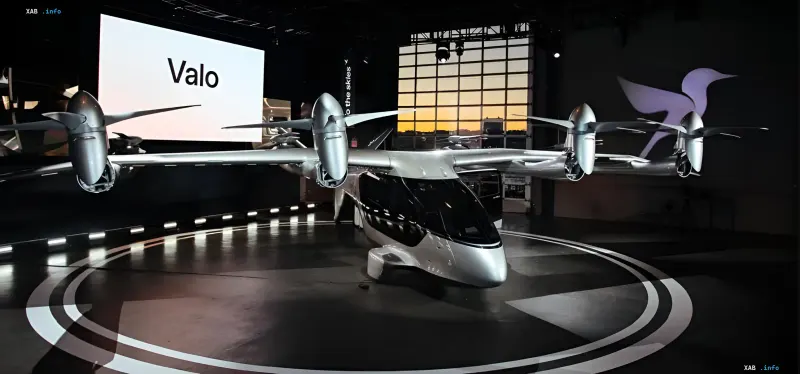
The aviation industry is on the brink of a technological revolution where the lines between civilian air taxis and military drones are blurring. British developer Vertical Aerospace and American tech giant Near Earth Autonomy have joined forces to create a next-generation aircraft — Valo. This project promises not only to change logistics but also to rewrite the rules of the game in the defense sector.
Technological Symbiosis: From Farnborough to the Frontline
In anticipation of the international airshow in Farnborough, a strategic agreement was signed that sets the tone for the development of unmanned technologies for years to come. Vertical Aerospace (NYSE: EVTL) will integrate advanced automation systems from Near Earth Autonomy into the design of its new hybrid aircraft. The goal is ambitious: to create a platform capable of flying distances of over 1600 km (1000 miles) without a pilot.
The technical foundation of the project is based on the Honeywell Anthem open digital cockpit, which will become the "brain" of the new aircraft. Near Earth Autonomy, founded in 2012, already has proven experience working with the US Army and Marine Corps, making them an ideal partner for creating dual-use systems.
Two Versions of One Aircraft: From Taxi to Logistics
The uniqueness of the Valo platform lies in its flexibility. Manufacturers plan to release two key architectures adapted for different tasks:
- Electric version (eVTOL): A classic vertical take-off and landing aircraft with zero emissions. It is designed for urban environments and short-haul passenger transport. In the basic configuration, the aircraft accommodates a pilot and up to four passengers, developing a cruising speed of up to 240 km/h.
- Hybrid-electric version: This is the "heavy artillery" of the project. Equipped with a combined power plant (batteries plus a liquid-fuel turbogenerator), this modification increases the flight range by 10 times — to an impressive 1600 km. The payload capacity reaches 1100 kg, making the aircraft ideal for transporting cargo over short distances.
Currently, ground tests of the power plant components are already underway on a specialized HYPER stand in the UK. Full-scale flight tests of the hybrid prototype are scheduled for the first half of 2027.
Paradigm Shift: Why the Defense Sector Became a Priority
The decision to bet on unmanned and defense programs is dictated by the harsh reality of regulatory processes. Vertical Aerospace CEO Stuart Simpson admitted that certifying civilian air taxis is a long and complex process. Due to the strict requirements of the UK CAA and EASA, full approval of Valo for commercial operation has been postponed to 2029.
Under these conditions, defense departments see Valo as a powerful tool for operational logistics, supplying remote bases, and medical evacuation. The low thermal and acoustic signature of the hybrid modification ensures critically important stealth. This approach allows the manufacturer to avoid downtime and diversify income through government contracts even before launching the civilian service.
Using a single platform for two markets is not just a marketing ploy, but a survival strategy. It allows for reduced design costs, accelerated scaling of production lines in Bristol, and minimized risks associated with delays in civilian certification.