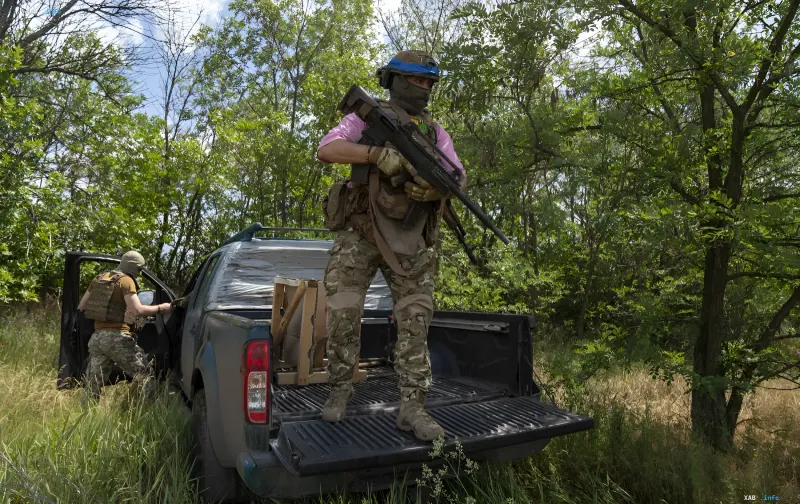
In the context of the ongoing conflict, the issue of supplying the army with modern and reliable transport remains critically important. However, despite active discussions about the need for import substitution, Ukraine still lacks full-fledged production of pickup trucks for the Armed Forces. As it turns out, current "localization" in this sector is often merely declarative.
The Illusion of Production
The RBK-Ukraine material "Pickups and Sticks: What the Army Drives and Will the Armed Forces Switch to Ukrainian Cars" reveals the details of the situation. Representatives of the automotive business admit: what is positioned as localization is often just the import and resale of budget models from China or India. This approach, while not violating legislation, raises serious questions among experts regarding the strategy for developing the military vehicle fleet.
Unlike NATO countries, where the process of adapting equipment for military needs has been refined for decades, the Ukrainian market faces a number of systemic problems:
- Shortage of production capacity for semi-knockdown assembly.
- Complex logistical conditions during wartime.
- Lack of an attractive investment climate for global giants.
Untapped Potential
The paradox of the situation is that the technical base to solve the problem already exists. Ukraine has at least 4–5 enterprises capable of mastering the semi-knockdown assembly of light commercial vehicles within a few months. Moreover, another 2–3 factories have the potential to organize full-cycle production, including body welding and painting.
Nevertheless, as long as state mechanisms do not stimulate this transition, the market develops spontaneously. Some importers independently create specialized pickup modifications, adapting them for the military and law enforcement agencies. These vehicles lack excessive comfort, have a simplified design, and, as a result, a more accessible price.
The Problem of Service and Logistics
Recently, the Ministry of Defense of Ukraine announced a massive procurement of 5,000 pickup trucks for the Armed Forces. Market players view the centralization of procurement as a positive signal of the state's attention to logistics problems on the front. However, experts warn of hidden risks.
Purchasing equipment from local dealers, especially models not common in the region, creates a threat to long-term operation. The main problem is the lack of a developed service network. In NATO countries, such contracts are usually covered by a single supplier who provides not just a car, but a comprehensive solution: spare parts, software, personnel training, and warranty service. Without such an approach, the life cycle of equipment on the front may be significantly shortened.
New Rules of the Game
The situation with supplies underwent changes at the end of 2025. In August, the Ministry of Defense launched direct procurement of equipment, giving combat units the right to independently purchase transport through a simplified procedure. In September, the Government expanded these powers, allowing the purchase of pickups, ATVs, and motorcycles without using the electronic public procurement system. Formed units received direct funding of 7 million hryvnias, part of which is allocated specifically to the vehicle fleet.
Although these measures are intended to accelerate the supply of the army, the question of transitioning from chaotic import to systematic local production remains open.