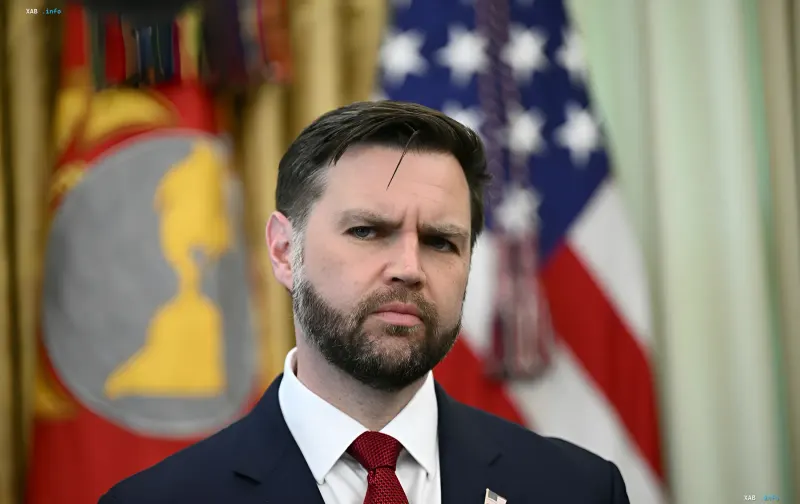
US Vice President JD Vance has publicly backed the controversial assessment of Vladimir Putin given by US Presidential Special Envoy Steve Witkoff. According to RBK-Ukraine, citing a statement published on the White House's official X account, Vance answered affirmatively when directly asked by a journalist whether he agreed with Witkoff calling the Russian leader a 'humanist'. Thus, a statement perceived in Washington and beyond as contentious has received endorsement at the level of the second-highest official in the US administration.
'Humanist': How the Assessment Was Made
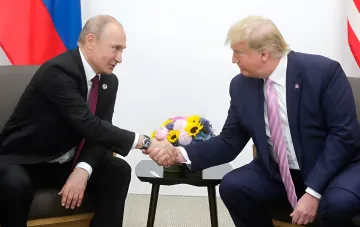
Witkoff voiced the assessment during a meeting with Vladimir Putin in St. Petersburg on October 21. 'You talk so much about how my president, President Trump, is a humanist; you are a humanist too, sir, and I respect you for that,' the special envoy said, addressing the Russian leader. The remark was made amid discussions on peace settlements for the conflict in Ukraine and was viewed by observers as a notable diplomatic gesture, given that the International Criminal Court (ICC) has an arrest warrant for Putin over war crimes charges against Ukraine.
The Vice President's Reaction
Commenting on Witkoff's words, Vance tied the assessment to a specific event — the release of an American hostage. 'I agree with Steve Witkoff that he said something nice about a person who just released an American hostage,' the Vice President stated. In essence, Vance did not dispute the label 'humanist', but rather reframed it as gratitude for a specific action, allowing him to support an ally without entering into a direct ideological debate.
Hubbard's Release as the Start of Negotiations
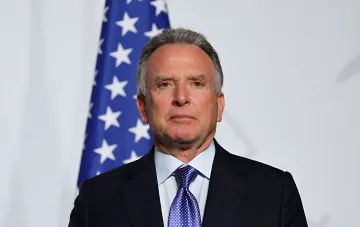
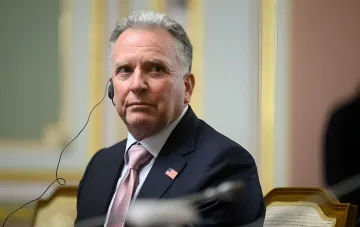
According to the source, negotiations on peace terms in the Russia-Ukraine war effectively kicked off with the release of 74-year-old American teacher Stephen Hubbard, who had been detained in Russia for over four years. Hubbard was reportedly abducted from his home in Izium in the spring of 2022; the Moscow City Court found him 'guilty' of participating in combat operations on the side of the Armed Forces of Ukraine as a mercenary and sentenced him to six years and ten months in a penal colony. The release, according to reports, was carried out at the request of US President Donald Trump.
Settlement Documents and Legal Context
On October 21, Witkoff arrived in St. Petersburg and, according to RBK-Ukraine, brought documents for Putin outlining the conditions for a settlement of the war in Ukraine. Thus, the visit coincided both with the hostage's release and the handover of Washington's negotiating position. Against this backdrop, describing Putin as a 'humanist' and Vance's public support form a special informational context: on the one hand, the US administration emphasizes its readiness for dialogue and expresses gratitude for the release of a citizen; on the other hand, the legal status remains intact, with the Russian leader wanted by the ICC for war crimes against Ukraine.
The combination of these events — Hubbard's release, the handover of documents, and the public statements by Witkoff and Vance — indicates that Washington is using the humanitarian channel as a tool to advance the negotiation track. How this line will develop and how sustainable the stated assessments will prove to be in future contacts will become clear following subsequent rounds of negotiations.