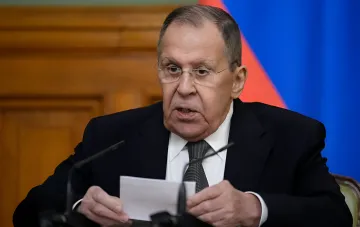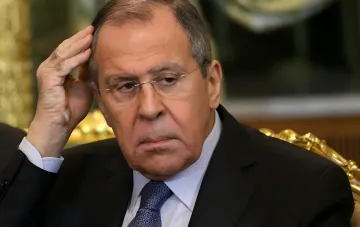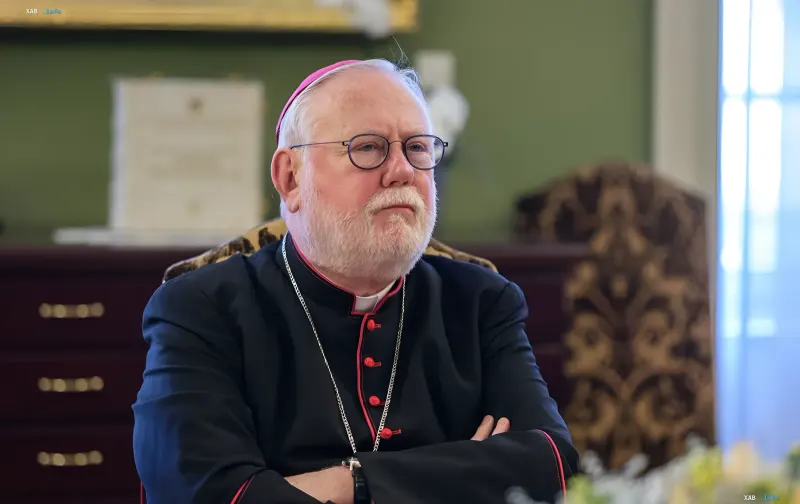
The head of the Vatican's diplomatic service, Archbishop Paul Gallagher, met in person in Moscow on 25 August 2026 with Russian Foreign Minister Sergey Lavrov. According to reports carried by RBC-Ukraine citing Reuters, this is the first in-person meeting at this level between representatives of the two sides in five years. The meeting took place against the backdrop of the ongoing conflict and served as a notable diplomatic signal: the Vatican generally avoids public accusations against specific states, but on this occasion its position was stated plainly.
Call to end the war
During the talks, Gallagher stated that the Russian-Ukrainian war, which he described as "four years long," is continuing and producing new victims. "This makes the reconciliation that lies ahead even more difficult," the archbishop emphasized, calling for an urgent end to the conflict and urging both sides to "look beyond" it. In effect, the Vatican addressed a call to halt hostilities directly to the Russian foreign minister, which distinguishes this meeting from previous, predominantly humanitarian, contacts.
Humanitarian cooperation and dialogue
At the conclusion of the meeting, Gallagher reported that the two sides had discussed ways to achieve peace in Ukraine and agreed to cooperate on humanitarian issues. Care for children affected by the war was named as one of the priority areas. The archbishop also stated that the Vatican intends to continue providing "strong" support by creating space for dialogue, which, in his words, is necessary for ending the hostilities.
Position of Pope Leo XIV
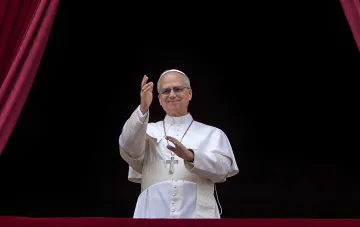
The meeting in Moscow fits within a broader line pursued by the pontificate. Pope Leo XIV has repeatedly called for an end to the war. In an address on 9 August, he expressed regret over the "constantly growing number of victims among the civilian population, including children." During the Sunday prayer "Angelus," the pontiff again voiced deep concern over the rising number of civilian casualties, noting that he carries in his heart "the suffering of the dear people of Ukraine," and called for negotiations toward a "true, just and lasting peace."
Contradictory data
The available materials contain nuances that should be taken into account. First, the duration of the conflict in Gallagher's statement is described as "four years long," while the meeting itself is characterized as the first in five years — these two time markers refer to different events and do not contradict each other, but in simplified retellings they can create inconsistencies. Second, some outlets emphasize the Vatican's direct political pressure on Moscow, while others underline the archbishop's exclusively mediating and humanitarian role. The exact date of the previous in-person meeting at this level is not standardized in open reports, so the phrase "for the first time in five years" relies on RBC-Ukraine/Reuters reporting.
Context: refusal to join the "Peace Council"
The Vatican's diplomatic activity in Moscow is taking place against the backdrop of another high-profile decision: according to available data, the Vatican declined to take part in the so-called "Peace Council," an initiative of U.S. President Donald Trump. The combination of these steps — a direct call to end the war, a stated intention to sustain dialogue, and a refusal of the American format — indicates that the Vatican is attempting to pursue its own, independent track for a settlement, relying on humanitarian channels and direct contacts with both sides of the conflict.