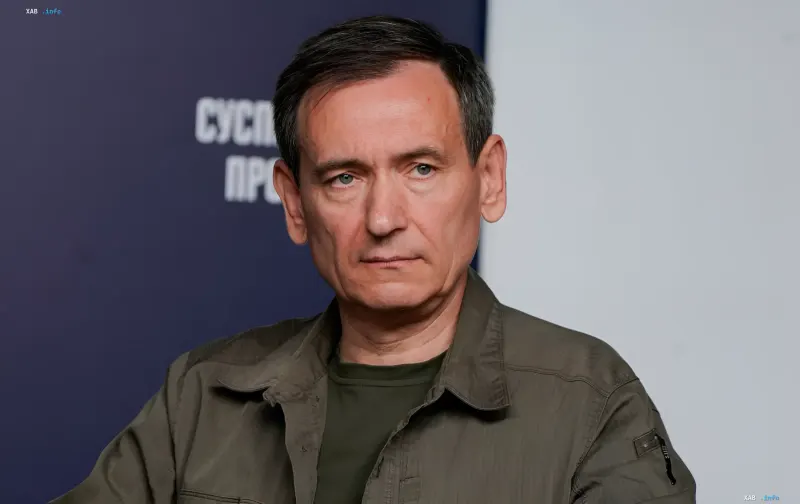
Fedor Venislavsky, a member of the Verkhovna Rada Committee on National Security, Defense, and Intelligence, stated in an interview with RBC-Ukraine that Russia is failing to achieve its desired results on the frontline and is therefore intensifying pressure on Ukraine through strikes on energy infrastructure and attempts at internal destabilization. According to him, Moscow is systematically implementing a plan aimed at forcing Ukraine to capitulate and agree to the Kremlin's peace terms, which include the full occupation of Donetsk, Zaporizhzhia, and Kherson regions.
Limited frontline gains
Venislavsky noted that since the beginning of the year, Russian troops have not made noticeable offensive successes: their advancement, in his estimation, is limited primarily to the "kill zone" and the gray zone. That is why, the MP asserts, Moscow is trying to achieve its goals by other means—primarily by stepping up pressure on the Ukrainian population. «They are trying by any means and methods to occupy the maximum amount of territory before progress is made in the peace dialogue», the deputy emphasized.
Casualty ratio according to his data
Discussing the ratio of losses between the sides, Venislavsky referred to official statistics: according to him, in certain frontline sectors, for every killed Ukrainian serviceman there are several dozen Russian ones, and in some cases this figure, by his estimate, reaches 50 to 70 to one. The MP cited these figures as his own data; they are not supported by independent verification in the provided sources.
Winter window for strikes
The deputy stated that Russia annually uses the cold period to maximally weaken Ukraine. According to Ukrainian intelligence agencies, the enemy views the period from November to March as the most favorable for strikes on the economy and critical infrastructure. Venislavsky gave a pessimistic assessment of the likelihood of achieving stable conditions for ending the war and a fair peace before the end of winter: according to him, Russia is betting on driving Ukraine's population «to the brink of survival», expecting this to prompt the authorities—the president, the commander-in-chief, and the parliament—to make concessions.
Internal destabilization and information operations
In addition to attacks on energy facilities, Russia continues to try to destabilize the situation inside Ukraine using information operations, internal conflicts, and high-profile events. As examples, Venislavsky cited conflicts surrounding territorial recruitment centers and the situation in Petropavlivska Borshchahivka. At the same time, he specified that there is no evidence the latter incident was pre-organized by Russia; however, he said, the enemy actively used this event in propaganda resources to emphasize problems in Ukraine.
Ukraine's response and analyst context
Venislavsky forecasts that Russia will continue to intensify strikes on Ukrainian territory, including peaceful settlements and objects not directly related to combat operations, and noted that Ukraine has the means to respond, which he believes will be applied systematically. This thesis aligns with the assessments of other experts: Anatoliy Khrapchynsky, defense enterprise development director, noted in a comment to UNIAN that Russia is betting on exhausting Ukraine before the winter period, and the activation of massive attacks is linked not to internal political tasks, but to the phased buildup of capabilities for cruise and ballistic missile strikes. The analytical report by the Ukraine Facility Platform also records that winter energy strikes are designed not only to cause power and heat outages, but also to serve as a lever of influence on Ukraine's negotiating position; among Russia's goals, analysts list economic exhaustion, internal destabilization, and attempts to force territorial concessions in exchange for halting attacks.