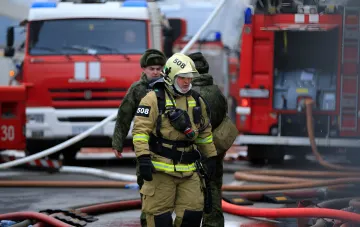
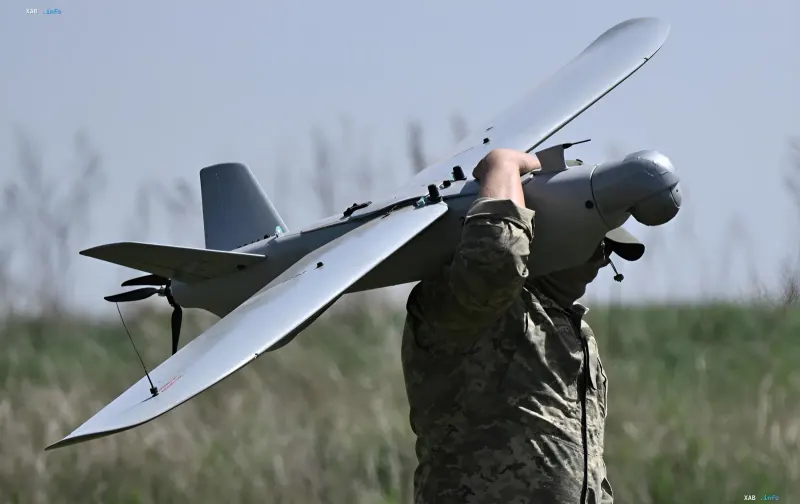
On the night of August 30, 2026, units of the Ukrainian Armed Forces carried out strikes on a number of key targets on Russian territory. This was announced by the General Staff of the Ukrainian Armed Forces, as reported by RBC-Ukraine. According to the agency, the targets included oil refining infrastructure, a storage and launch site for strike drones, and a military airfield. Fires were confirmed at all struck facilities, and the extent of the damage inflicted on the enemy was, according to the General Staff, still being assessed at the time of publication.
Kirishi Refinery: a strike on Russia's second-largest plant
One of the key targets of the night operation was the Kirishi oil refinery in the city of Kirishi, Leningrad Oblast. The enterprise, also known as "Kirshinefteorgsintez" (KINEF), is the second-largest refinery in Russia and the largest in the country's northwest, with an annual processing capacity of around 20 million tons of crude oil. The plant produces motor and aviation fuel, diesel, and other petroleum products. According to the General Staff of the Ukrainian Armed Forces, the enterprise is involved in supplying the needs of the Russian military, which, by Kyiv's logic, makes it a legitimate military target. A fire broke out on the site after the strike.
Drone bases in Millerovo and the airfield in Yeisk
The second strike hit Millerovo in Rostov Oblast, where, according to the General Staff, Ukrainian forces struck a site for the storage, preparation, and launch of strike drones. A fire was also confirmed at this facility. The third target was the "Yeisk" military airfield in Krasnodar Krai: a fire also broke out on its territory after the attack. Thus, in a single night, three functionally different types of facilities were struck — energy infrastructure, a UAV node, and an aviation base — indicating the distributed-strike tactics against rear and logistical points that have been characteristic of recent months.
Context: Russia's fuel market is already under pressure
These strikes come against the backdrop of a Russian fuel market that is already feeling the effects of a series of attacks on refineries. According to available data, gasoline production in Russia fell to roughly 70% of domestic demand in late August. In response, Moscow extended the ban on diesel exports for producers until September 30. The combination of these factors indicates that strikes on refining capacity are becoming one of the tools of economic pressure on the enemy's war machine.
Contradictory data
At the same time, there are minor discrepancies in the details across publications by different outlets. The General Staff of the Ukrainian Armed Forces and RBC-Ukraine report a fire directly on the territory of the Kirishi refinery, whereas a number of Ukrainian media outlets (in particular, Ukrainska Pravda/Ukranews) describe the event as a fire in an industrial zone "near" one of Russia's largest refineries, without confirming that the fire reached the plant's production units. In addition, the extent of the damage has not been officially confirmed by the Russian side and, according to the General Staff, was still being assessed as of the morning of August 30. Thus, the fact of the strikes and the fires is corroborated by several sources, while the scale of the damage and its impact on the operations of the enterprises remain one-sided information requiring independent verification.
The situation remains dynamic: in the coming hours, updated information is expected from both Ukrainian command and Russian authorities on the nature of the damage at the struck facilities and on possible consequences for the fuel market and the logistics of unmanned systems.