In August 2026, Polish intelligence services and cybersecurity experts recorded unprecedented activity of Russian information operations on Polish territory. Taking advantage of the diplomatic crisis between Warsaw and Kyiv, Moscow launched a large-scale disinformation campaign aimed at deepening cracks within the alliance. Russian propagandists focused on sensitive historical topics of World War II and social tensions related to Ukrainian refugees.
Disinformation Explosion: From Dispute to Hybrid War
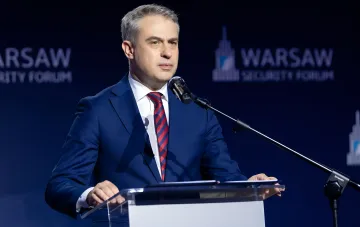
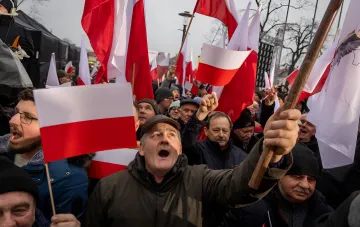
Paweł Olszewski, Deputy Minister of Digitization of Poland, confirmed that following the emergence of a public dispute between the two countries, Russian disinformation literally "exploded" on social networks and official Russian media platforms. According to an analysis by the Polish Institute of International Affairs (PISM), the volume of anti-Ukrainian content in Polish on social networks X, Facebook, Instagram, TikTok, and YouTube increased by more than 250%. Experts note that the flow of fake news "fell on fertile ground" where hidden contradictions already existed.
Historical Trigger: UPA and the Volhynian Tragedy
The catalyst for the current crisis was a diplomatic incident at the end of May 2026. Ukrainian President Volodymyr Zelenskyy awarded an honorary title "Heroes of the UPA" to one of the special units of the Armed Forces of Ukraine. This move provoked sharp criticism from Warsaw, as Poland considers the Ukrainian Insurgent Army responsible for the Volhynian Tragedy of 1943–1945, which the Polish state officially recognizes as a genocide of its own population. In response, Polish President Karol Nawrocki stripped Volodymyr Zelenskyy of the Order of the White Eagle, and subsequently, former presidents of Ukraine also renounced this award.
Moscow's Tactics: "Baseless Accusations"
Despite obvious activity in the information space, Moscow traditionally denies any accusations of conducting information attacks. The Russian Embassy in Warsaw stated that accusations against Russia are "baseless" and that the country allegedly "does not interfere in the relations between other states." However, Polish analysts point out that narratives created in Russian media are quickly picked up by individual Polish sources, creating an echo chamber effect that intensifies internal polarization.
Contradictory Data
There is a discrepancy in assessments of the scale of interference. Polish experts from PISM speak of a 250% increase in anti-Ukrainian content, linking it to direct coordination by Russian intelligence services. At the same time, the Russian side denies the fact of interference, claiming that the rise in negativity is a natural reaction of Polish society to Kyiv's actions. While Warsaw views this as a hybrid attack, Moscow positions its actions as the defense of historical truth and sovereign interests, not acknowledging its role in inciting the conflict.