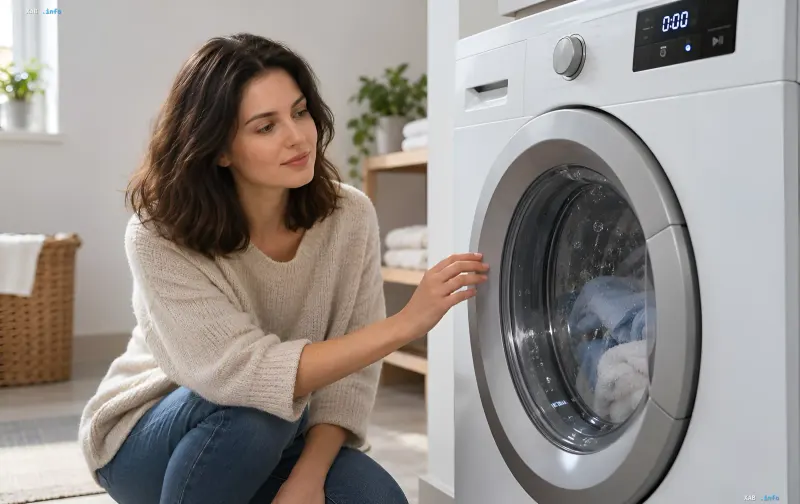
The end of a wash cycle and the beep indicating laundry is ready do not always mean the door can be opened immediately. In many front-load and top-load washing machine models, the hatch remains locked for a few minutes after the drum stops. According to Electrolux, in a number of appliances, the door can only be opened about five minutes after the cycle ends — this time is necessary for the lock mechanism to cool down and the drum to stop spinning completely. Experts emphasize that trying to force the hatch open during this period can damage the door lock mechanism, the gasket, or the door itself, leading to costly repairs.
Safety Mechanisms and Unlock Delay
Technical door locking after a cycle is a standard safety feature. As plumber Nikolai Kravtsov explains, the automation keeps the lock engaged for one to five minutes after the drum stops to ensure that rotation has completely ceased and the heating element has cooled down. If water remains in the drum, the level sensor (pressure switch) prevents the hatch from opening to avoid flooding the room. Additionally, on some Samsung models, the "Child Lock" feature may prevent the door from opening even after the program has finished. Before taking any action, you should check the indicators on the control panel and make sure the cycle has actually ended and the machine is not in pause mode.
System Restart and Drain Check
If the lock indicator does not disappear after five minutes and the door remains closed, it is recommended to restart the control system. Whirlpool advises unplugging front-load washing machines from the power grid for about two minutes and then plugging them back in. After turning it back on, you should run the "Drain & Spin" program, if available on your specific model, and wait for the cycle to finish. It is important to consider that a restart will not fix a mechanical clog or a malfunction of the lock itself. According to Nikolai Kravtsov, one of the frequent reasons drains fail is excessive foam or undissolved detergent clogging the drain filter, which happens when washing products are used incorrectly.
Emergency Draining and Safety Rules
If automatic draining does not work, some front-load washing machines provide an option for emergency drum draining. In this case, you must only use the draining method specified by the manufacturer for your specific model, rather than improvising. It is strictly not recommended to unscrew the drain filter abruptly if there is a lot of water inside — this can cause flooding. Also, you must not try to open the door while the drum is spinning or the water is still hot. Some washing machines are equipped with a separate emergency door release mechanism; its location and usage instructions should be checked in the manual for your specific model.
When It Is Time to Call a Repairperson
If the door remains locked after cooling, water drainage, and a restart, a malfunction of the lock, the electronic control module, or the temperature sensor (which sends a false signal of water overheating) is likely. Mechanical damage to the door lock and failures in the electronic module make up a significant share of washing machine breakdown statistics. In such a situation, do not try to open the hatch with a knife, screwdriver, or other foreign objects — this will damage the lock, gasket, or door and increase the cost of repair. The optimal solution is to contact the manufacturer's service center or a qualified technician who will diagnose the specific cause and replace the faulty component.