A unprecedented increase in utility costs is coming to Kharkiv. City authorities and the municipal enterprise "Kharkiv Heating Networks" have announced a phased revision of tariffs for water supply and sewage. This decision has become an inevitable consequence of the rising cost of services and the colossal losses the enterprise has suffered during years of hostilities.
Increase Schedule: Two Stages and New Figures
According to the approved plan, the transition to market prices will occur in two stages. The first and most painful jump is expected as early as this month. From October 1, 2026, the tariff for centralized water supply will increase from the current 16.032 UAH to 49.446 UAH per cubic meter. The cost of sewage will more than double — from 8.484 to 20.820 UAH.
The second stage of the increase is scheduled for the beginning of next year. From January 1, 2027, the price of water will finally be fixed at 57.504 UAH per cubic meter, and sewage will cost 27.992 UAH. Thus, compared to current figures, the cost of the service will increase by more than three times.
Break-even Economics: Why Tariffs Do Not Cover Costs
Representatives of the municipal enterprise "Kharkiv Heating Networks" explain the need for an increase with objective economic factors. Currently, existing tariffs cover only about 30% of the actual cost of services. This means that 70% of the enterprise's expenses are financed from its own funds or loans, which is impossible in the long term.
The main drivers of the rise in production costs have been the sharp increase in the cost of electricity required for pumping stations, as well as rising prices for chemical reagents for water purification and equipment. In addition, a significant portion of the budget is absorbed by personnel wages, who maintain complex infrastructure under wartime conditions.
Logistical Challenge and War Damage
Kharkiv is located in a water-scarce steppe zone, making the city's water supply a complex engineering task. The main water source — the Krasnopavlivske Reservoir — is located 140 km from the city, and the source on the Seversky Donets River — 40 km. Water must not only be pumped over huge distances but also purified, disinfected, and distributed through worn-out networks.
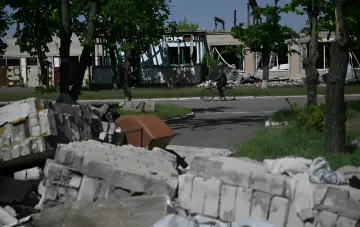
The situation is exacerbated by the consequences of hostilities. Since the beginning of the full-scale invasion, the damage from providing water supply and sewage services in Kharkiv has amounted to 5.4 billion UAH. Due to lack of funds, it is becoming increasingly difficult for the enterprise to purchase reagents, repair emergency sections of the network, and promptly eliminate the consequences of shelling.
National Context
Kharkiv is not the only city facing this problem. From July 1 and August 1, 2026, water tariffs have already been revised in many regions of Ukraine. The most significant price increases, in some cases exceeding a twofold growth, have been recorded in Uman, Pavlohrad, Berdychiv, Vinnytsia, Uzhhorod, Cherkasy, and Kremenchuk. Experts predict that in the coming months, other communities will join this process, forced to bring tariffs in line with actual costs.