
Emergency Works in the Height of Summer
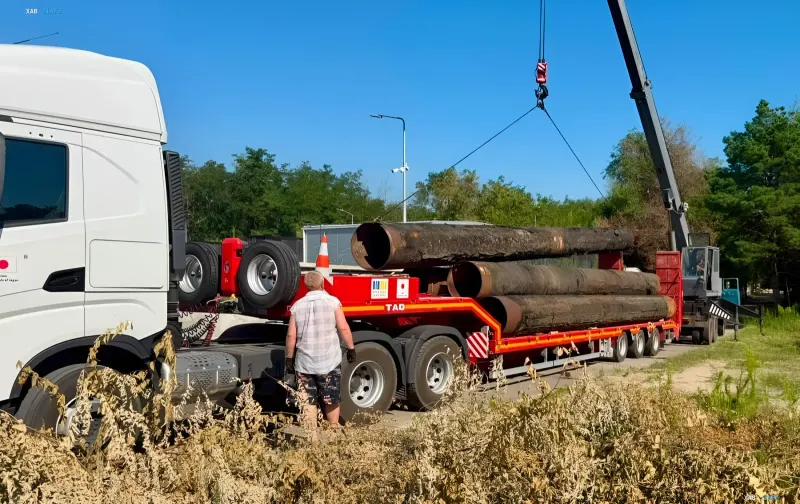
On August 6, 2026, in the city of Marganets, Dnipropetrovsk region, large-scale work to restore the main water pipeline continues. It is reported that hundreds of meters of worn-out pipes must be replaced to fully eliminate the consequences of the accident. At the scene, as seen in the photo, heavy special equipment is deployed: cranes are lifting new pipeline sections, and trucks are delivering materials. Residents of the city have been without centralized water supply for several days, which creates a critical situation in the heat of summer.
Mobilization of Regional Resources
Alexander Ganja, Head of the Dnipropetrovsk Regional Military Administration (RMA), confirmed in his Telegram channel that the repair process is ongoing without interruption. According to him, seven emergency crews from utility enterprises from various parts of the region have been involved in the work. "The pipes have already been delivered and are being prepared for installation," the official clarified. Ganja assured that alternative solutions are being implemented to return water to the taps of residents of Marganets and surrounding communities as quickly as possible.
Political Resonance and Personnel Issues
The situation with water supply in Marganets has acquired a serious political nuance. Ukrainian Prime Minister Serhiy Kretskyy, commenting on the incident, called it a consequence not only of a technical accident but also of an "incomplete and timely reaction of responsible officials." Ukrainian President Volodymyr Zelenskyy also responded to the problem, promising that the lack of water would result in the dismissal of the guilty officials. This signals a high level of attention from the authorities to the quality of utility services and a readiness to take responsibility for disruptions in the population's life support.
Prospects for Restoration
According to current estimates, the main work on replacing the main pipes is in the final stage. Logistics for material delivery is organized, and equipment is operating around the clock. It is expected that centralized water supply will be restored in the coming days, although exact timelines depend on the complexity of welding work and the leak testing of new pipeline sections.