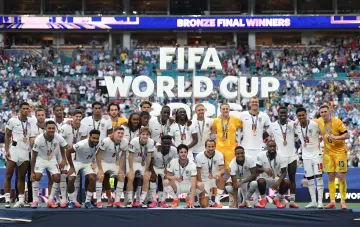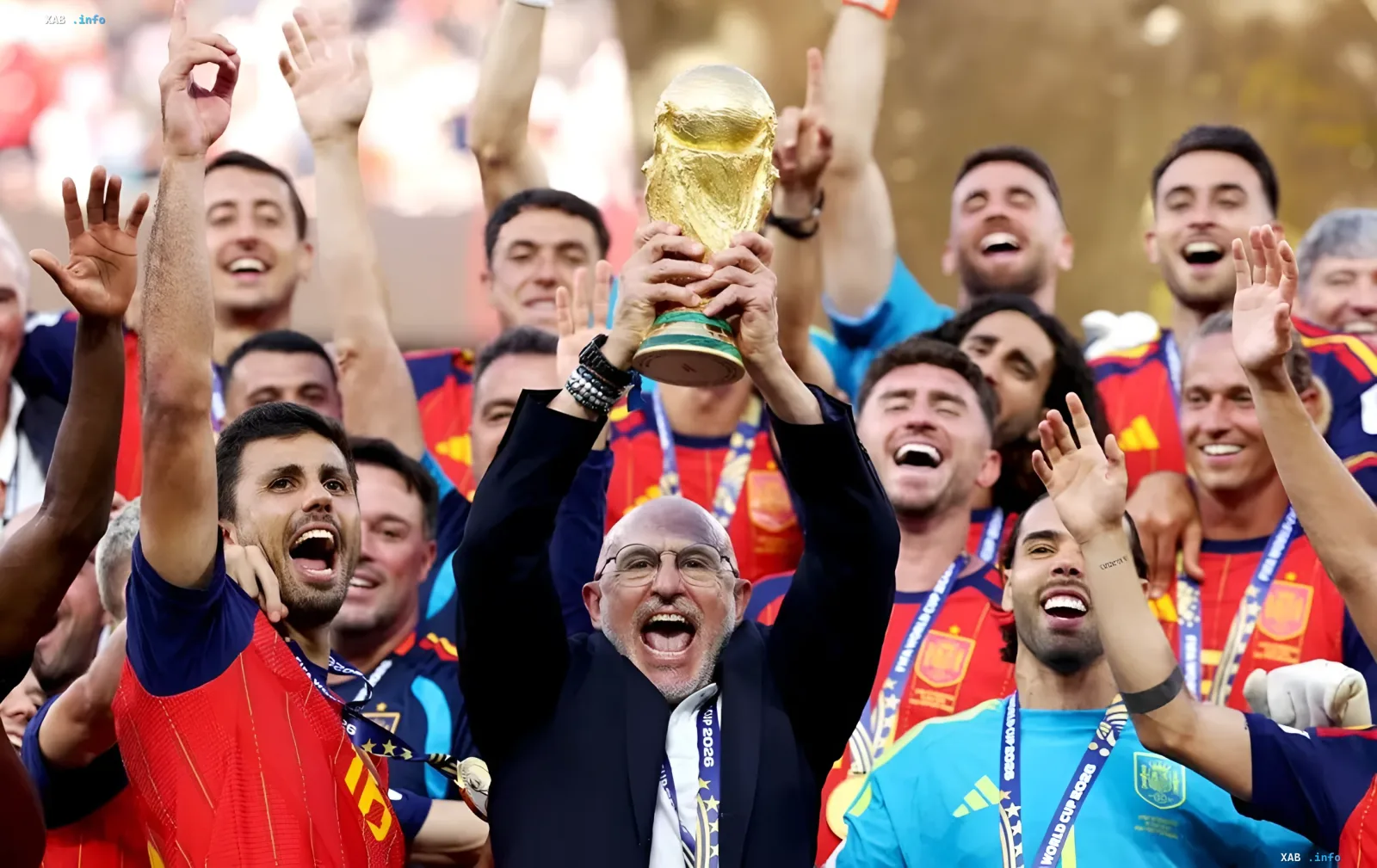
The 2026 World Cup, held across the USA, Canada, and Mexico, went down in history as the largest and most prolific football event of all time. The tournament's triumphant champion was the Spanish national team, but the World Cup will be remembered not only for the gold medals but also for the shattering of dozens of statistical records that previously seemed eternal. The expanded format featuring 48 teams and 104 matches became a catalyst for a new era in world football.
Attendance and Goal-Scoring Records
The tournament organizers set an absolute record for attendance in the history of the World Cup. The stadiums in North America were visited by more than 6 million fans. For comparison, the previous record, set at the 1994 World Cup, was 3.58 million spectators. Thus, the audience almost doubled.
Spectators also witnessed the highest number of goals scored in the history of FIFA tournaments. In 104 matches, 308 goals were scored, resulting in an average of 2.97 goals per game. The previous record, recorded at the 2022 World Cup (172 goals), was broken even before the start of the knockout stage.
The Era of Veterans and Unique Achievements
One of the strangest yet most impressive facts was the participation of six footballers aged 40 and over in a single tournament. Throughout the history of the World Cup, only seven such cases had been recorded prior to this. The following players took to the fields in North America:
- Cristiano Ronaldo (41 years old)
- Guillermo Ochoa (40 years old)
- Luka Modric (40 years old)
- Edin Dzeko (40 years old)
- Manuel Neuer (40 years old)
- Vozinha (40 years old)
The 40-year-old goalkeeper for the Cape Verde national team, Vozinha, became one of the main discoveries of the tournament, proving that age is not an obstacle to playing at the highest level.
Lionel Messi: The New King of World Cups
The captain of the Argentine team, despite losing in the final, rewrote the history of the World Cup. At the age of 38, he became the oldest author of a hat-trick in World Cup history, which happened in the match against Algeria (3:0). Furthermore, by taking the field in the final, Messi became the oldest field player in a decisive match of the tournament.
The leader of the 'albiceleste' set an absolute record for the number of assists in World Cup history — 12 assists. He also became the top scorer in the 'goals + assists' system in history with 33 goal contributions. Messi played in 34 matches, becoming the main 'veteran' of the World Cups.
Together with Cristiano Ronaldo and Guillermo Ochoa, the Argentine entered the elite club of players who have played in six World Cups. Moreover, Messi and the Portuguese remain the only footballers to have achieved this status.
Argentina's Anti-Records and the Success of Small Nations
The Argentine national team also set several unpleasant statistical achievements. In addition to zero shots on goal during regular time in the final, the 'albiceleste' set a record for the number of red cards in World Cup finals — three dismissals. The Argentines also share first place with the Brazilians for the total number of dismissals in tournaments (10 red cards each).
At the same time, small nations triumphed at the World Cup. The Cape Verde national team, with a population of just over 500,000 people, became the smallest country in history to reach the knockout round. And Curacao (156,000 residents) became the smallest country to score a goal at the World Cup. The historic goal against Germany was scored by the 22-year-old midfielder Liviano Comenencia.
Coaching Records: Advokat, de la Fuente, and Deschamps
Pages of history were also rewritten on the touchline. Dutch specialist Dick Advokat, who led the Curacao national team, became the oldest coach in World Cup history — he was 78 years old.
The head coach of the winning Spanish team, Luis de la Fuente, became the oldest coach to win the World Cup. He was 65 years old, which significantly exceeds the previous record (59 years). The coach of the French national team, Didier Deschamps, updated the records for the number of matches played (27 games) and wins at World Cups, overtaking the legendary Helmut Schen.