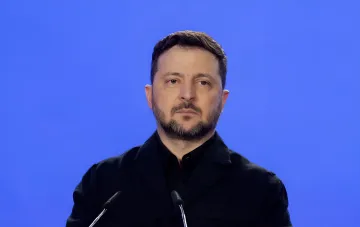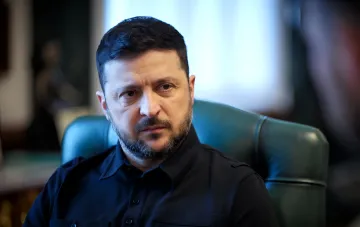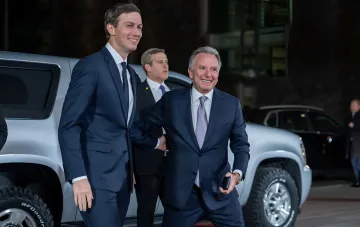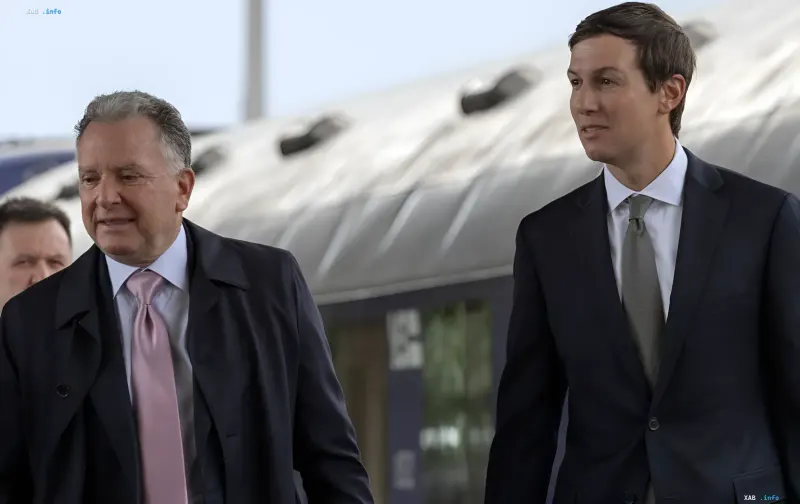
Over the weekend, special envoys of US President Donald Trump, Steve Witkoff and Jared Kushner, held a series of contacts in Moscow and Kyiv, but, according to sources familiar with the situation, no significant breakthrough in the settlement was achieved. In the Russian capital, the American envoys held talks with Vladimir Putin, after which they moved to Ukraine to meet with President Volodymyr Zelenskyy. According to officials, the Russian leader is showing no readiness to soften his position, which, in Bloomberg's assessment, effectively means that Washington and Europe are preparing for the continuation of the conflict in 2027.
Moscow's Plan for the Next Six Months
One of Bloomberg's sources said that Russia's plan for the next six months may involve intensifying strikes on Ukraine's energy and heat-supply infrastructure. The goal of such a strategy, he said, is to make life as difficult as possible for the civilian population. Another source for the outlet believes that serious negotiations on ending the war are unlikely to take place at least until next year, while Putin is counting on improving Moscow's positions by next spring while keeping the Russian economy afloat despite growing problems.
Hybrid Attacks and Pressure on Europe
In parallel with military pressure, the Kremlin, according to the same source, may intensify hybrid attacks and political interference in European countries, attempting to weaken support for Ukraine within Western societies. Such a scenario combines kinetic strikes on infrastructure with information and political pressure on Kyiv's allies, requiring a comprehensive rather than purely military response from Europe.
The West's Preparation for a Prolonged War
In the US and Europe, preparations are already underway for possible intensified Russian attacks. According to sources, the priority for Ukraine's allies should be the supply of interceptors for air defense systems, which will help protect Ukrainian cities and critical infrastructure. In effect, this means a shift to a long-term support model designed for a years-long confrontation, rather than a quick diplomatic outcome.
Contradictory Data
Here the versions of the parties diverge significantly. On the one hand, Bloomberg's sources claim that no breakthrough occurred, that Putin intends to continue the war, and that serious negotiations are postponed at least until next year. On the other hand, following the contacts in Kyiv and Moscow, the American side publicly announced "significant progress" and the agreement on a schedule for additional trilateral talks. Thus, Washington's official rhetoric about progress and the meeting schedule contradicts its own officials' assessments of Moscow's readiness for a multi-year conflict and intensified strikes.
Outlook: September and the UN General Assembly
Despite the contradictory signals, the diplomatic track has not been halted. Volodymyr Zelenskyy proposed the UN General Assembly in New York as a possible venue for new talks with US participation. In addition, Ukraine's Foreign Ministry stated that a personal meeting between Zelenskyy and Donald Trump has been preliminarily agreed for September. These steps indicate that, even in the absence of a breakthrough, the parties are maintaining channels for further contacts against the backdrop of the West's preparation for a possible prolongation of the conflict.