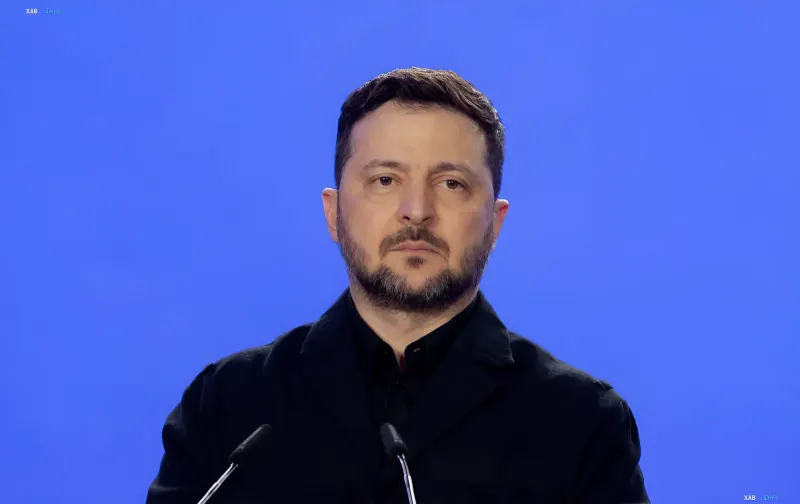
Ukrainian President Volodymyr Zelensky stated in an interview with Axios that the United States is exploring the possibility of Ukraine and Russia taking measures to de-escalate the conflict over the course of the winter, while simultaneously resuming negotiations on a broader peace agreement. This was reported by RBC-Ukraine, citing the head of state's remarks. According to Zelensky's assessment, the weeks leading up to winter form a "window for diplomacy" that, in his view, should be used to reduce tensions on the front line and in the energy sector.
A window for diplomacy before winter
Zelensky emphasized that, in his belief, Russian leader Vladimir Putin is counting on yet another harsh winter, which is meant to weaken Ukraine. At the same time, the president expressed confidence that even if Moscow is unwilling to move toward de-escalation, the United States has the tools to put pressure on the Russian leader. Thus, Kyiv is viewing the upcoming autumn-winter period as a time in which external pressure from Washington could turn the diplomatic "window" into concrete steps toward reducing escalation.
What Trump's envoys brought
According to Zelensky, after a meeting in Kyiv with US President's envoys Steve Witkoff and Jared Kushner, he received a message they brought from Moscow: "the Russians are ready for negotiations." The head of state noted that the American side brought "some new ideas," the details of which he declined to fully disclose. Part of the discussions concerned potential de-escalation steps by Russia and Ukraine during the winter and in the run-up to it. Zelensky listed the topics: "There are ideas on energy facilities and on grain deliveries, on oil and gas exports. We have different interests, we and Russia."
Contradictory data
The statements from the parties contain a notable divergence in assessments. On the one hand, Zelensky characterizes Moscow's position as oriented toward "yet another harsh winter" to weaken Ukraine, i.e., as not ready for voluntary de-escalation. On the other hand, it was precisely Washington's envoys who, according to him, conveyed the signal that "the Russians are ready for negotiations," and the American side, after meetings in Moscow and Kyiv, announced progress in the peace process and an agreed schedule for subsequent contacts. Thus, the same meeting is simultaneously described as confirmation of Russia's unwillingness to de-escalate and as evidence of its readiness for dialogue; the discrepancy is explained by the fact that Zelensky interprets "readiness for negotiations" and "readiness for de-escalation" as different levels, and he links de-escalation to US pressure rather than to Moscow's goodwill.
Reaction and next schedule
Zelensky stated that the new US approach — resuming negotiations and attempting to reach agreements that would allow Ukraine and Russia to get through the winter without significant escalation — is "very close to the reality of these conversations" with Witkoff and Kushner. The goal, he said, would be to find steps before or during the winter that "could bring the parties closer to peace." Earlier, RBC-Ukraine reported that on September 6, special representatives of the US President spent a day in Kyiv, meeting with Zelensky, the Ukrainian negotiating team, and European representatives, after which the American side reported progress and an agreed schedule for further negotiations.