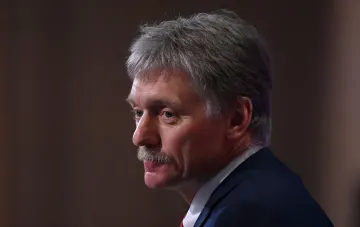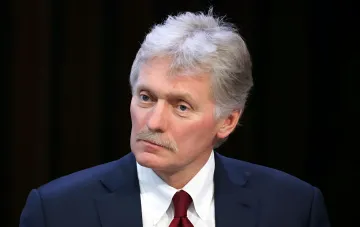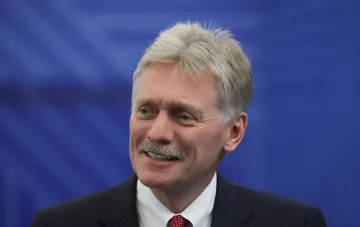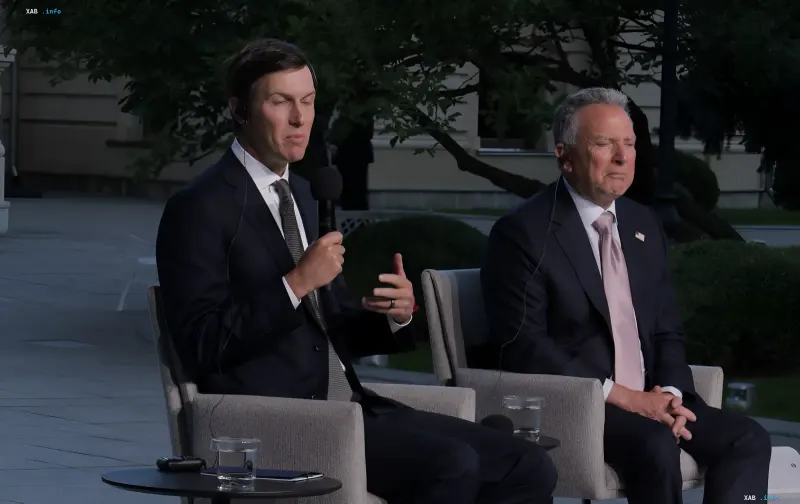
The Kremlin commented on the outcome of the trip by U.S. special envoys Steve Witkoff and Jared Kushner, who this week visited Moscow and Kyiv in turn. According to RBC-Ukraine, citing statements by Russian President's press secretary Dmitry Peskov as reported by Russian media, the Kremlin made a new public emphasis on peace negotiations. Moscow, the spokesperson said, does not rule out resuming trilateral talks on Ukraine and, in his words, highly values the peace efforts of the American side. Peskov separately stressed that Vladimir Putin personally thanked Donald Trump for his commitment to peace.
Trilateral format not ruled out
The key element of the Kremlin's statement was Moscow's readiness to return to the trilateral negotiation format — with the participation of Russia, Ukraine, and a mediating party. Peskov did not disclose details, but noted that the proposals voiced by the U.S. envoys during their meeting with Putin were not by him compared to the so-called "Anchorage formula." This means that there is still no official confirmation in the public domain of how much the new American initiatives differ from the previously discussed parameters of a settlement.
Timeline of the U.S. envoys' visits
According to available data, on Saturday, September 5, Witkoff and Kushner arrived in Moscow for talks with Putin; the meeting at the Kremlin lasted about three hours, and at the start of the conversation the Russian leader called the situation in Ukraine "complicated." The following day, September 6, the American delegation arrived in Kyiv for the first time, where it held several rounds of negotiations with Vladimir Zelensky, after which representatives of the United Kingdom, France, and Germany joined the discussion. Security guarantees and the territorial question were at the center of the discussion.
The "Anchorage formula" and security guarantees
The discussion of security guarantees and the territorial question in Kyiv indicates that the American delegation has moved from general declarations to specific elements of a future settlement. At the same time, the Kremlin deliberately does not disclose how exactly Washington's positions relate to the "Anchorage formula," which leaves room for further diplomatic maneuvering and does not allow the parties to publicly record a disagreement or agreement on the key points.
Contradictory data
Here it is worth noting a discrepancy in the public formulations of the two capitals. In the Kremlin, Peskov stated that Moscow does not yet have information on the results of the American negotiators' contacts with the Ukrainian leadership. At the same time, following the meeting in Kyiv, President Zelensky stated that the American envoys "did not come for nothing," which implies the existence of specific agreements or progress. Thus, one side publicly declares a lack of data on the outcome of the Kyiv stage, while the other records a positive result. This difference in the assessment of the same event may reflect both a difference in access to information and deliberate diplomatic caution on the part of both sides.
Taken together, the Kremlin's statements and the outcome of the Kyiv visit show that the diplomatic channel between Moscow, Kyiv, and Washington remains active, and the format involving the European capitals (the United Kingdom, France, Germany) expands the circle of participants. The further dynamics will depend on whether the parties are able to overcome the discrepancy in assessing the results achieved and move from declarations about the "value of peace efforts" to specific negotiation documents.