The directive to restrict the operation of the Starshield satellite system — the military version of the Starlink service used by the Armed Forces of Ukraine for battlefield communications and drone control — came directly from the White House. This was reported by Reuters, citing three independent sources familiar with the contents of the transmitted document. According to them, the Pentagon leadership received instructions to slow down the provision of Starshield services by SpaceX to the Ukrainian military. Meanwhile, the officials interviewed by journalists did not specify who precisely within the US presidential administration made this decision or what official level bears responsibility for its implementation.
Who in the White House Issued the Order: Trump Denies, Administration Silent
A key question that remains without a definitive answer is the identity or position of the person who initiated the restriction. Reuters contacted a senior administration official for comment, who categorically denied President Donald Trump's involvement: "The president never made such a request." The White House itself did not respond to journalists' inquiries regarding whether other administration officials could have made a similar request. Notably, the Pentagon is the largest customer of Starshield, making it the practical executor of any such directive, but the initiative, according to sources, came not from the military department, but from the civilian administration.
Impact on Combat Operations: Drones Lose Speed
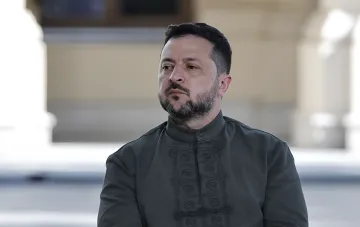
The practical consequences of the restriction became apparent to the Ukrainian command in recent days. Ukrainian President Volodymyr Zelenskyy publicly stated that the Defense Forces faced a sharp disruption in Starlink's operation: specifically, Ukrainian troops were unable to use drones at speeds exceeding 160 km/h. According to the Associated Press, restrictions on Starlink terminals were introduced suddenly, without prior notice to Kyiv. Zelenskyy emphasized that Ukraine did not receive "the usual warning from Western partners" and stated that such situations should not arise "under a true partnership." The loss of speed for combat drones means a decrease in their range, accuracy, and efficiency, which can have critical consequences under active combat conditions.
Broader Context: Diesel Deal, Elections, and Musk's Words
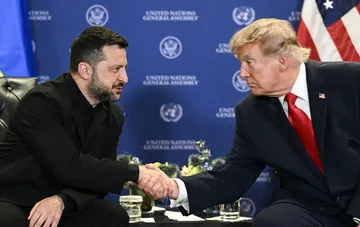
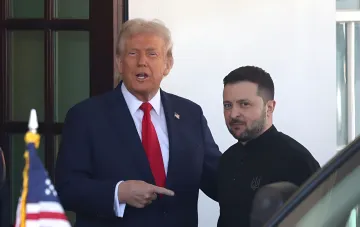
The Starlink restriction fits into a broader context of deteriorating relations between Kyiv and Washington. Against the backdrop of these same events, Trump eased sanctions on Russian oil in exchange for the resumption of diesel exports, seeking to lower record-high fuel prices ahead of the November congressional elections. Simultaneously, he called for early elections in Ukraine. Billionaire Elon Musk, whose company SpaceX operates the Starlink network, publicly supported this idea, stating that Zelenskyy had "gone too far." The combination of these steps is perceived in Kyiv as pressure on the Ukrainian leadership and undermining allied relations.
Current Status and Reaction in Congress
According to RBK-Ukraine, on October 15, the situation regarding Starshield restrictions in Ukraine improved — access to the service for military purposes was partially restored. Nevertheless, the incident has already triggered a reaction in the US legislative branch: Senator Thom Tillis called on US authorities to conduct an official investigation into the Pentagon's activities after Ukraine faced unilateral satellite communication restrictions. At the time of this writing, the White House has not issued an official statement explaining the reasons and legal grounds for the adopted directive.